Guide 05 · 4 min read
Mesa, AZ Planting Zone 9b
Mesa sits in USDA zone 9b, where the average annual extreme minimum runs 25 to 30 F on the 2023 map. That number decides which plants survive a cold night, and it says nothing about summer heat, which is the harder test in this yard.
Planting
What planting zone is Mesa in?
Mesa is in USDA zone 9b, according to PlantMaps zone data (opens in a new tab). Zone 9b means the average annual extreme minimum temperature runs 25 to 30 F, based on the 2023 map. That is a mild winter by national standards and a real constraint by desert standards, because most of the year is warm enough that plants keep growing through winter and then meet a few cold nights. The zone is an average, not a promise. A cold snap can drop below the band, and a protected courtyard can stay above it. Use the zone to rule plants out, not to promise that a marginal plant will make it through every winter. The number is a starting filter, not a plan. Half zones can change across a city, so the USDA Plant Hardiness Zone Map (opens in a new tab) is worth checking for a specific address.
Good to know
What does zone 9b mean for frost?
Zone 9b describes the coldest night an average winter is likely to bring, not the length of the frost season. A Mesa yard can go years without a hard freeze and then take a night at the bottom of the band. That is enough to burn citrus, blacken bougainvillea and kill young tropical plants. The damage depends on exposure as much as on temperature. A plant against a south wall, under a tree or on a patio stays warmer than the same plant in an open yard. Cold air also settles in low spots, so a frost pocket at the bottom of a slope can be colder than the top by several degrees. Plant tender material high and close to the house, and keep a sheet handy on a cold forecast.
Planting
When should you plant in Mesa?
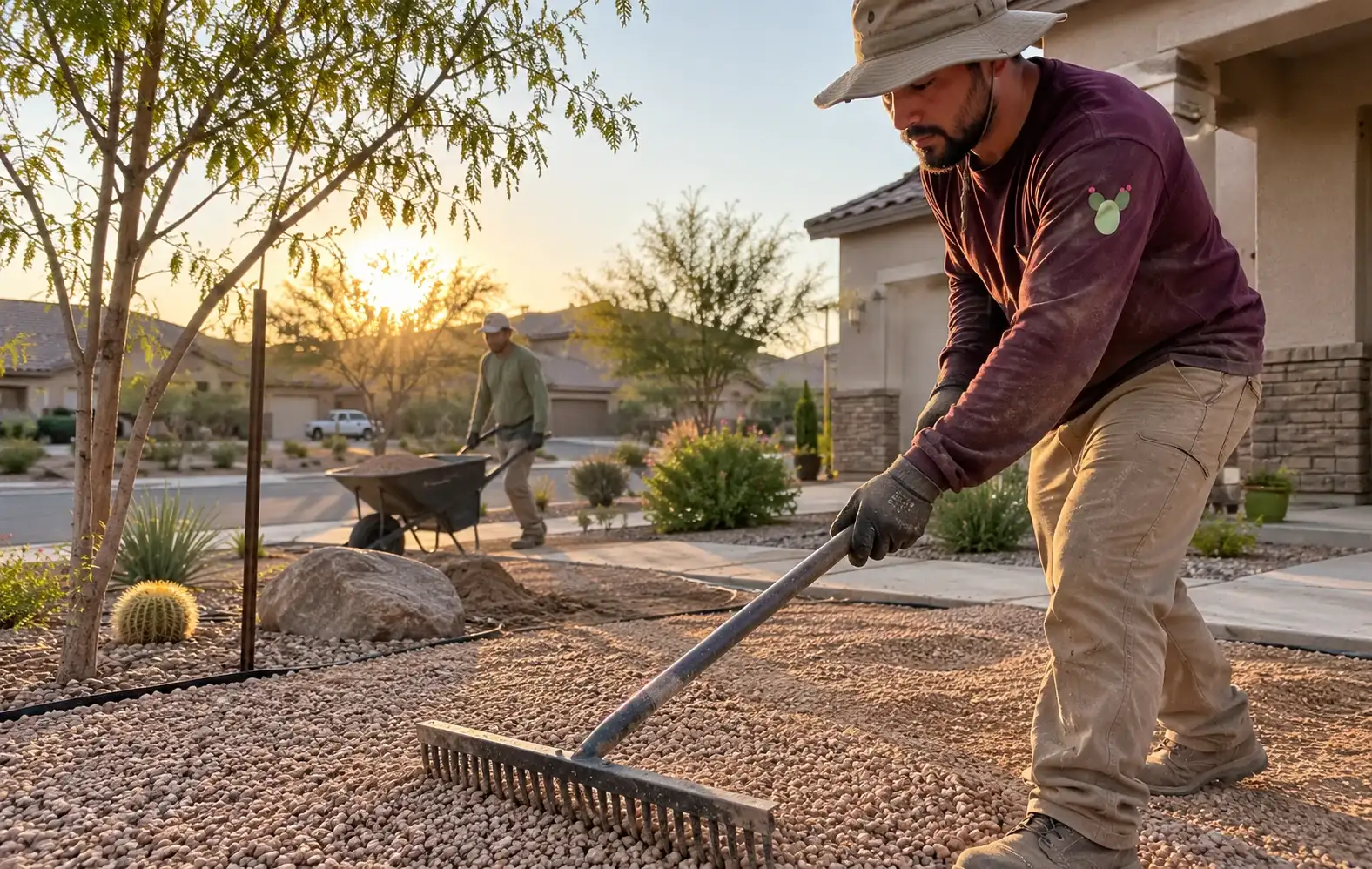
Fall is the easier window. The air cools while the soil is still warm from summer, so roots establish before the first cold night and the plant faces its first summer with a settled root system. Spring works too, if you plant early enough to give roots a few weeks before the first hot stretch. Summer planting is the hard one, because a new plant needs water it cannot yet take up, and a long run of extreme heat can finish it. If you must plant in summer, shade the new plant for its first weeks and water by hand. Winter is fine for trees and shrubs that are fully dormant, but not for anything tender.
Climate
Which plants handle zone 9b heat?
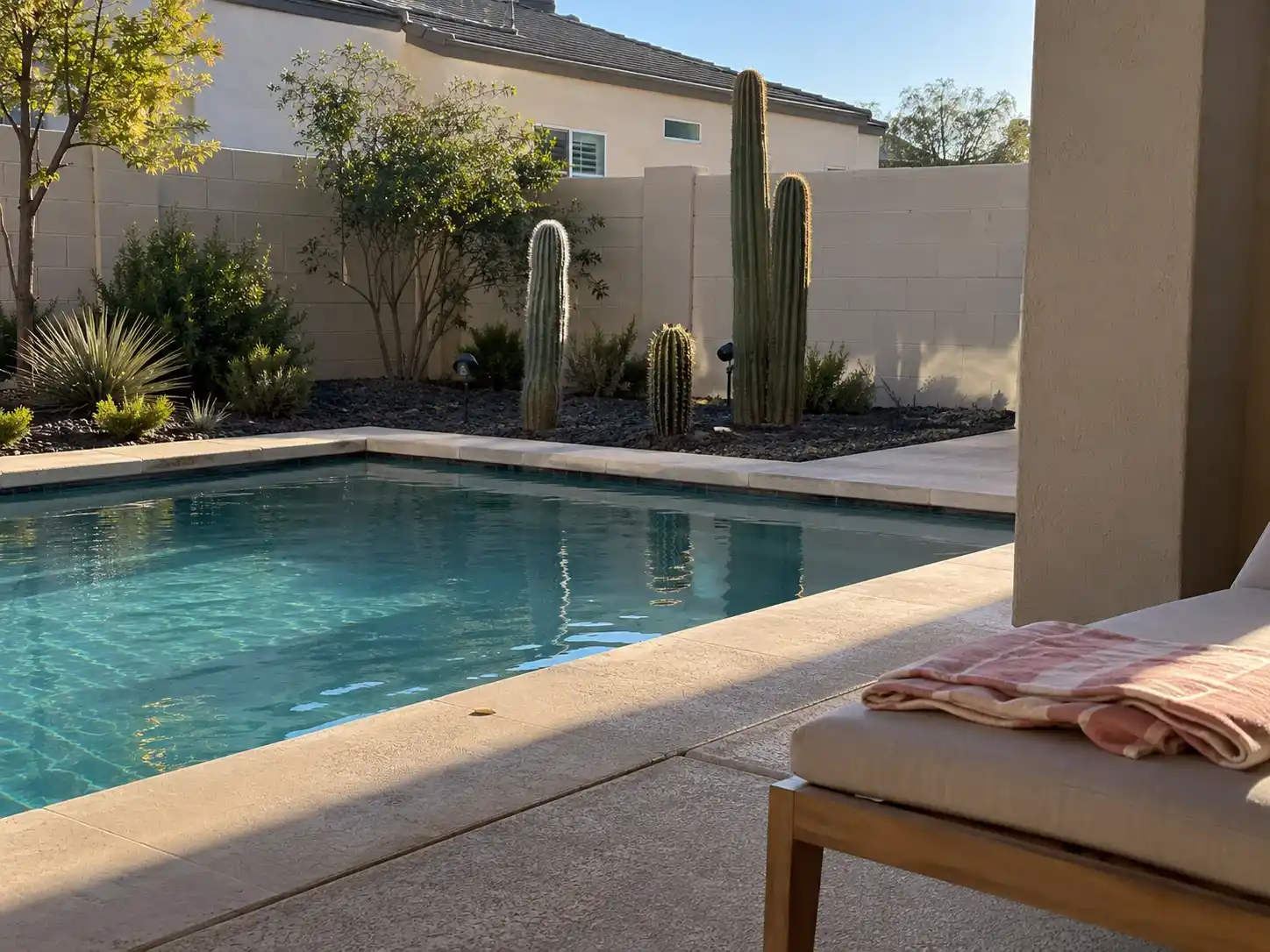
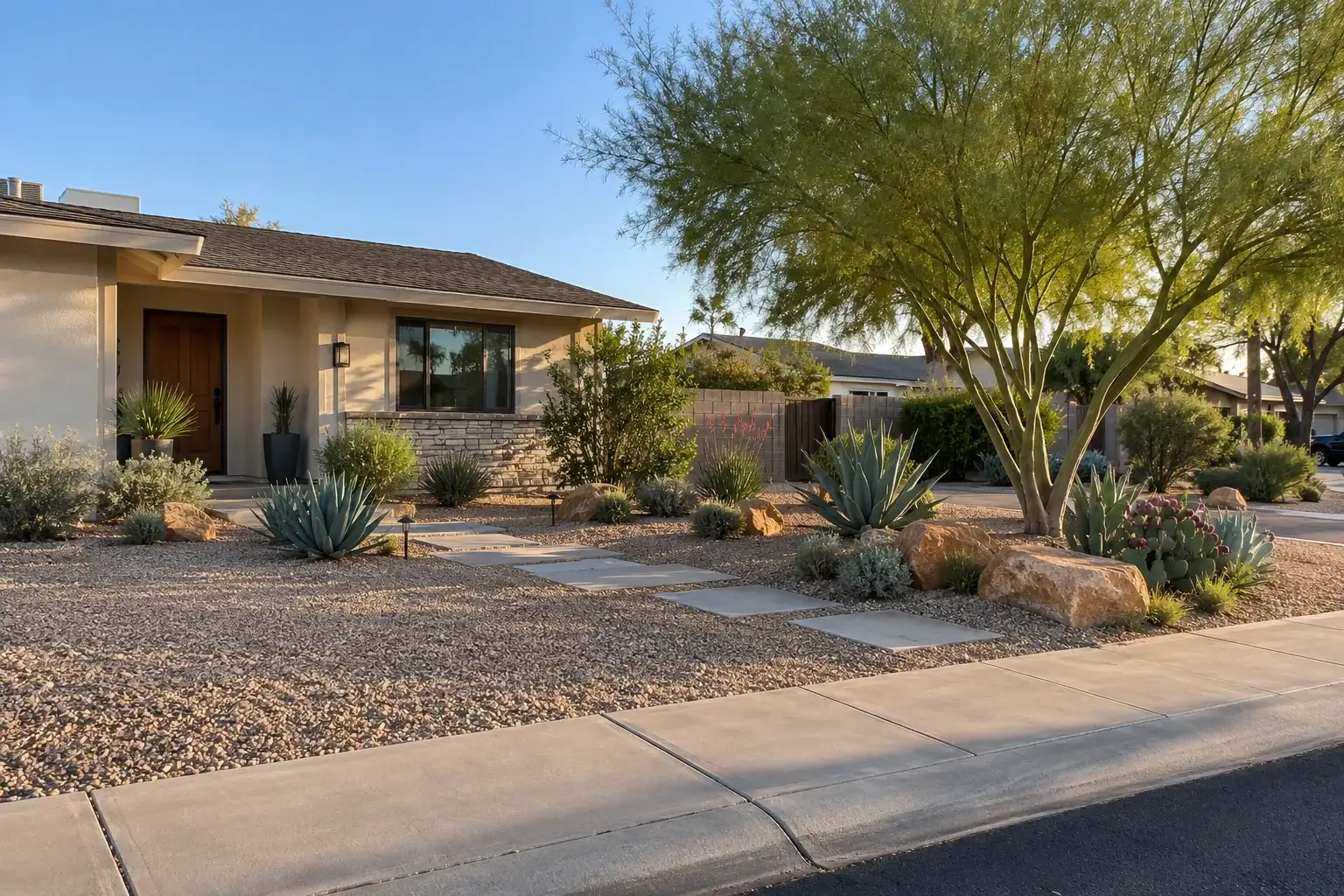
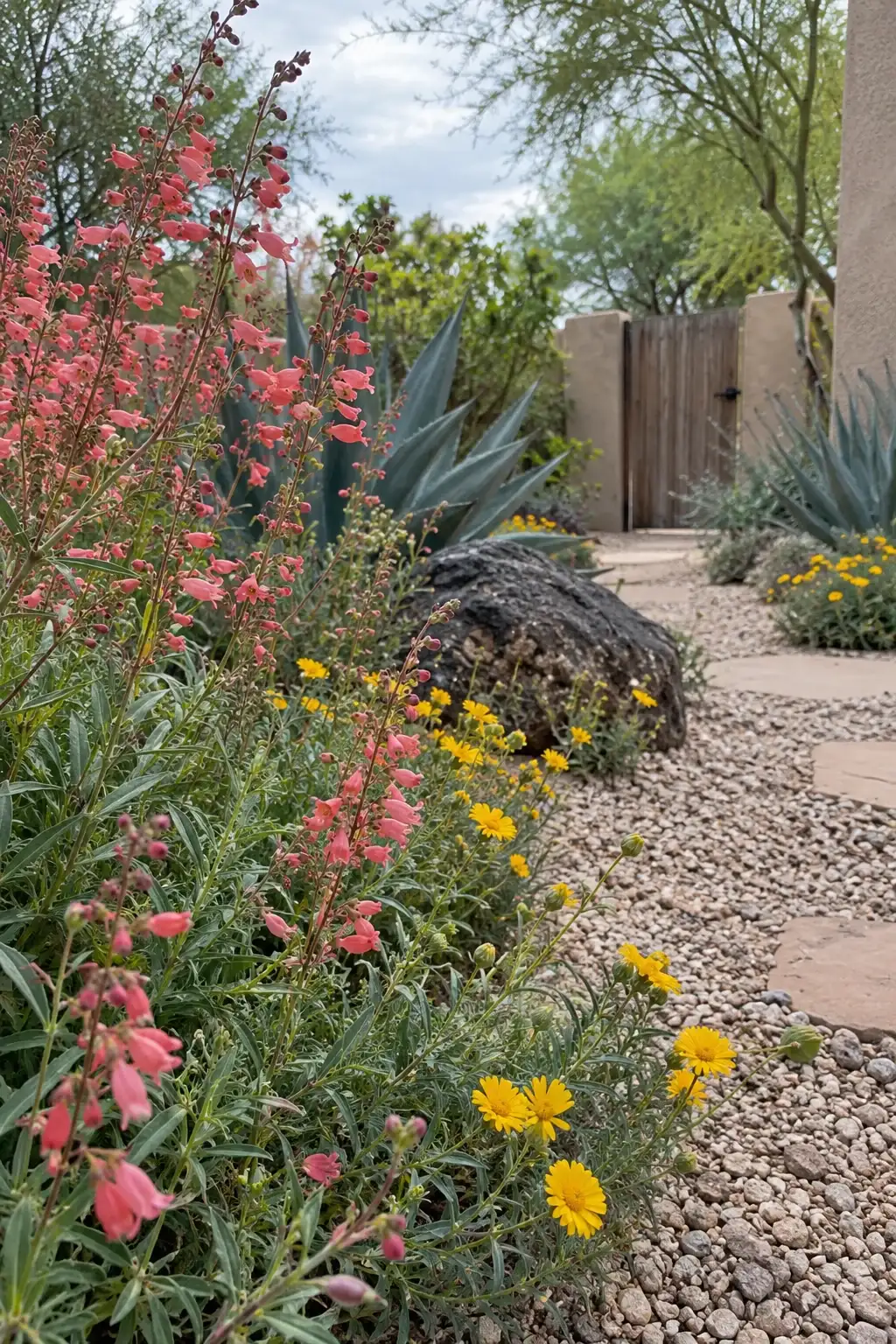
The reliable list is desert natives and dry climate plants from similar latitudes. Mesquite, palo verde and desert willow handle reflected heat and need little water once established. Texas sage, brittlebush, creosote and ocotillo take full sun. Rosemary, oleander and lantana fill a border without much care. Agave, yucca and most cactus are built for the conditions. Citrus is possible in a protected spot, though a cold night at the bottom of the band can damage it. The plants that struggle are the ones sold as tropical: hibiscus and most ferns want more humidity than Mesa has. A plant that survives the summer still has to survive the winter, and zone 9b sets that second test. Group the list by water need before you buy, or the irrigation design will fight the planting plan.
Planting
Which plants struggle in a Mesa yard?
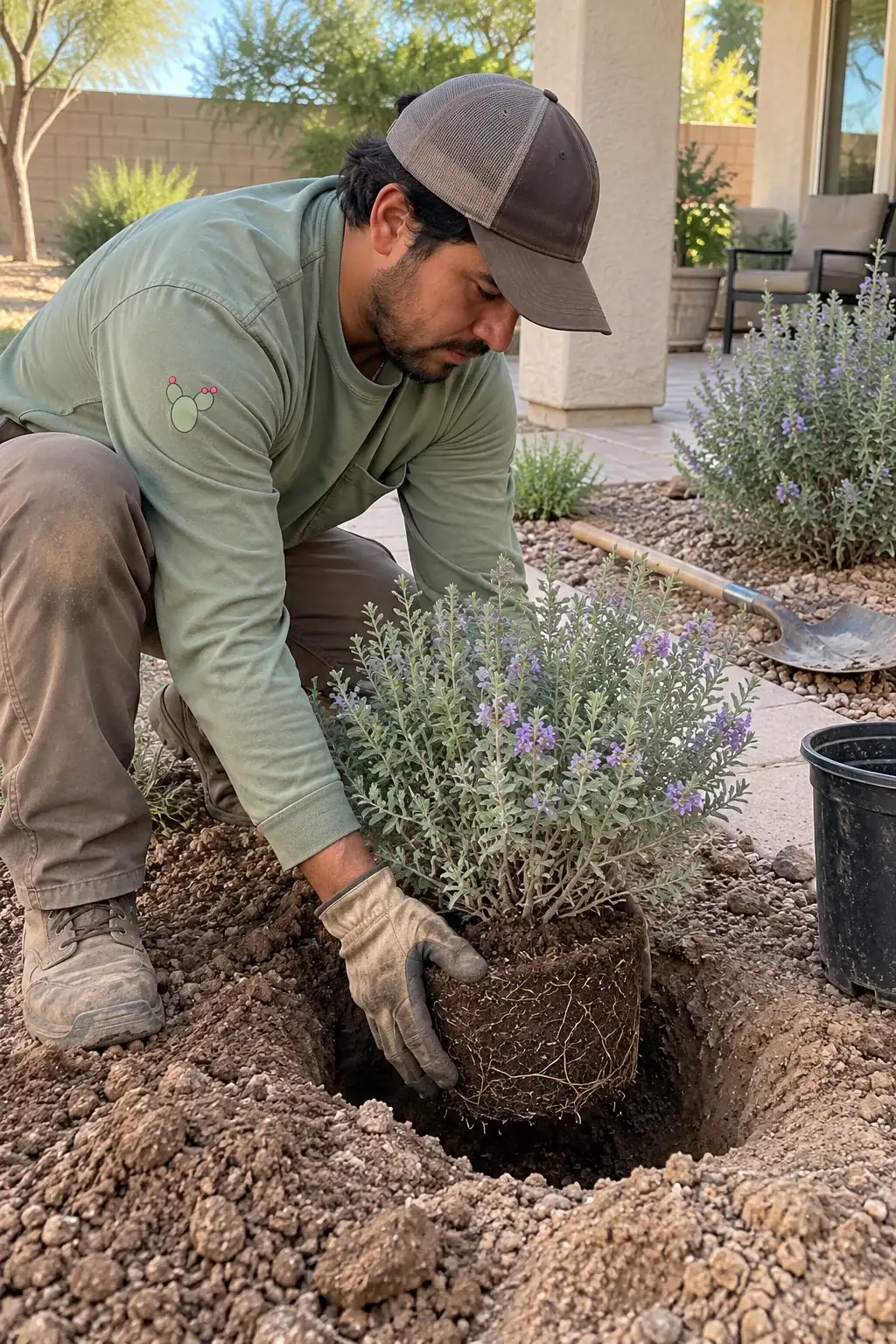
The failures often come from water, not from temperature. A desert plant in a low spot that holds monsoon water will rot, and no amount of heat tolerance saves it. A tropical plant in full afternoon sun will scorch even when it is watered. A lawn grass under a mesquite can thin as the tree matures and takes the water. The other common failure is planting too deep. Desert soil is often shallow over caliche, and a tree planted into a dug hole with amended soil can sit in a bowl that holds water against the trunk. Plant on a slight mound, keep the crown above grade, and match the plant to the drainage you actually have. If a plant keeps dying in the same spot, the spot is the problem.
Water
How does zone 9b change watering?
Zone 9b sets a long growing season, so water use runs for more of the year than a colder climate would suggest. Plants grow in spring and fall, slow in midsummer, and still need water in winter during dry stretches. That pattern argues for drip on separate valves by plant type, so a desert shrub is not watered on the tree schedule. Water deeply and less often, and let the top of the soil dry between cycles. A controller set for a lawn schedule will overwater a xeriscape and can drown cactus. Mesa publishes a Landscape Watering Guide and a water calculator at Mesa Water Conservation (opens in a new tab), and they are worth reading before you set a schedule. If the controller still runs a summer program in December, call (747) 243-2089.
3 questions
Questions people ask
Still have a question? Call (747) 243-2089 and describe the yard.
Is Mesa zone 9a or 9b?
Zone 9b for most of the city, according to PlantMaps zone data for the 2023 map, with an average annual extreme minimum of 25 to 30 F. Half zones can differ by address, and older maps and plant tags may show a different zone, so the USDA interactive map is the check for a specific yard.
Can I grow citrus in Mesa?
Yes, in a protected spot. Citrus handles zone 9b most winters, but a night at the bottom of the band can damage fruit and foliage. Plant against a south or west wall and cover young trees when a freeze is forecast.
Should I follow the zone printed on a plant tag?
Yes, but treat it as one test among several. A tag that lists zone 9 is a rough fit for Mesa, and the plant still has to handle reflected heat, caliche and a dry summer. Ask about drainage before you buy.