Service 01 of 05 · Mesa, AZ
Landscape Installation in Mesa, AZ
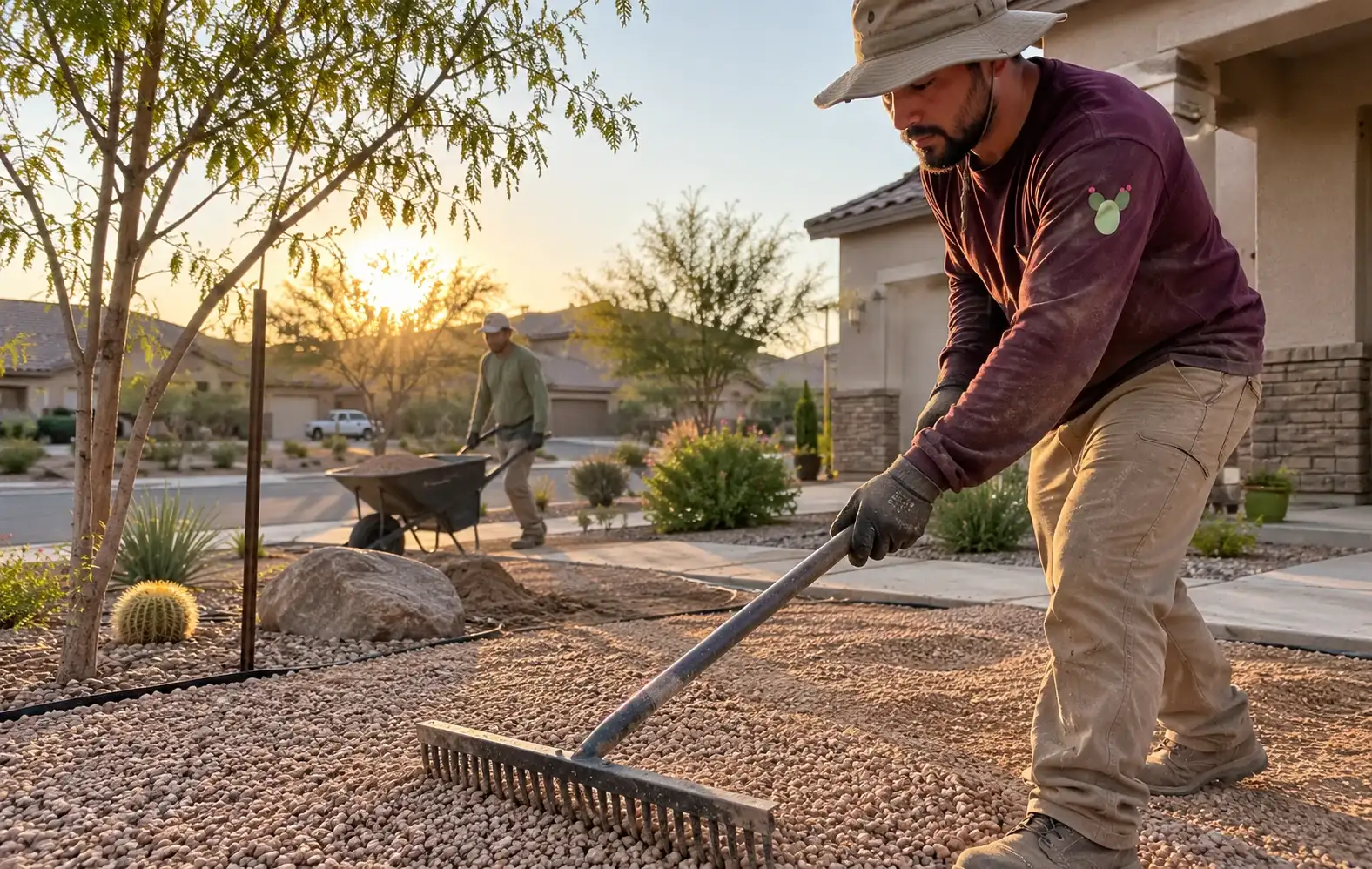
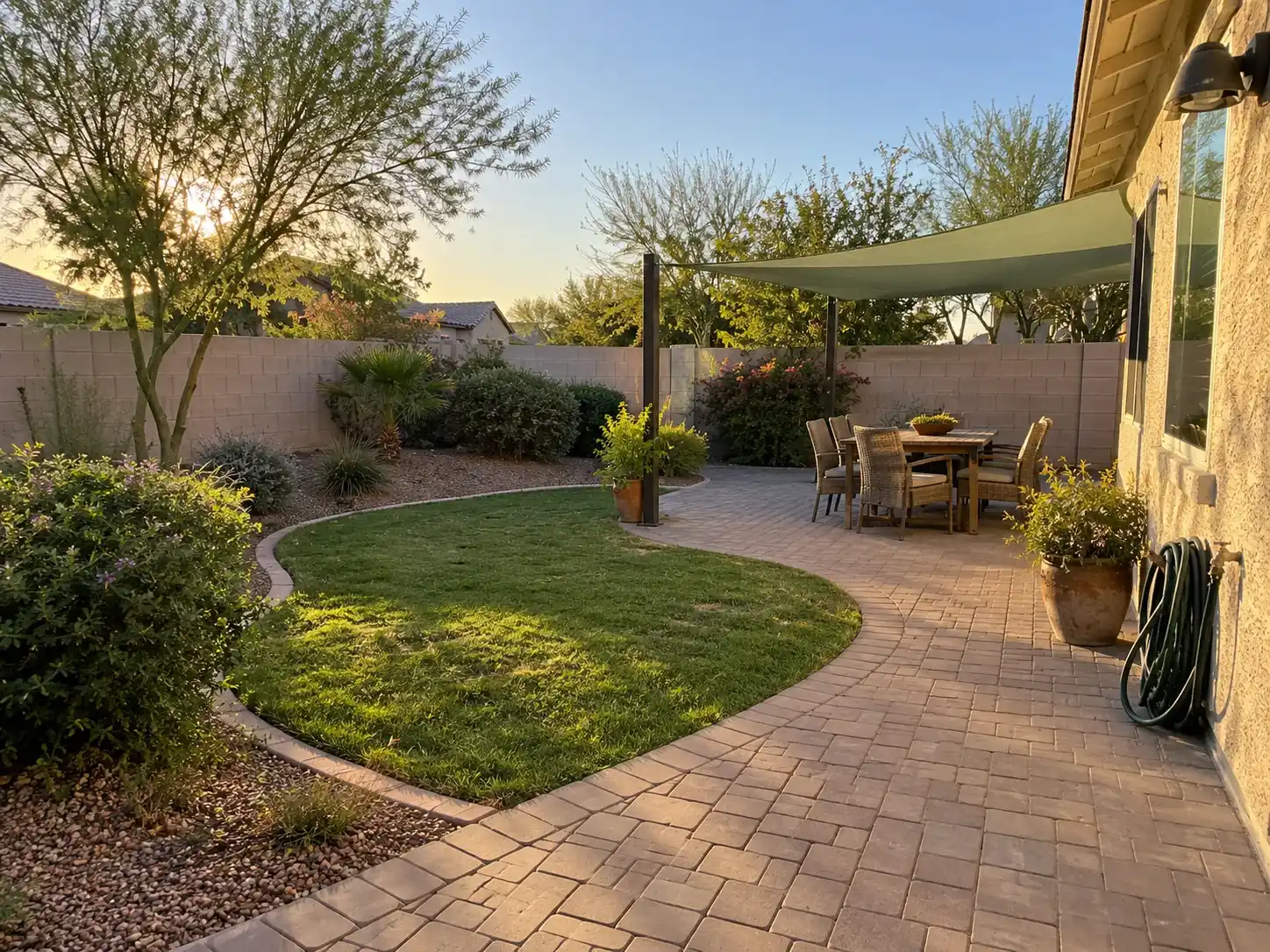
Landscape installation in Mesa is the work of turning bare dirt or a worn out yard into a finished landscape: grading, irrigation, planting, hardscape and ground cover. The yard is built around the water first, because everything else depends on where it drains.
Last updated
01How it works
What does landscape installation include?
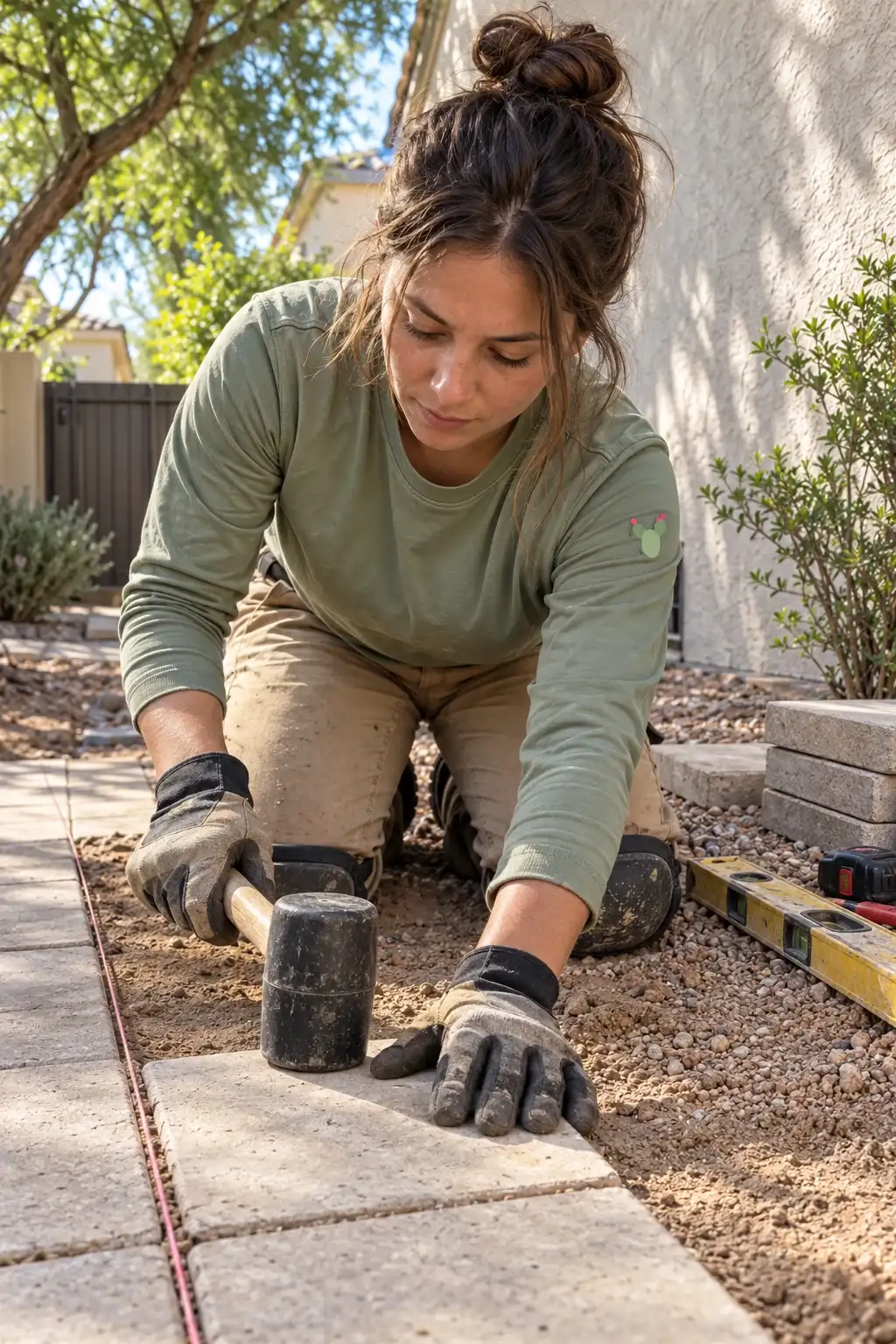
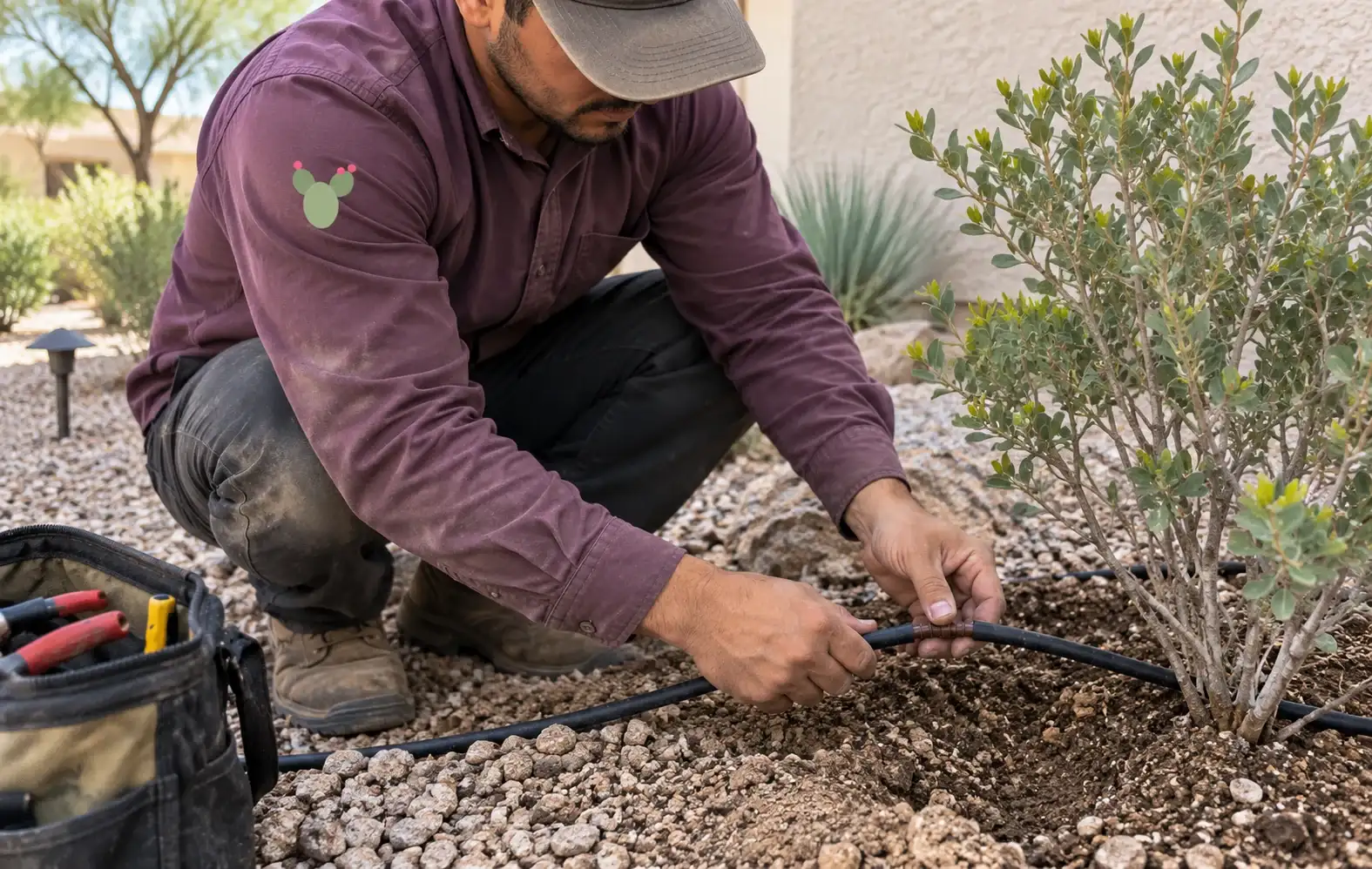
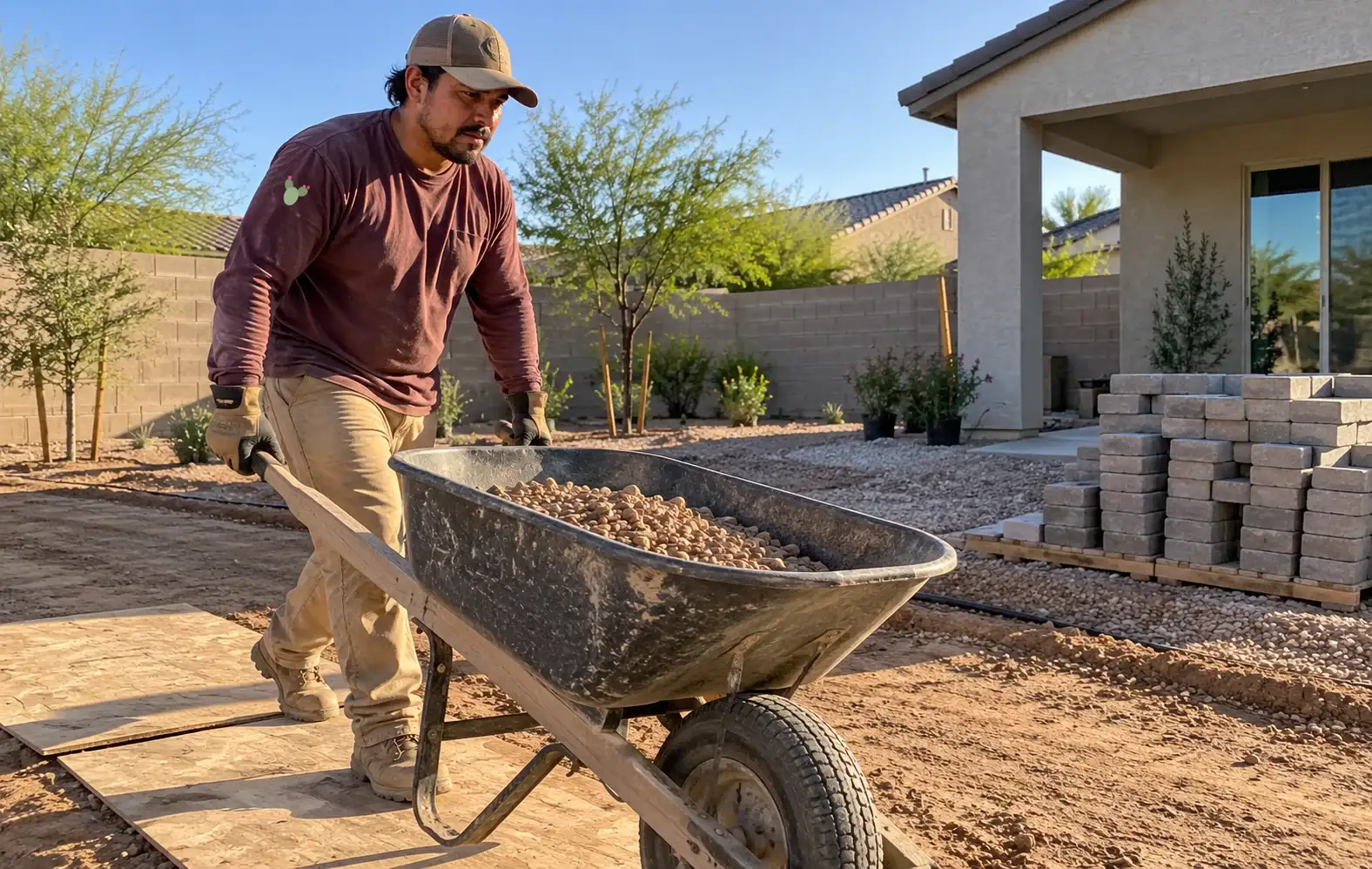
A full install covers everything between the bare dirt and a finished yard: grading, irrigation, planting, hardscape and ground cover. The work starts with drainage, because water has to leave the lot before anything else goes in. Then the irrigation zones are set, drip lines run to the plant positions, and the hardscape is built. Planting comes last so the new plants are not walked over. A typical package includes a planting plan, a drip system on a timer, gravel or mulch, a small paver pad or walkway, and 1 or 2 trees. Construction debris left by the builder is hauled off too, which on a new lot can be a trailer load of block, wire and plastic. If the yard already has grass, removal and disposal is part of the scope.
02Costs
What does landscape installation cost in Mesa?
Published national data puts a new landscape installation at $3,000 to $16,000, with most landscaping projects landing between $1,248 and $6,068 and an average near $3,516, according to national cost guides from 2026. Priced by area, work runs $4.50 to $12 per square foot, and a 2 person crew bills $50 to $100 per hour, according to the same guides. A front yard usually falls in the $1,500 to $5,000 band, while a full backyard renovation with walls, pavers and turf runs $15,000 to $50,000. On a Mesa lot the number moves with how deep the caliche sits, how much rock has to be broken out, and how far material has to be carried. These are published national ranges, not a quote. The final price comes after someone sees the yard.
03Contact
What happens from the first call to a finished yard?
It starts with a call to (747) 243-2089 and a walk of the yard with a tape measure. The walk covers the sun exposure, the slope, the hose bibs and the panel, and the areas to be changed get photographed. A written scope with a price and a stage order follows the walk. Before any digging, utility locates are called in on the gas, electric and water lines. On site the order is demolition, grading, irrigation, hardscape, planting, then gravel or mulch. Each stage is worth a look before the next one covers it. On a bare builder lot the first visit also checks whether the lot drains to the street or to a neighbor. The last step is a controller set and a watering schedule written down for the first month.
04Service area
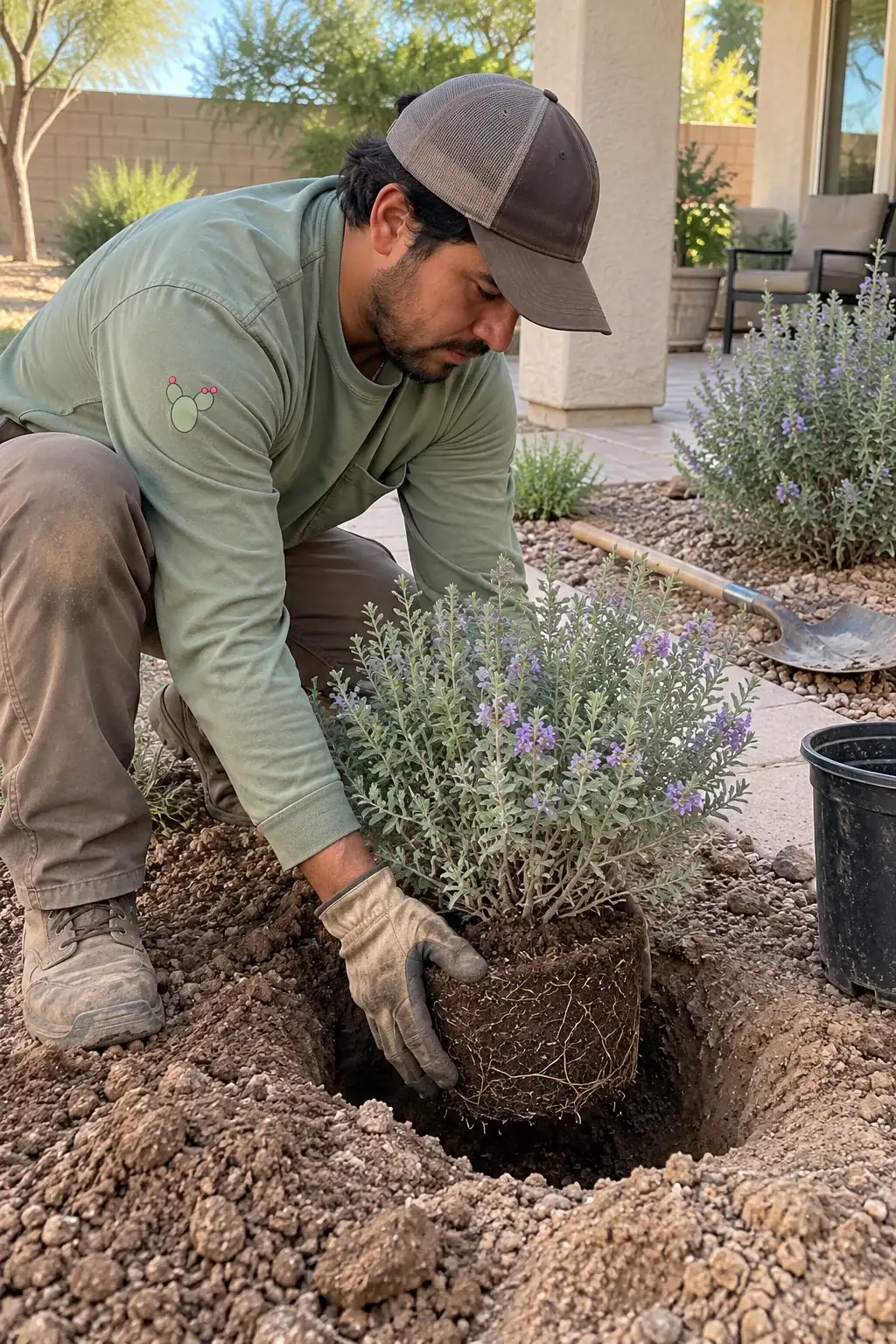
What is different about installing a landscape on a Mesa lot?
The work changes in 3 ways. Caliche, a cemented layer of soil and calcium carbonate, is common in southern Arizona soils and can be as hard as rock (UA Extension, managing caliche (opens in a new tab)), so planting holes may need the layer broken through. The second is the planting zone: Mesa is USDA zone 9b, with an average annual extreme minimum of 25 to 30 F, which sets what survives a cold snap (PlantMaps, 2023 map (opens in a new tab)). The third is water. Mesa publishes water conservation guidance, including a landscape watering guide, through its Environmental and Sustainability Department (City of Mesa, water conservation (opens in a new tab)), so the controller schedule follows Mesa guidance. In a small central area between Mesa Drive and Country Club, and 8th Street and 8th Avenue, the city serves approximately 300 irrigation customers on a weekly schedule (City of Mesa, irrigation service (opens in a new tab)), so those yards are watered differently from the rest of Mesa.
05Planning
What should be ready before work starts?
Have 4 things ready before work starts. First, the plot plan or survey the builder gave you, which shows easements and the sewer lateral. Second, HOA approval if the community requires it, since some Mesa subdivisions review front yard plans and backyard walls. Third, a recent water bill, which shows the meter size and the account, and matters if you plan to apply for the city xeriscape incentive. Fourth, the decisions: turf or gravel, trees or none, a patio now or later. Clear the side gate and move the cars, because the work needs a path for wheelbarrows and a spot to drop pallets. If a dog uses the yard, plan for it to be out of the house during the noisy part.
06Mistakes
What goes wrong on a Mesa installation?
The common failures are predictable. Drainage is graded toward the house instead of away, and the first monsoon puts water against the stem wall. Irrigation is run as 1 zone when the yard needs several, so the trees get watered like the groundcover. Plants go in at nursery spacing and touch before long. Turf is laid over compacted builder fill with no base, and it can ripple within a year. Caliche is ignored, holes are too small, and roots circle in a bucket shaped pocket. Debris stays buried and shows up later as a sinkhole under the gravel. Each of these costs less to prevent at the grading stage than to fix after the plants are in, which is why drainage gets walked before anything else.
07Rules
Do I need a permit for landscape installation in Mesa?
Sometimes. Mesa's residential construction FAQ says retaining walls under 4 feet tall can be built without a permit if they do not hold back dirt or water, and fences under 6 feet tall do not need a construction permit, though fence height, location and material rules still apply (City of Mesa, residential construction FAQ (opens in a new tab)). Planting and gravel are surface work, not structures. A wall that holds soil on a slope is the case most likely to need review, so the wall height and where it sits on the lot are worth settling first, and the city's Planning Division answers height and location questions.
08Timeline
How long does landscape installation take?
The calendar is set by scope, access and inspections. A front yard with gravel, drip and a few plants is usually a shorter job than a backyard. A backyard with a retaining wall, a paver patio and turf takes longer, because each stage has to be inspected or left to set before the next one starts. Rain, a failed inspection, or a material order that arrives late all push the finish. A written schedule with the stage order is more useful than a single finish date, and it shows when something moves. Summer work starts early and stops in the afternoon heat, which is a real constraint on a west facing yard.
09Good to know
What maintenance does a new Mesa yard need?
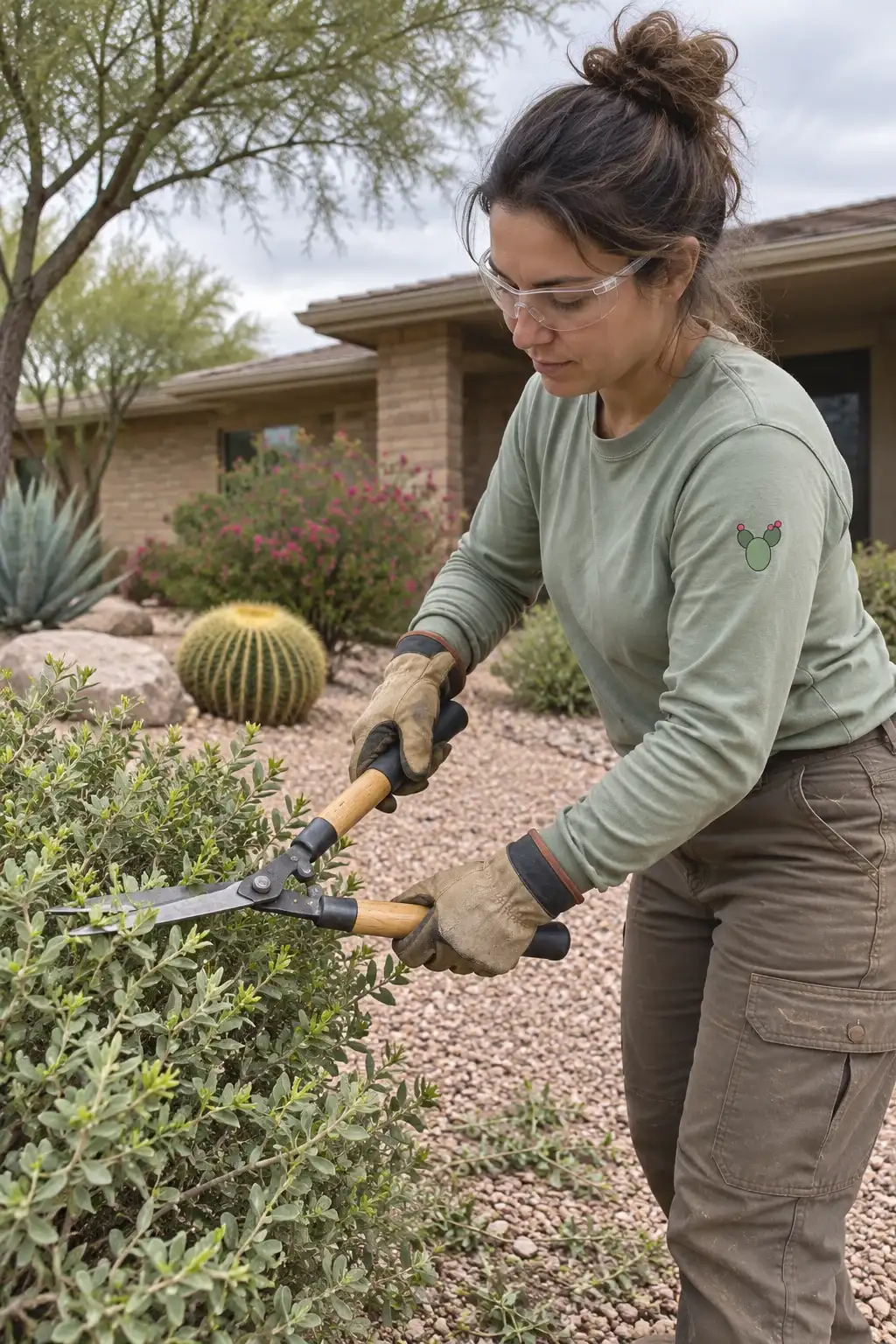
The first 30 days matter most for whether the planting takes. New plants need deep watering at the root ball, not a light daily spray, and the schedule changes between April and October. The drip system needs a check after the first week for clogged emitters and a line that came loose during planting. Gravel gets raked back off the pavers after a storm. Tree stakes need checking and loosening. Turf needs brushing and a rinse to keep dust down. After the first season the work drops to a seasonal pass: prune in late winter, refresh mulch, check the controller against Mesa's current schedule, and look at the wall joints after monsoon. A watering sheet and a zone map on the controller door keep the schedule easy to follow.
10Costs
How do I stage the cost of a Mesa installation?
You can build a yard in stages and still end up with something that works. The order that saves the most is grading and irrigation first, because both sit under everything else. Then hardscape, since a patio is the part that has to be level and drained. Plants come next, and turf or gravel last. Doing the front yard this year and the backyard next year is common, and it lets you use the city xeriscape incentive on the front, since the program allows 1 incentive per property in 3 years (Mesa Water Conservation, 2026 (opens in a new tab)). Write the stage plan down with a price for each stage, so the year 2 work is a known number rather than a guess. Leaving the irrigation to last is the order that costs more, because trenches then cut through finished gravel and through plant roots.
11Costs
What is the cheaper version of a full installation?
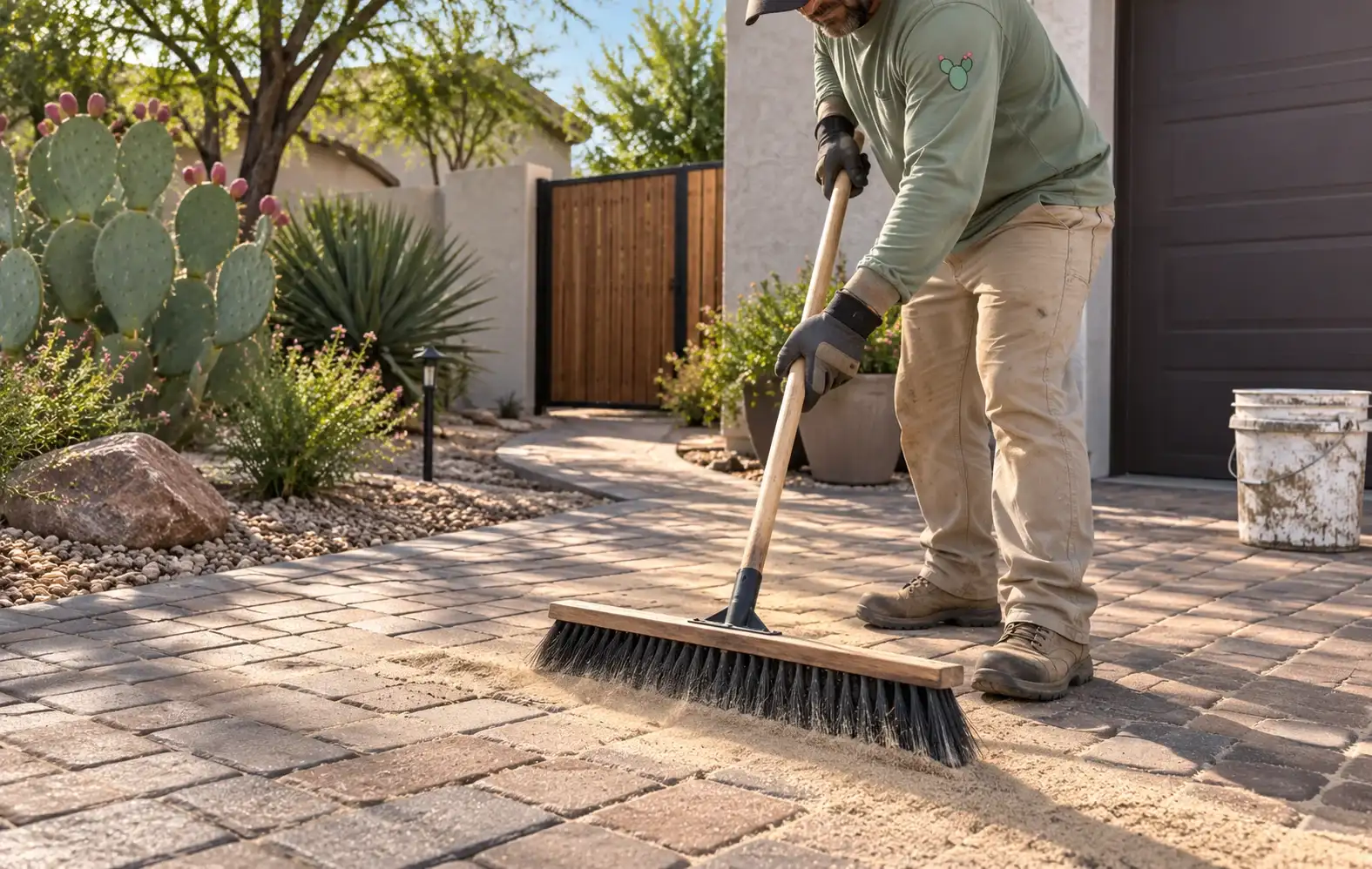
The lower cost version keeps the structure and cuts the finish. Keep the existing concrete and slope the new work to it instead of replacing it. Cut the turf area to a small pad and gravel the rest. Use 5 gallon plants instead of 15 gallon, which is slower to fill in but far less per plant. Choose 1 boulder as a focal point instead of a rock field. Run drip on 2 zones instead of 4. Do the grading and irrigation yourself if you are able, and pay for the planting and the hardscape. On a grass conversion, apply to Mesa's Residential Grass-to-Xeriscape and Tree Bonus before any grass comes out, since the program pays up to $2,100 and requires an application and a pre-inspection first.
12Service area
Which Mesa areas do you cover?
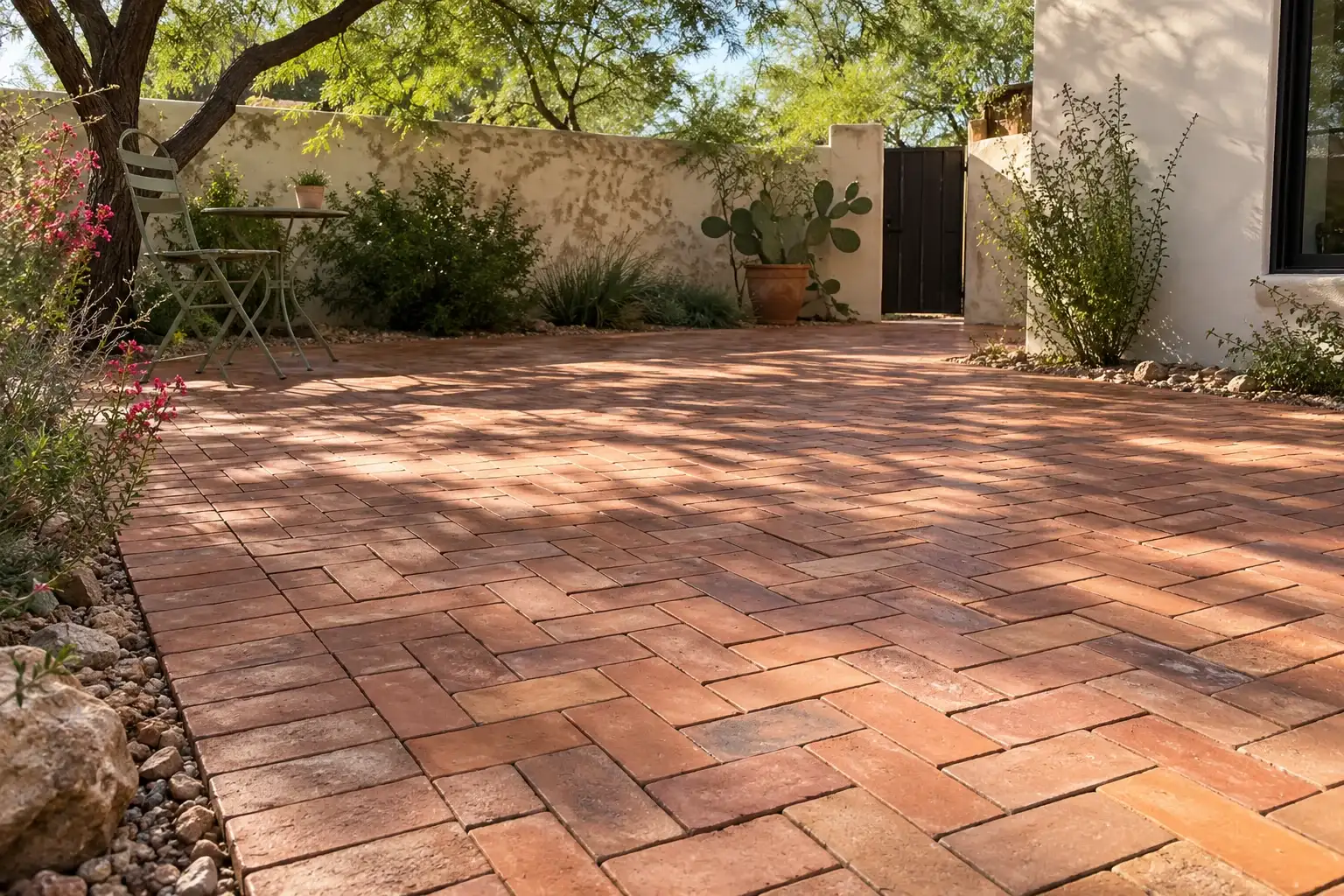
We serve Mesa and the towns around it. In Mesa that includes east Mesa and the golf course communities, Las Sendas and the northeast foothills, Eastmark in the southeast, and established Dobson Ranch in the west. Coverage also includes Apache Junction and Gold Canyon to the east, Gilbert and Chandler to the south and southwest, Queen Creek and San Tan Valley, Scottsdale, Tempe, Fountain Hills and Phoenix. The lot type changes the plan more than the city does: a foothill lot with slope needs retaining and drainage, a builder bare lot in Eastmark needs everything from grading up, and an older Dobson Ranch yard may need the irrigation replaced before new planting goes in. If your community is not on that list, send the ZIP code and someone from our team will call you back about coverage.
13Planting
What goes into a Mesa planting plan?
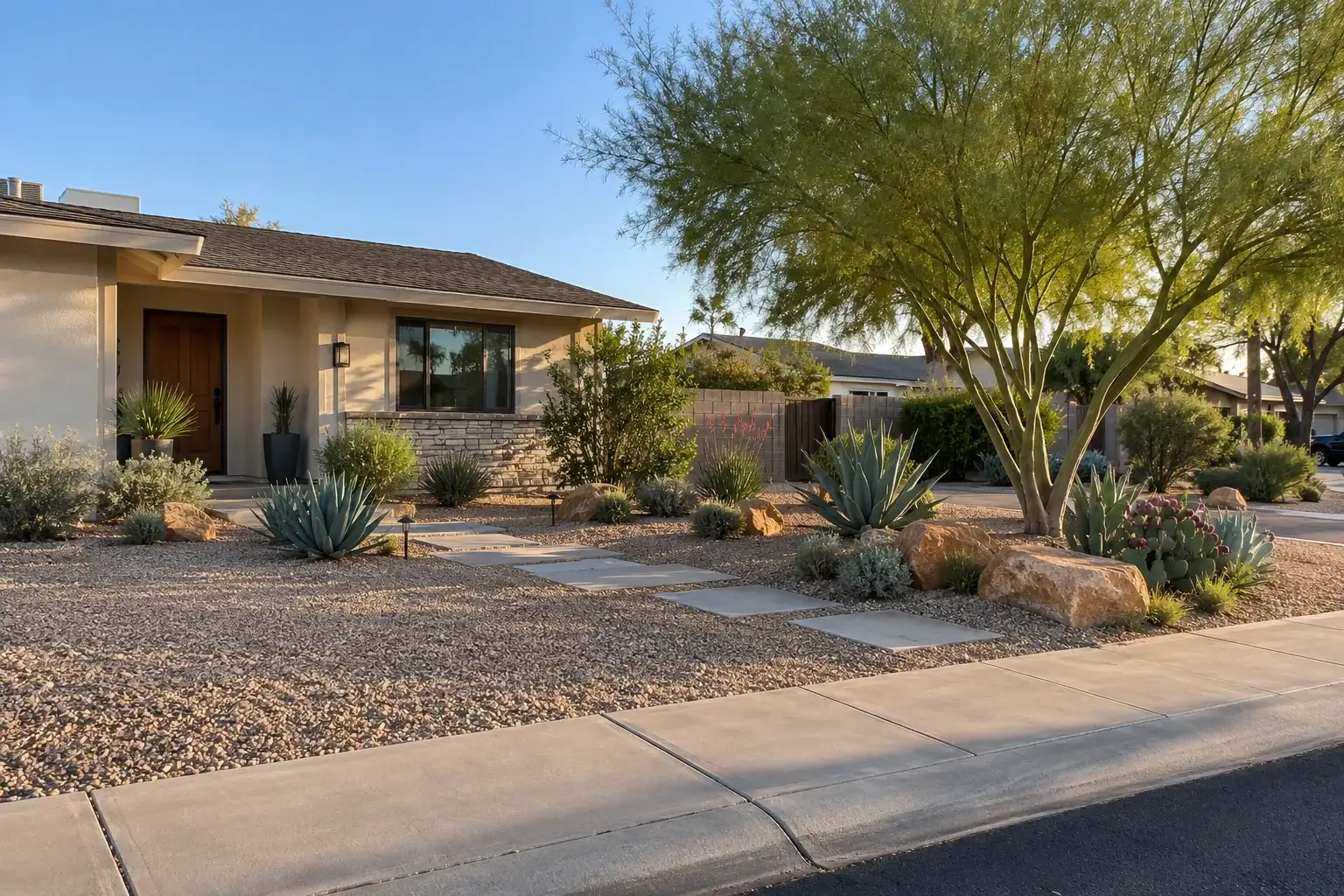
A planting plan starts with the zone and the exposure. Mesa is zone 9b, so the list runs to desert and Mediterranean plants: palo verde, mesquite, desert willow, Texas sage, lantana, rosemary, oleander, agave, aloe and feathery cassia. Plants are grouped by water use, so the trees sit on 1 drip zone and the desert shrubs on another, and nothing gets watered for the thirstiest plant in the bed. Spacing is set at mature width, which means the bed looks thin for the first year. South and west walls get the heat tolerant plants, north walls get the shade tolerant ones. The plan also leaves room for a tree canopy over the patio, since afternoon shade can make a Mesa yard more usable in July.
145 questions
Questions people ask
Still have a question? Call (747) 243-2089 and describe the yard.
01How much does it cost to install a landscape in Mesa?
Published national ranges put a new landscape installation at $3,000 to $16,000, and a front yard at $1,500 to $5,000. A full backyard with hardscape and turf is quoted at $15,000 to $50,000. Your lot, the caliche depth and the amount of hardscape move the number more than the square footage alone.
02Do I have to remove my grass first?
Only if the grass is where new planting or hardscape will go. Grass can stay in a smaller area if you want to keep a lawn, or it can be removed and the irrigation converted to drip. If you plan to claim the city xeriscape incentive, the application and pre-inspection must happen before any grass comes out.
03Can I keep my existing trees and plants?
Usually yes, if they are healthy and in the right place. Mesquite, palo verde and mature citrus are worth building around. Plants in the way of a new patio or a drainage path get moved or removed. What stays gets flagged on the plan before demolition starts, so nothing gets cut by mistake.
04What is caliche and does it change the price?
Caliche is a cemented layer of soil and calcium carbonate that is common in southern Arizona soils. It can stop a shovel and may need to be broken through for planting holes and trenches. It is one of the reasons 2 yards of the same size can price differently, and it gets checked during the walk before a price is set.
05How soon can plants go in after grading?
Planting can follow grading and irrigation once the drip lines are laid and tested. What matters is that the irrigation is running before the plants go in, so the first watering is not delayed.