Service 05 of 05 · Mesa, AZ
Desert Landscaping in Mesa, AZ
Desert landscaping in Mesa swaps lawn for gravel, drip line and plants that take zone 9b heat on little water. The order matters: plan the water first, then the plants, then the ground cover.
Last updated
01Planting
What does desert landscaping in Mesa include?
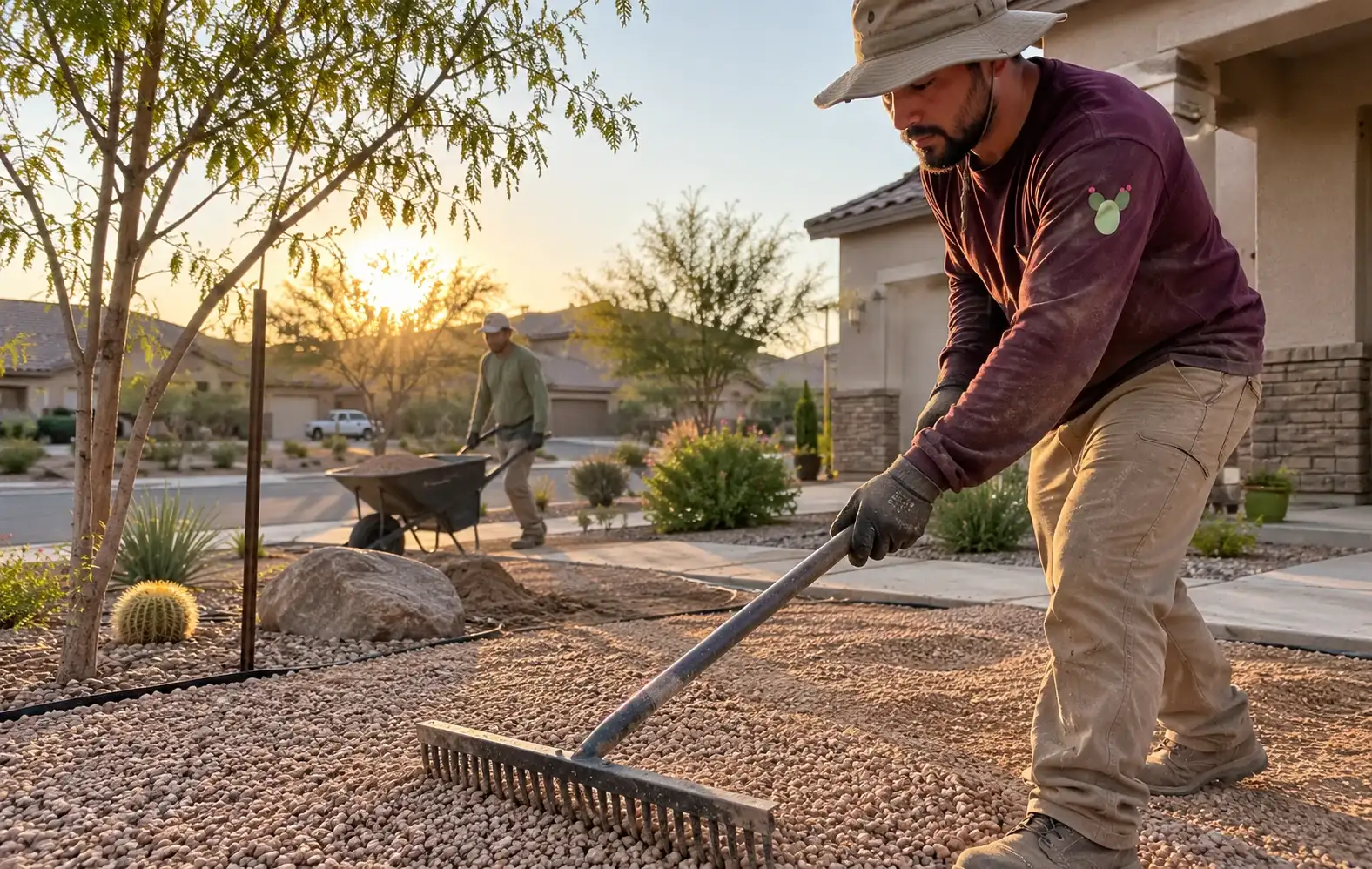
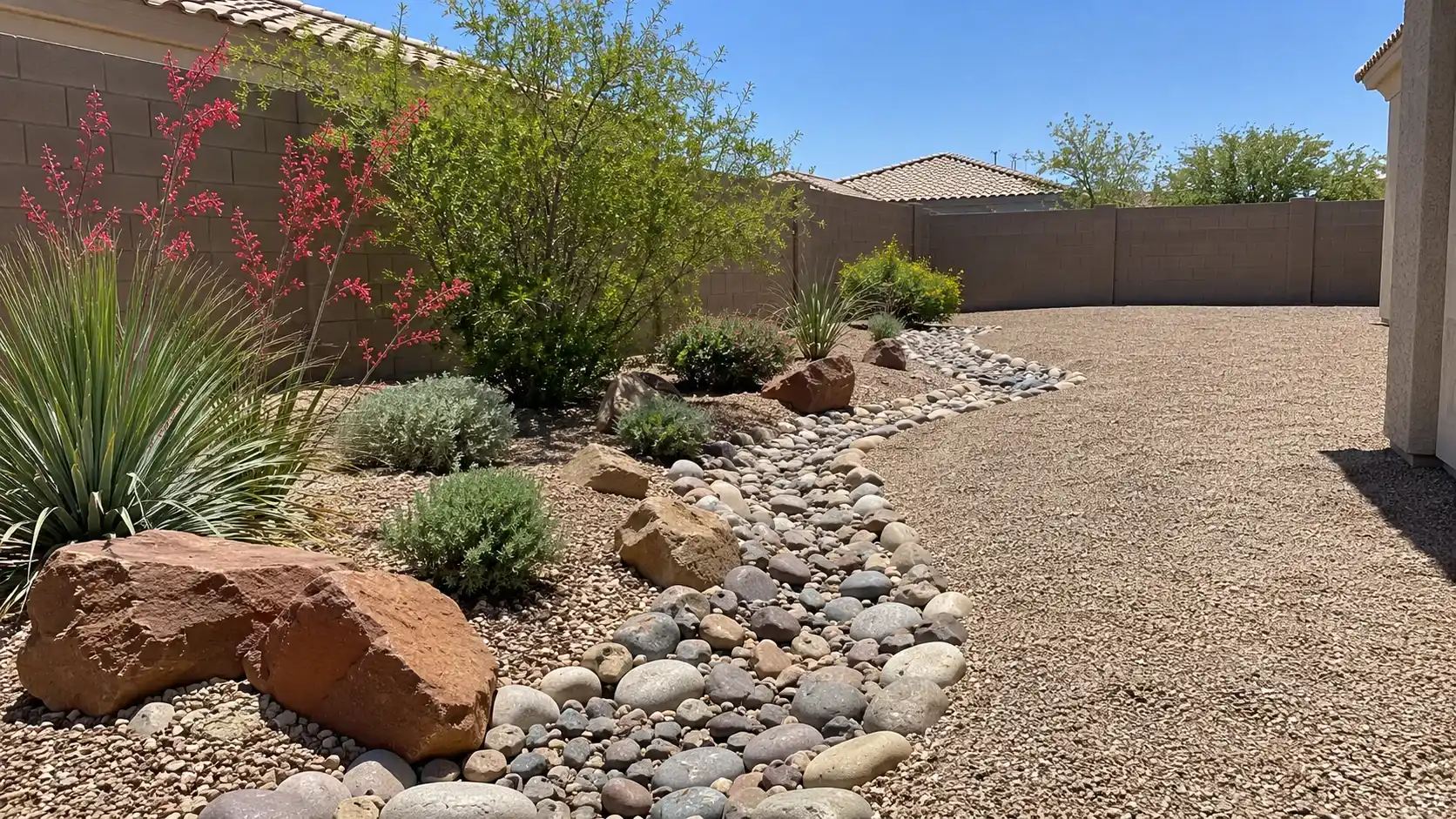
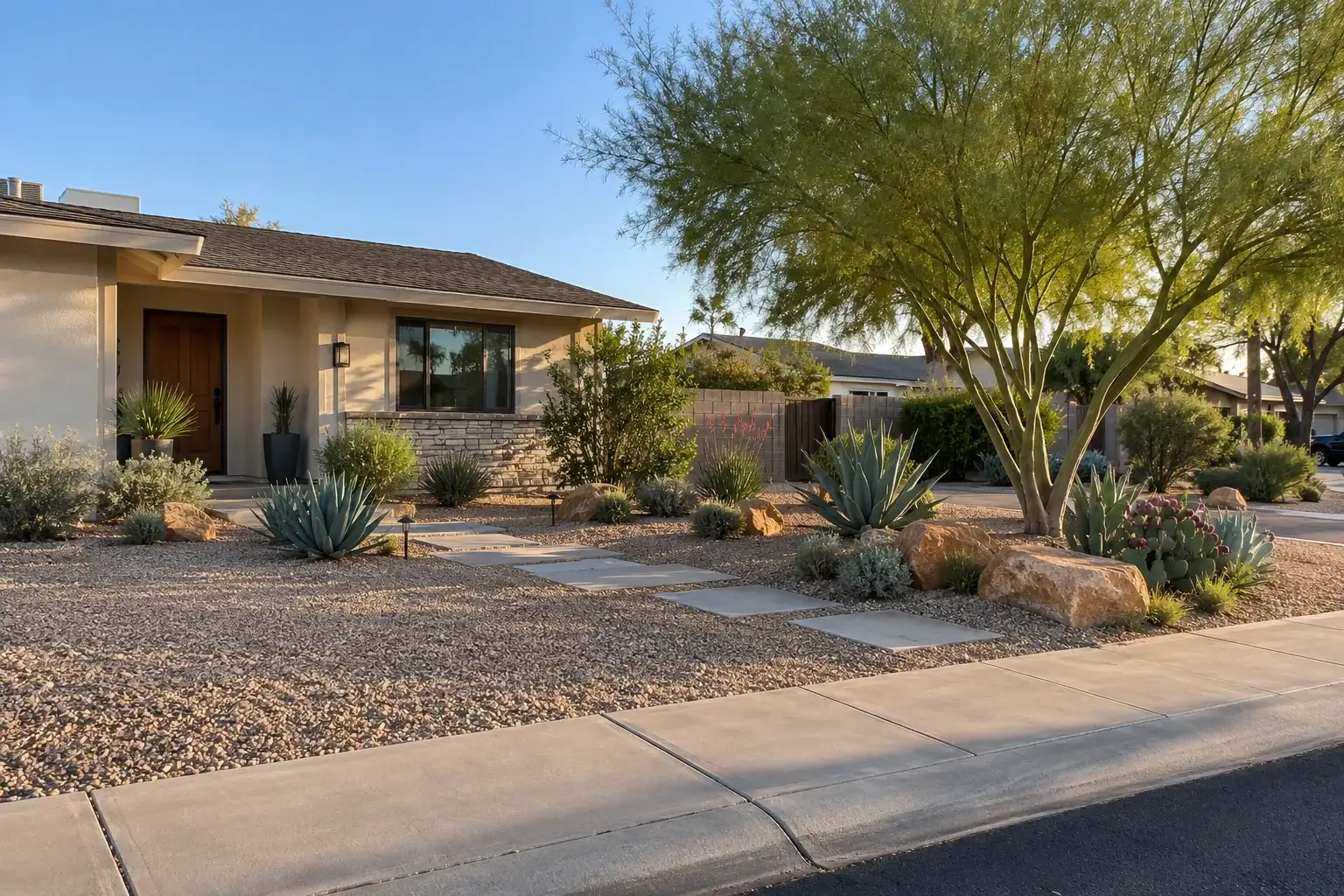
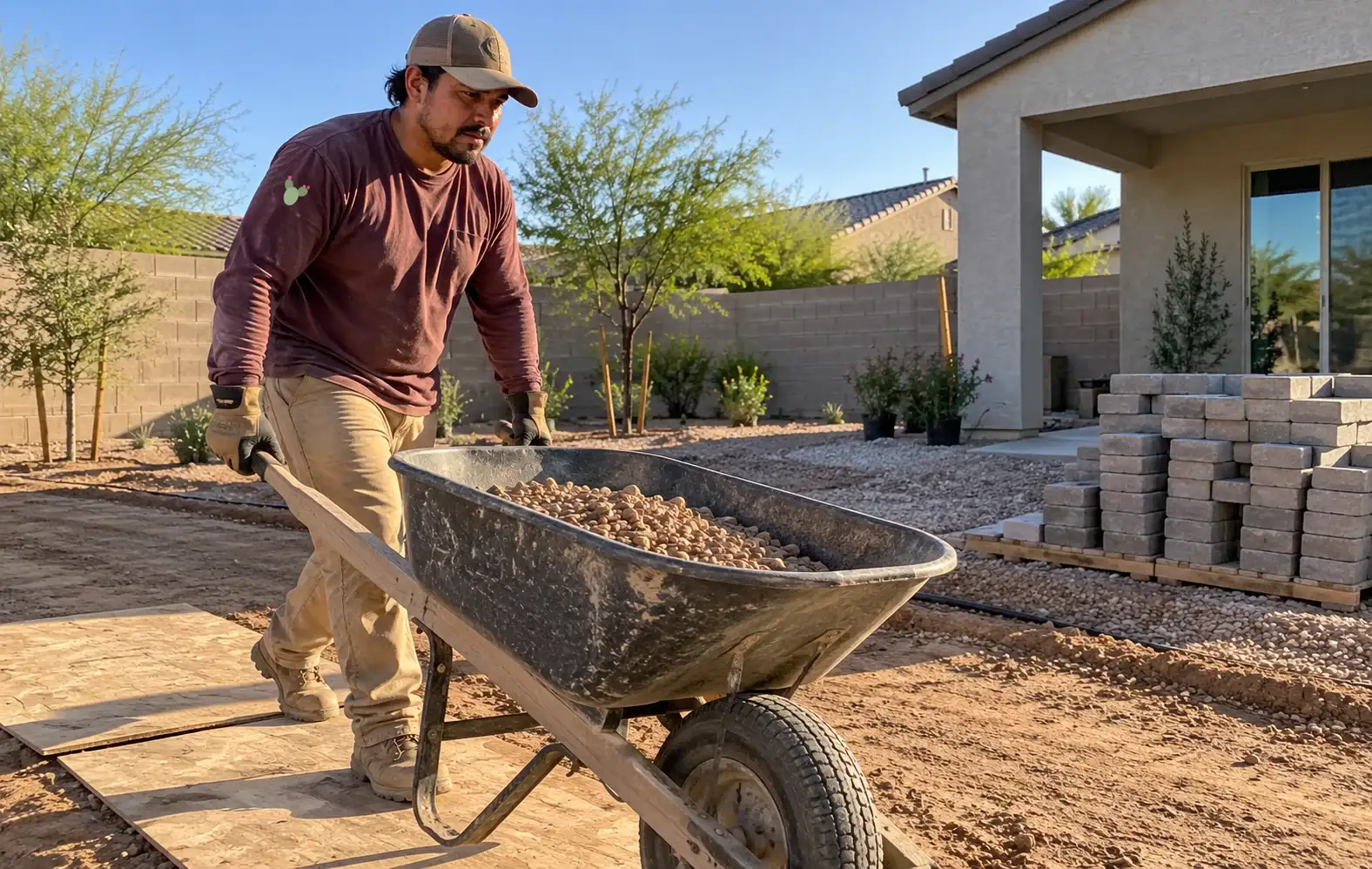
A conversion takes out the grass, reshapes the ground, runs drip line to the new beds, sets the plants and covers the open ground with gravel. Removal comes first. The sod is cut, the roots are stripped and the debris is hauled off, because turf that gets buried can come back through the mulch. Grading comes next, so water sheds away from the slab instead of pooling against it. Then the drip line goes in, with a filter and a pressure regulator at the valve and emitters sized to each plant. Planting follows the hydrozones, with the thirstiest plants grouped nearest the valve. Gravel finishes the job. Gravel is often 3/4 inch rock for open areas and a finer crushed granite around small plants, kept off the foundation edge. A border and boulders are optional.
02Costs
What does desert landscaping cost in Mesa?
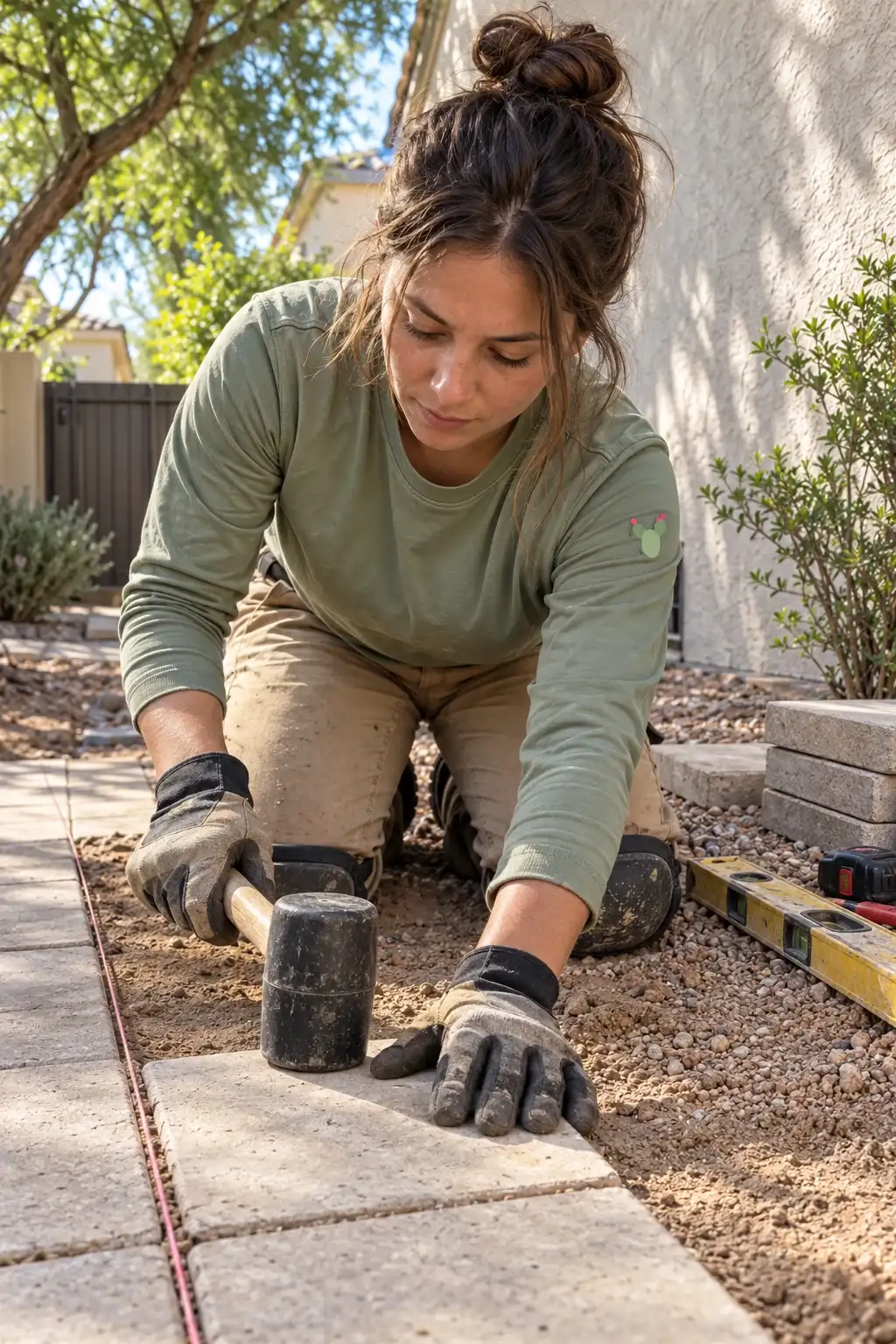
Published national data puts landscaping at an average of $3,516, with most projects between $1,248 and $6,068, at $4.50 to $12 per square foot, according to a national cost guide, 2026, based on 32,752 projects. Front yard landscaping typically lands between $1,500 and $5,000. A full backyard renovation runs $15,000 to $50,000. A 2 person crew bills $50 to $100 per hour, according to another national cost guide, 2026. On a Mesa lot the price turns on 3 things: how much grass comes out, how much rock has to be broken before planting, and whether the drip line can tap the existing valves or needs new pipe. A yard with caliche near the surface takes more excavation than a yard with deep fill. These are published national ranges, not a quote. The final price comes after someone sees the yard.
03Turf
How does the Mesa grass to xeriscape incentive work?
Mesa's Residential Grass-to-Xeriscape and Tree Bonus incentive pays up to $2,100 toward replacing lawn with low-water-use xeriscape (City of Mesa (opens in a new tab)). The owner has to be a single-family Mesa water customer. The application and a pre-inspection happen before any grass comes out, and that order is the whole program. City staff measure the conversion area from Maricopa County Assessor maps or in person, and the lawn is judged before it comes out. Removal starts only after the approval email. The yard must show healthy grass at 70 percent coverage or better, with bare soil and weeds under 30 percent of the area. Funding is limited and handed out first come first served, so an early application stands a better chance than a late 1. The limit is 1 incentive per property in 3 years.
04Good to know
What disqualifies a yard from the Mesa incentive?
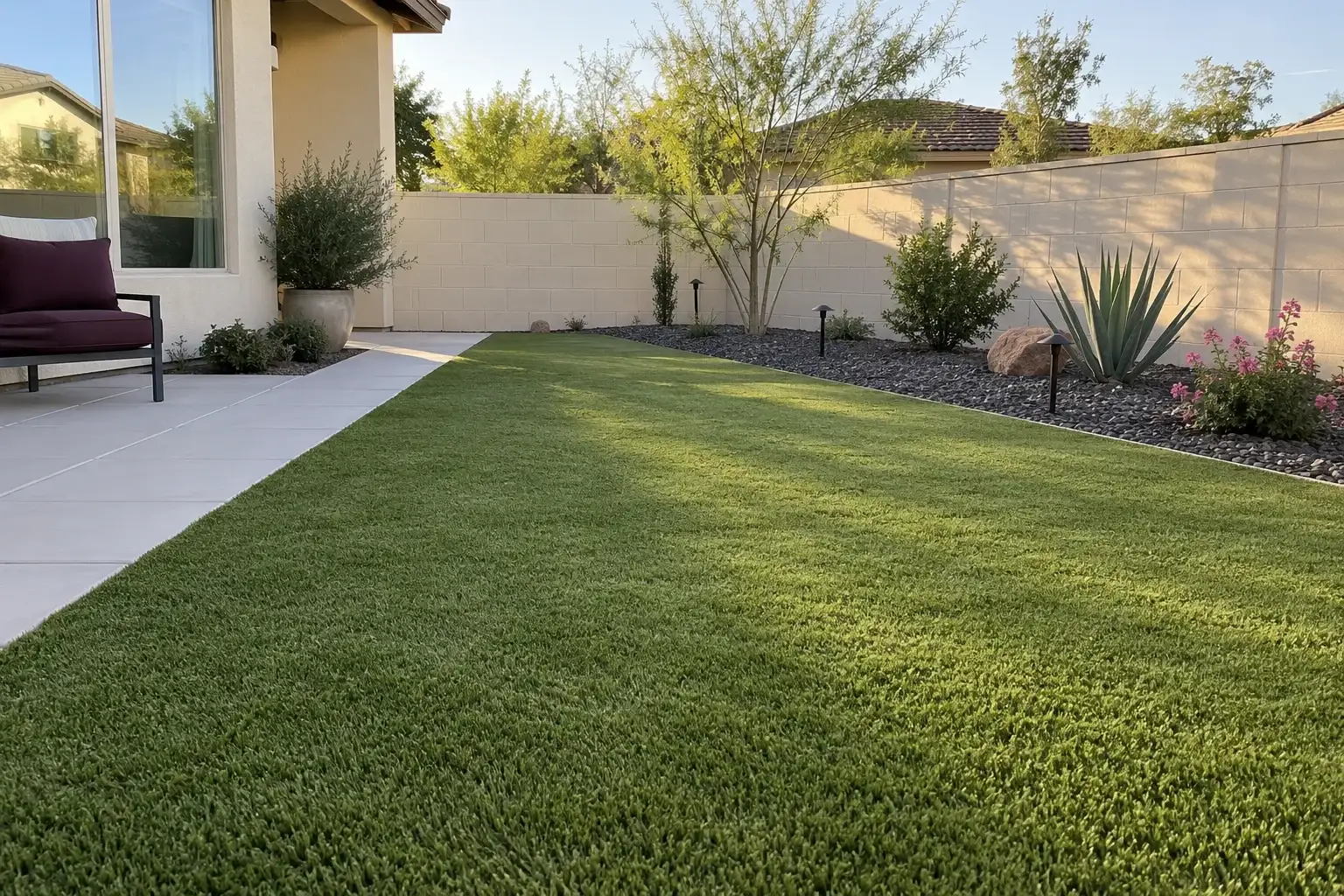
Starting work before approval is a common way to lose eligibility, and it is avoidable. If the grass comes out before the application is filed and the pre-inspection is done, the project does not qualify. Mesa judges the lawn before removal, not after. Work started before the approval email arrives does not count. A yard also fails when the grass is thin: coverage under 70 percent, or bare soil and weeds over 30 percent of the area, misses the condition rule. Grass watered by wells or flood irrigation water is not eligible, at least 500 square feet of grass has to come out, a home built within the past year is ineligible, and the new plants have to cover at least 50 percent of the area at maturity, because grass cannot be replaced with just rock or artificial turf. A property that took the incentive within the last 3 years cannot take it again, because the program allows 1 per property in 3 years. And since funding is limited and first come first served, a complete application filed early beats a complete application filed late. Read the current program page before anything is scheduled.
05Planning
How does a conversion run from start to finish?
It starts with a walk of the yard and a measured plan: which grass goes, which stays, where the beds sit and where the drip line runs. If the owner is using the city incentive, the application and the pre-inspection come next, before a shovel touches the lawn. On a front yard, removal, grading and the drip rough in come first, then planting and gravel, and plant size and how far the rock has to move change the schedule. A full backyard takes longer. The last day is cleanup and a walk-through: the controller is set, the shutoff is shown and the plant list is left with the watering schedule written on it.
06Water
How does drip irrigation replace spray heads?
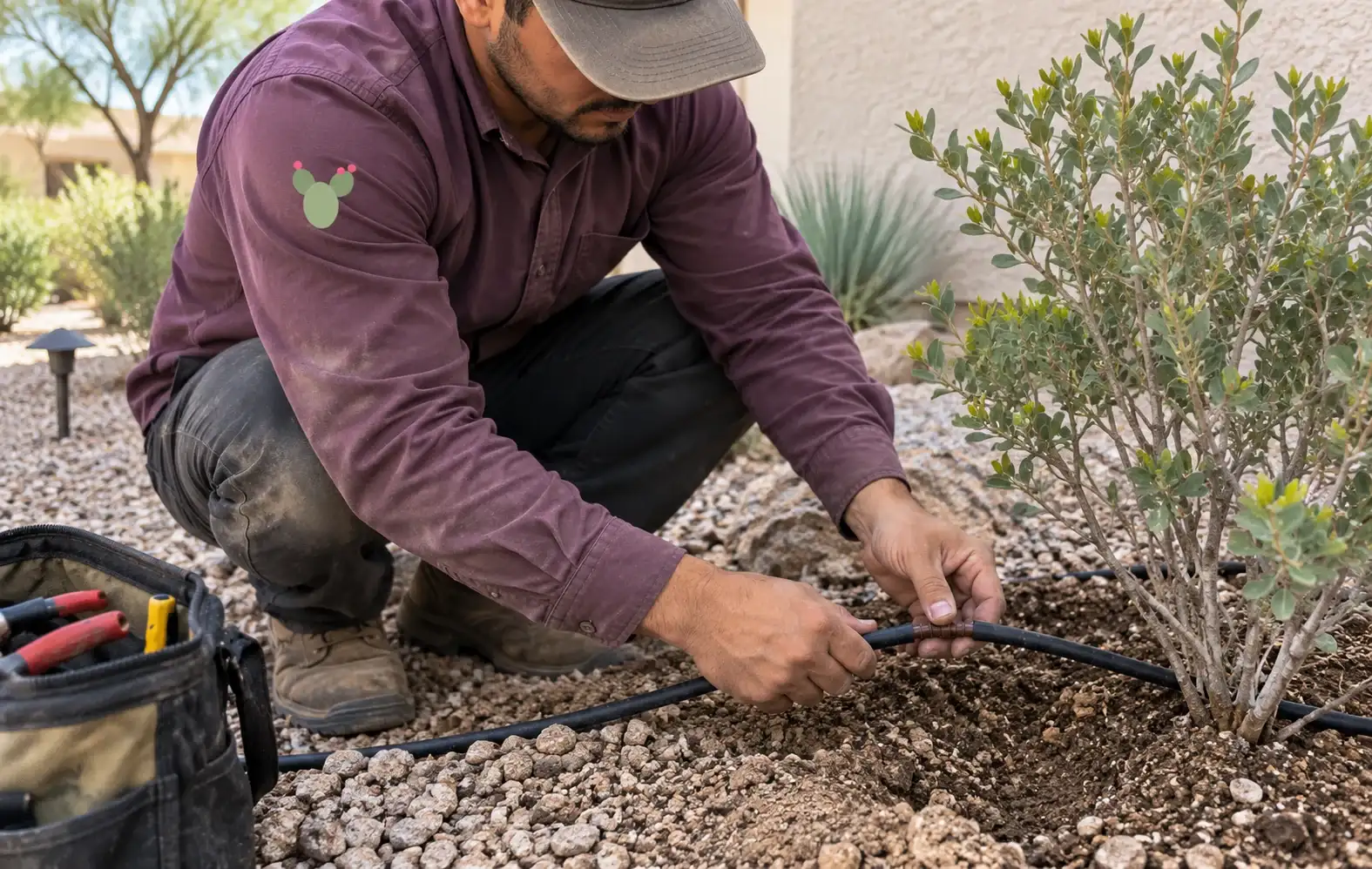
The spray heads on the zone are capped or pulled, the valve is kept and the outlet is rebuilt as drip. A filter and a pressure regulator go on first, because emitters clog and blow apart without them. Then 1/2 inch tubing runs along the beds with 1/4 inch line to each plant, or inline emitter tubing where the spacing is even. Each plant gets an emitter sized to its root ball, so a palo verde does not get the same flow as a brittlebush. The zone gets split by hydrozone, which means desert plants on 1 valve and any remaining lawn or shade plants on another. That split is what makes the water saving real, because a single schedule cannot serve both. The old heads come out and the openings get capped.
07Planting
Which plants work in a Mesa yard at zone 9b?
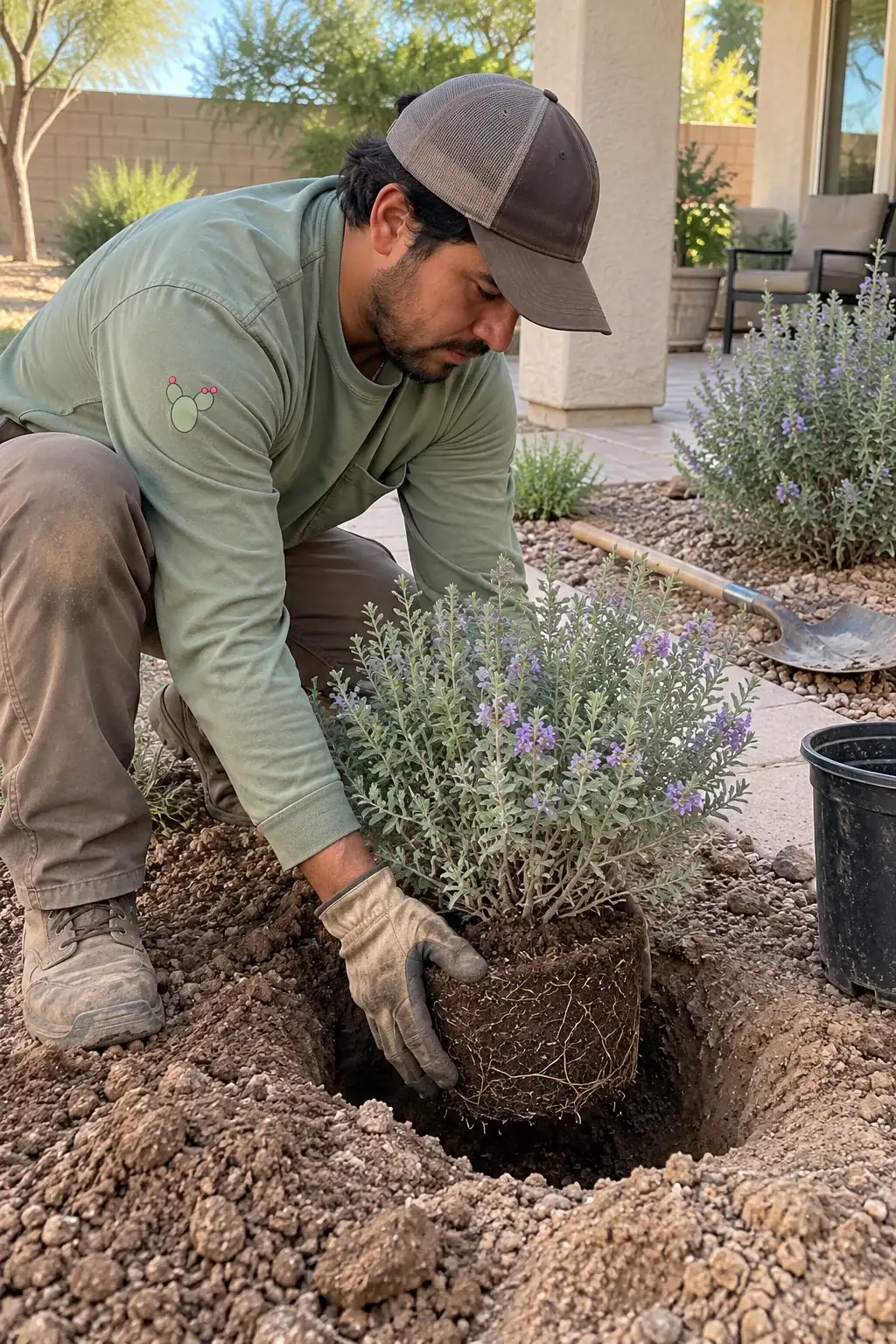
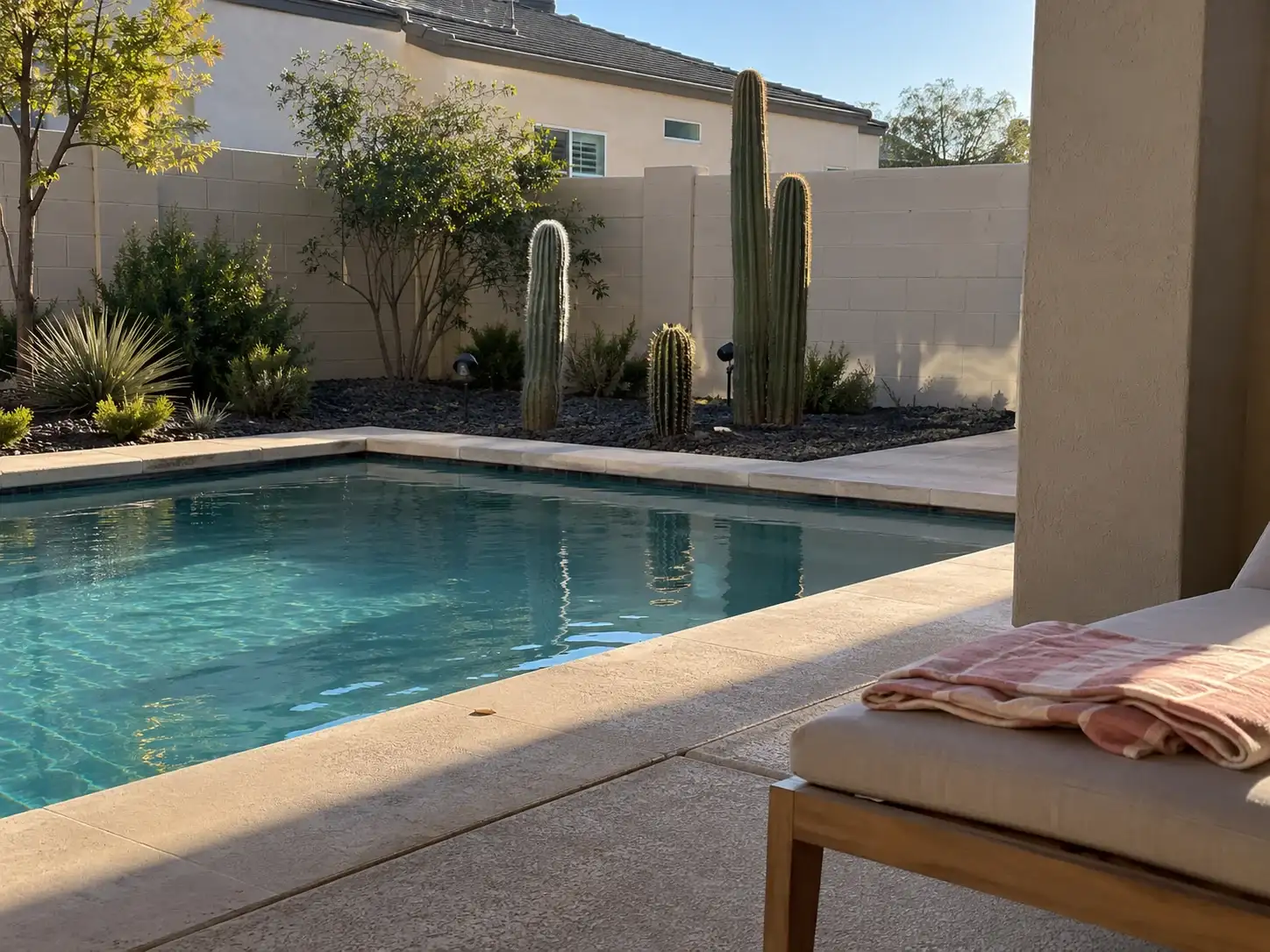
Mesa sits in USDA zone 9b, with an average annual extreme minimum of 25 to 30 F on the 2023 map (PlantMaps (opens in a new tab)). Plants here have to take desert summer heat and still come through a handful of frost nights. Trees that work include palo verde, mesquite, ironwood and desert willow. Shrubs and groundcovers include brittlebush, creosote, desert marigold, penstemon, lantana and rosemary. For structure, agave, ocotillo, yucca and aloe carry the bed through the year. Group them by water need rather than by color, put the tall ones where they shade a wall, and leave room for the mature width. A shrub set close to a window can become a pruning problem within a few years. Gravel mulch at the base holds moisture and slows weeds.
08Planning
What should be ready before work starts?
Have the water bill handy if you plan to use the city incentive, since the program is limited to Mesa water customers. Send the plot plan if you have 1, plus any survey that shows the sewer and gas lines. If the yard sits in an HOA, bring the design rules and the approval letter. Mesa runs a separate water program for HOAs, where the board president listed with the Arizona Corporation Commission has to be the signer (City of Mesa (opens in a new tab)). Clear the side gate, move the cars and take down anything you want to keep before the skid steer arrives. Note where the dogs go. If a retaining wall or a patio cover is part of the plan, settle the permit question first, because Mesa's residential construction FAQ sets height and location rules for both (City of Mesa (opens in a new tab)).
09Mistakes
What goes wrong in a desert conversion?
Grass can come back. Bermuda spreads by runners, and a strip of root left in the ground can push through gravel. Removal has to go below the crown, and the first months are worth a walk for stragglers. Caliche is the second problem: when the layer sits near the surface, water pools in the planting hole and the plant drowns in slow motion. The planting hole gets broken wider than the root ball and checked for drainage before planting. Gravel choice matters too. Round rock rolls onto the sidewalk and into the pool, and dark rock holds heat at the root crown. Small plants set too close can look full at first and crowded a few years later. A drip zone without a filter plugs at the emitters, which shows as 1 dry plant in a wet bed.
10Planting
What maintenance does a xeriscape yard need?
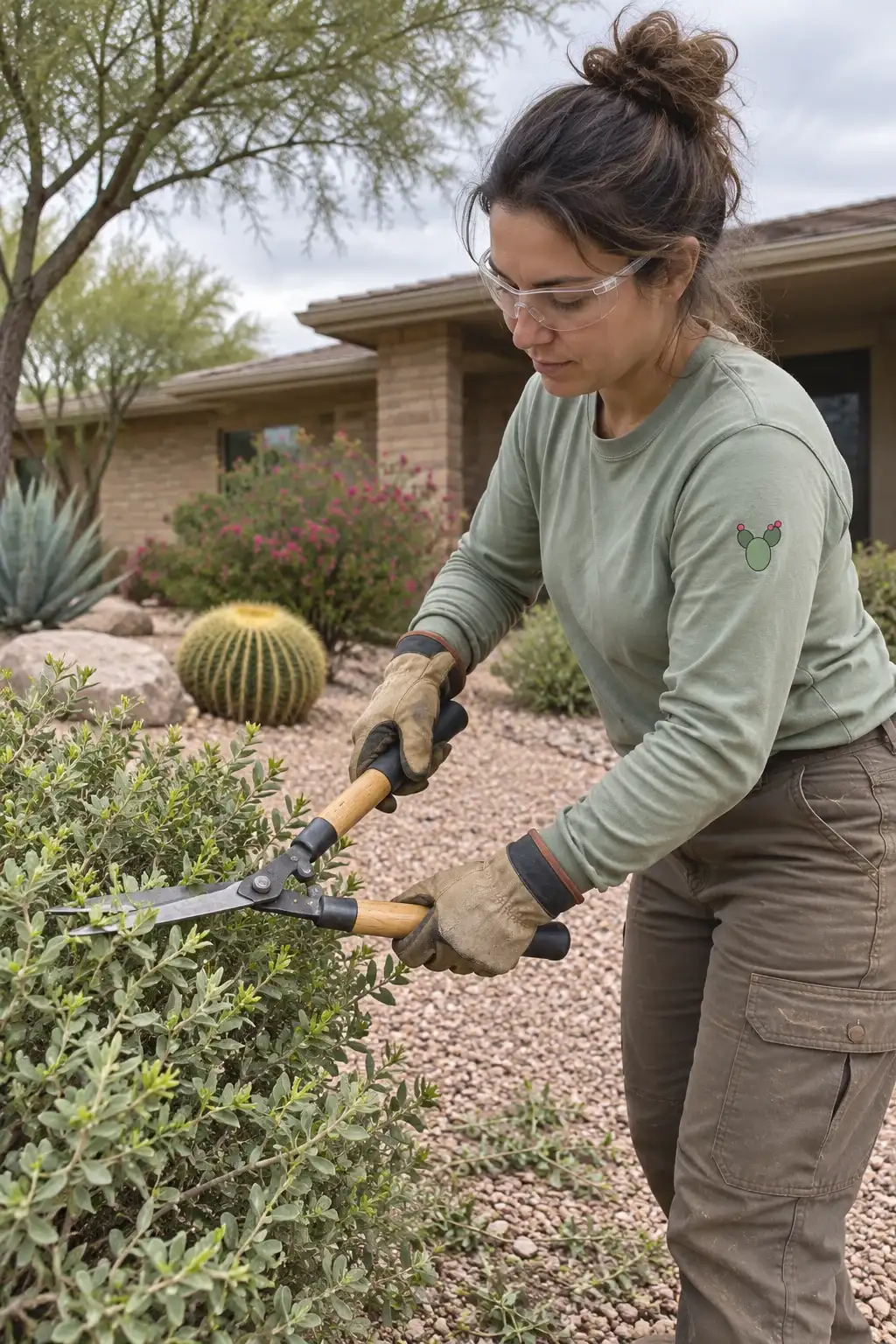
Less than a lawn, but not none. New plants need deep watering through the first summer while roots spread. After that the schedule drops to a fraction of what turf took. Run each drip zone by hand every month and look for a plant that is wilting while its neighbors are fine, because that is a plugged emitter. Flush the filter at the same time. Cut perennials back after the frost threat passes, and prune trees in winter rather than in summer heat. Pull weeds before they seed, since gravel slows them and does not stop them. Top up the gravel where it has thinned against the border. A few plants may need replacing in the first year, which can happen on a conversion.
11Costs
Can the cost be staged?
Yes. The usual split is front yard first, then the backyard, because the front is what the street sees and it is often the smaller area. Within 1 yard, do the removal and the drip line together, since reopening the ground costs more than doing it in 1 visit. Plants can be staged by size: smaller specimens in the first pass, the accent tree or the boulders later. Keep the controller and the valve work in the first phase no matter what, because new plants cannot be watered without them. A staged job needs 1 plan from the start, so the second phase matches the first. Changing the plant palette halfway through is what makes a staged yard look staged. Call (747) 243-2089 to talk through the phases.
12Costs
What is the cheaper version of a full conversion?
Keep some grass. A partial conversion that takes the parkway strip, the side yard and the far corners can cut the water bill without touching the area the kids use. Choose smaller plants and fewer of them, and let them grow into the space instead of buying mature specimens. Reuse the existing valve manifold and mainline if they hold pressure, and convert only the zones that water shrubs. Skip the boulders and the steel border in the first pass. Gravel can cost less per square foot than pavers or turf, so more gravel and less hardscape lowers the total. Removal and gravel as separate lines on a quote show which 1 carries the cost. If the yard only needs a refresh, a head repair and a new schedule may be the whole job.
13Service area
Which Mesa areas do you cover?
We serve Mesa and the towns around it, including east Mesa, west Mesa, Dobson Ranch, Las Sendas and Eastmark. Outside Mesa, coverage includes Apache Junction, Gilbert, Queen Creek, Tempe, Chandler, Scottsdale, San Tan Valley, Gold Canyon, Fountain Hills and Phoenix. The housing stock changes the work. Established west Mesa yards can have mature trees, older irrigation and grass that has been in for decades, which can make removal slower. Newer east Mesa builds can have bare backyards and a builder controller, so the conversion starts from nothing. Foothill lots near the Superstitions bring slope and rock into the plan. Send the ZIP code and someone from our team will call you back about coverage.
145 questions
Questions people ask
Still have a question? Call (747) 243-2089 and describe the yard.
01How much does it cost to remove grass in Mesa?
Published national data puts landscaping at an average of $3,516, with most projects between $1,248 and $6,068. Removal, grading, drip line, plants and gravel all sit inside that range. A front yard usually lands between $1,500 and $5,000. The final price comes after someone sees the yard.
02Does Mesa pay for grass removal?
Yes, through the Residential Grass-to-Xeriscape and Tree Bonus incentive, which pays up to $2,100. The application and the pre-inspection have to happen before any grass comes out. The lawn needs healthy grass at 70 percent coverage, and funding is limited, so apply early.
03Can I keep part of my lawn?
Yes. A partial conversion is common, and it keeps the area that gets real use. Check the current program rules first, because the incentive is tied to the area that comes out and to the condition of the grass in it. The remaining lawn then needs its own zone and schedule.
04Do I need HOA approval for a conversion?
Sometimes. Some Mesa communities require design review before any change to the front yard, and the rules cover plant lists, gravel color and wall height. Get the approval in writing before work starts. The city also runs a separate water program for HOAs with its own signer rule.
05How long until a xeriscape yard fills in?
Shrubs can take a couple of growing seasons to look established, and trees take longer. The first summer is the risky one, because roots are still spreading into the surrounding soil. Deep, less frequent watering gets them through it. Plant at the mature width and the bed fills without crowding.
15Keep reading