Service 02 of 05 · Mesa, AZ
Artificial Turf Installation in Mesa, AZ
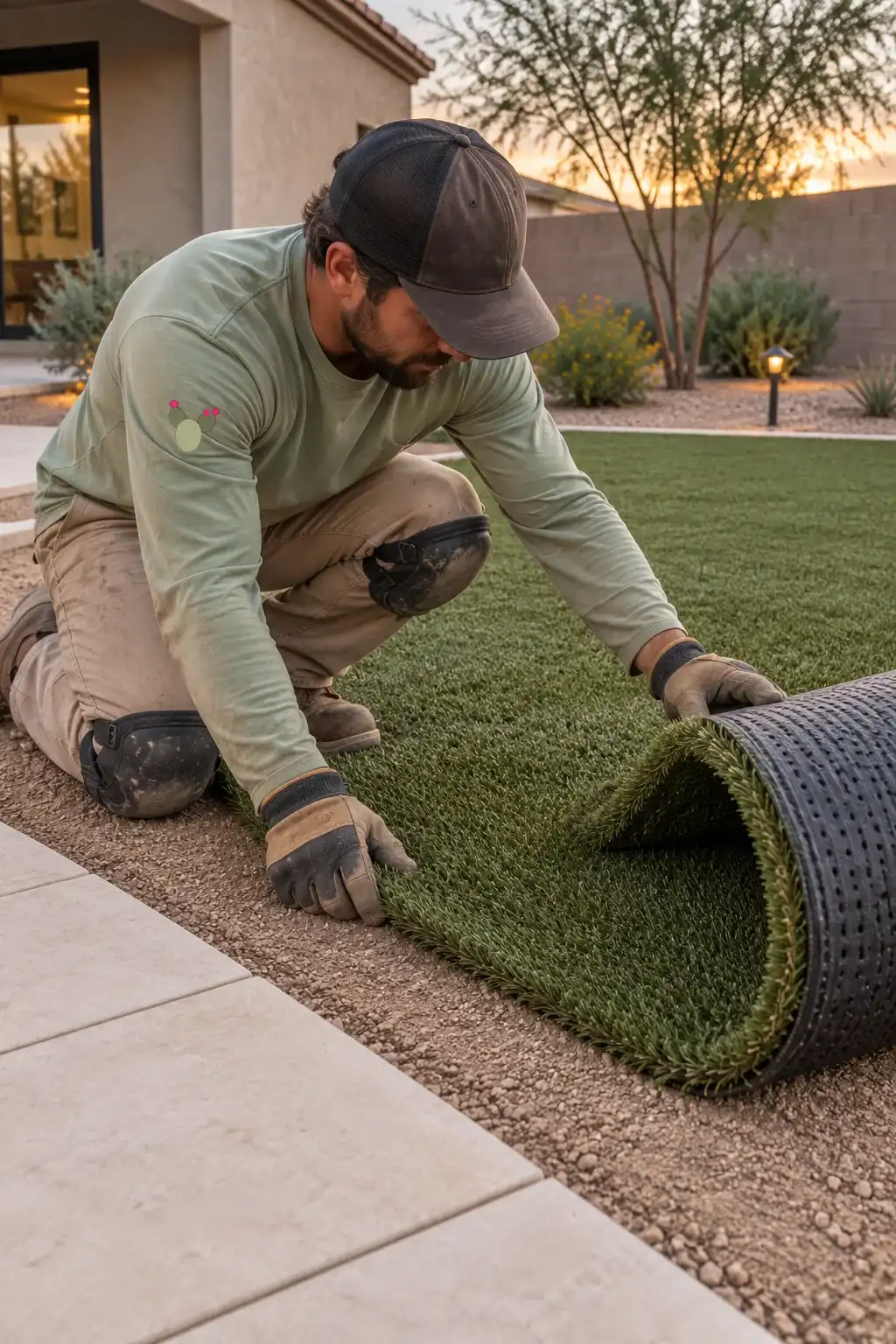
Artificial turf installation in Mesa puts a synthetic lawn over a built base, so the base is the part that decides how it looks years later. The old surface is cut out, the caliche is broken, a drained aggregate base is built, and the turf is fitted and seamed on top.
Last updated
01Surface studio · 5 lawn looks
What does artificial turf installation include?
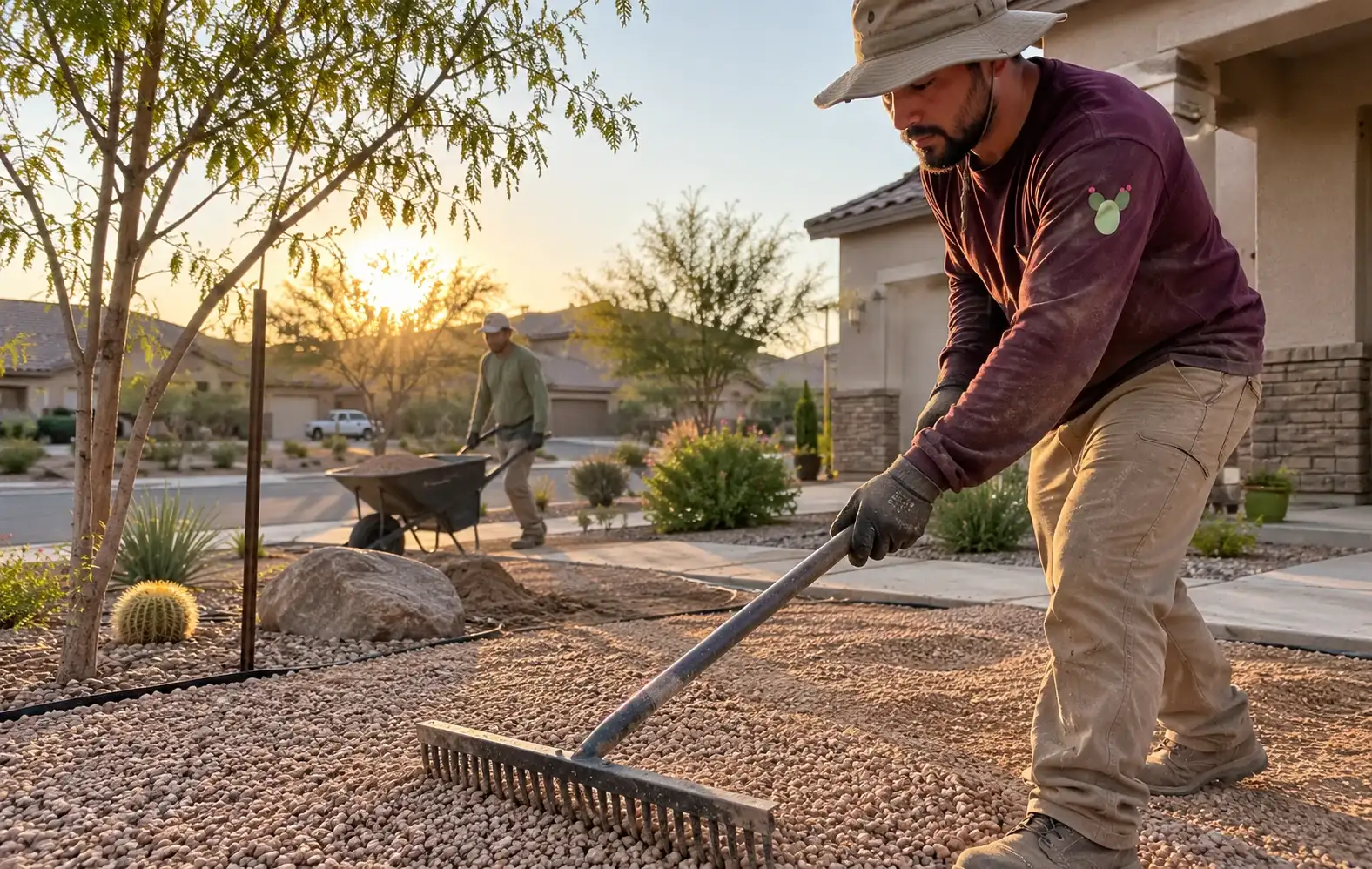
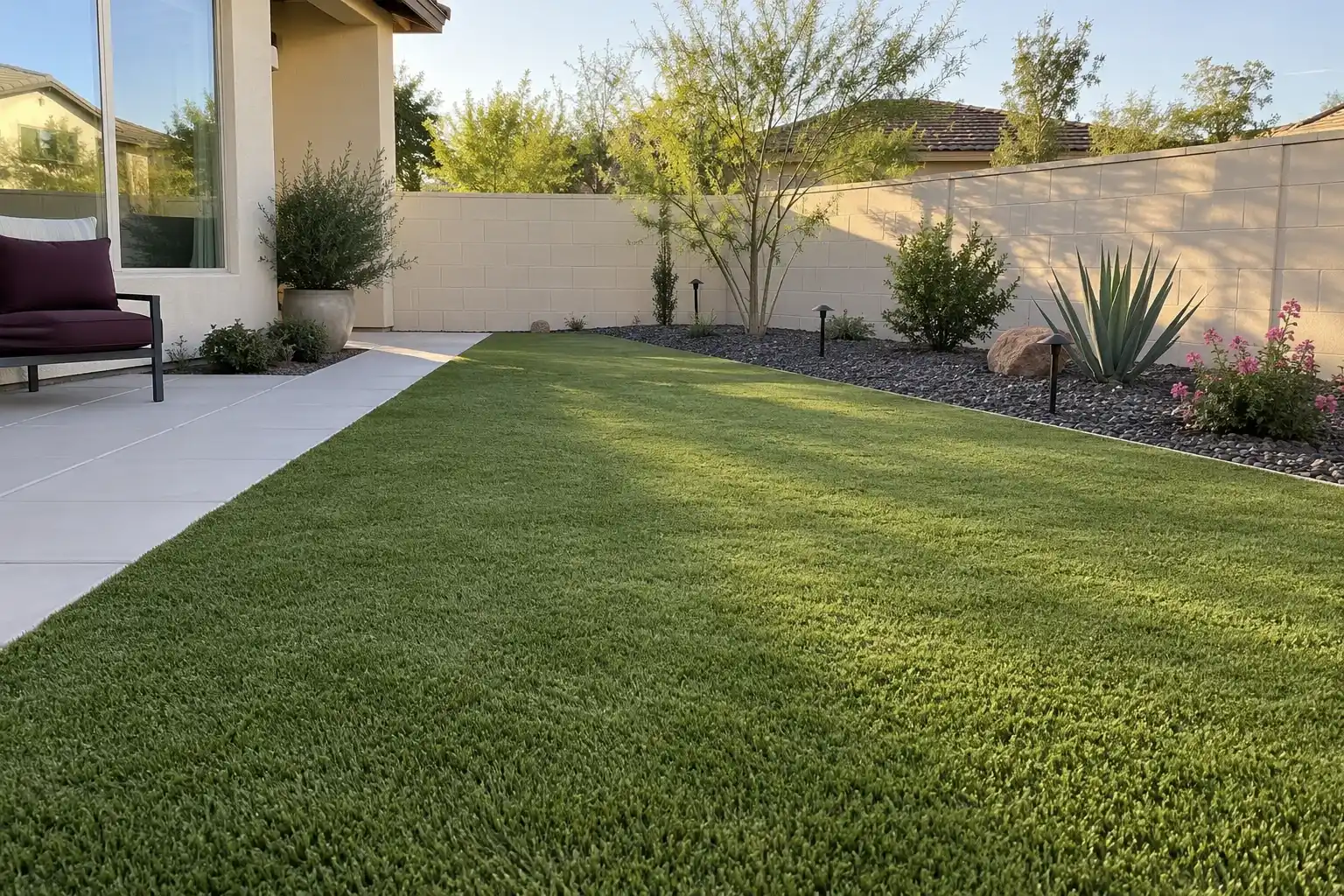
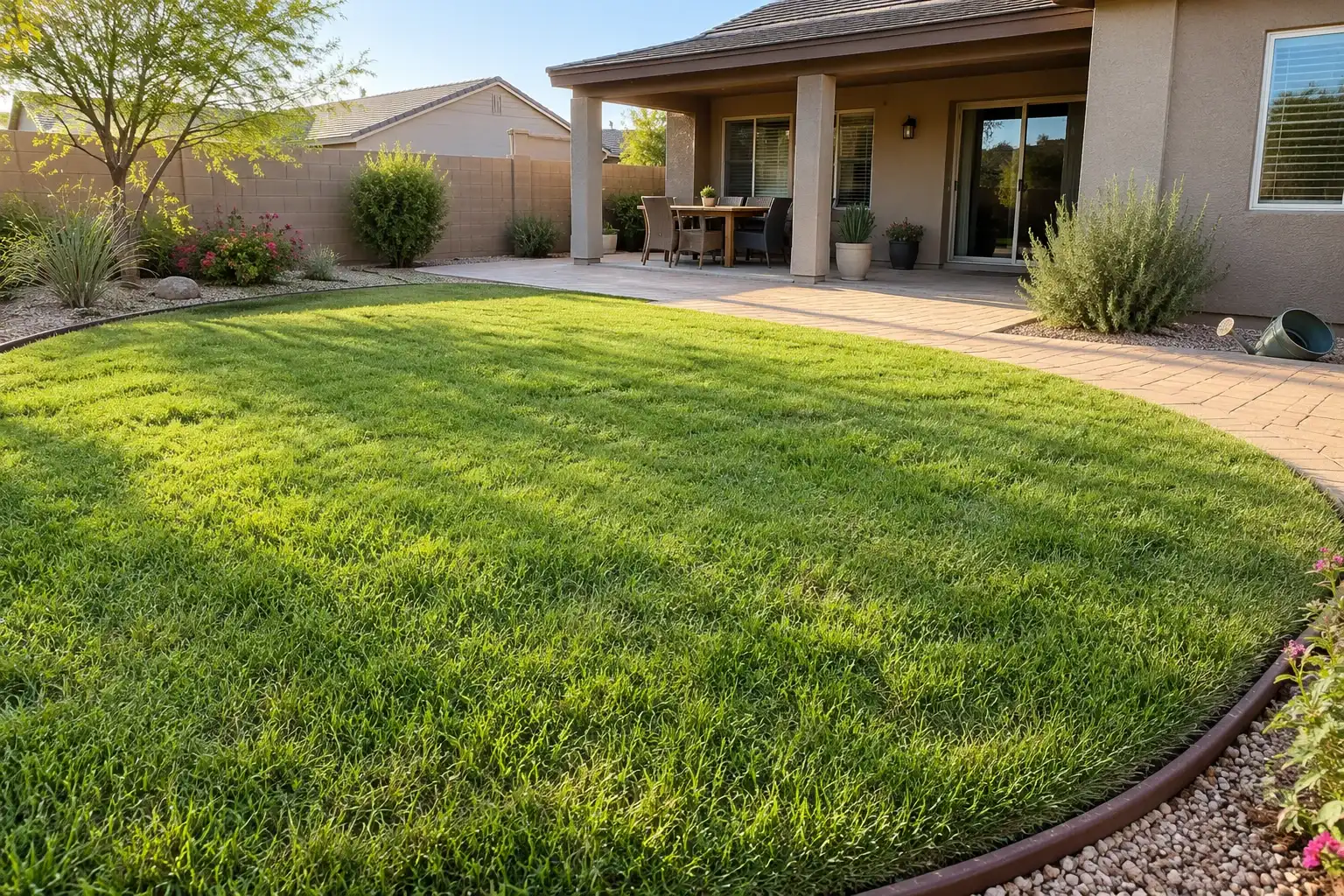
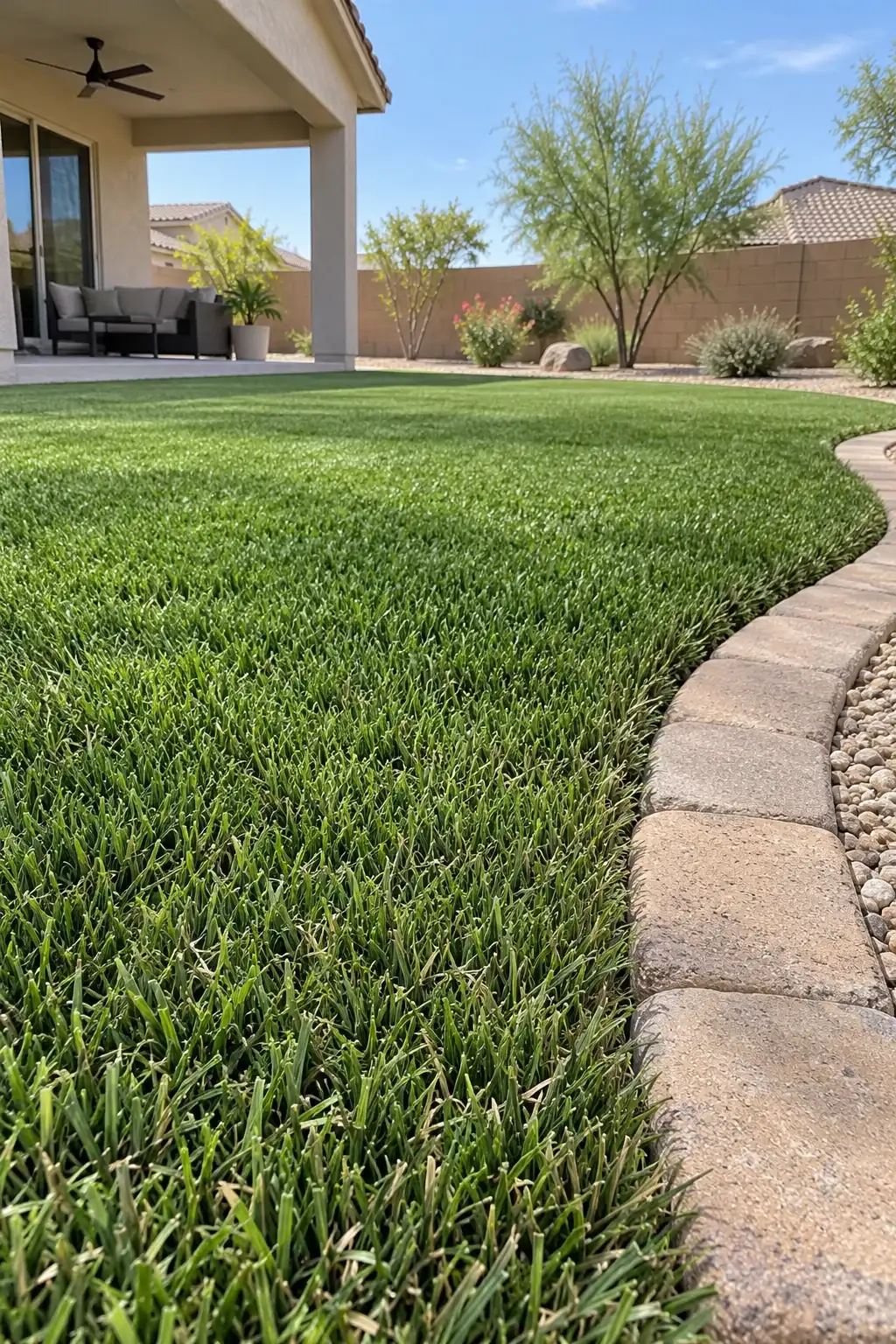
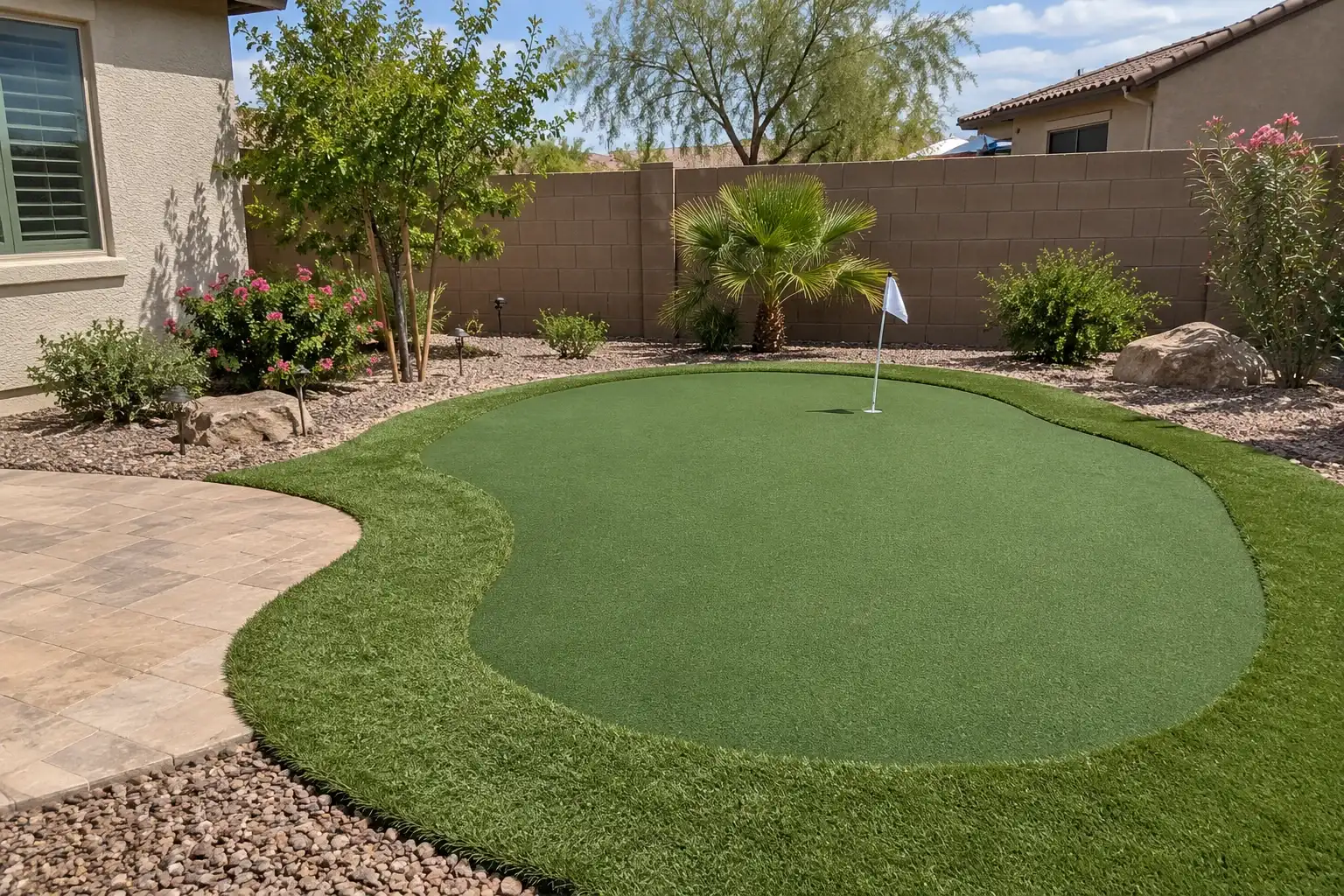
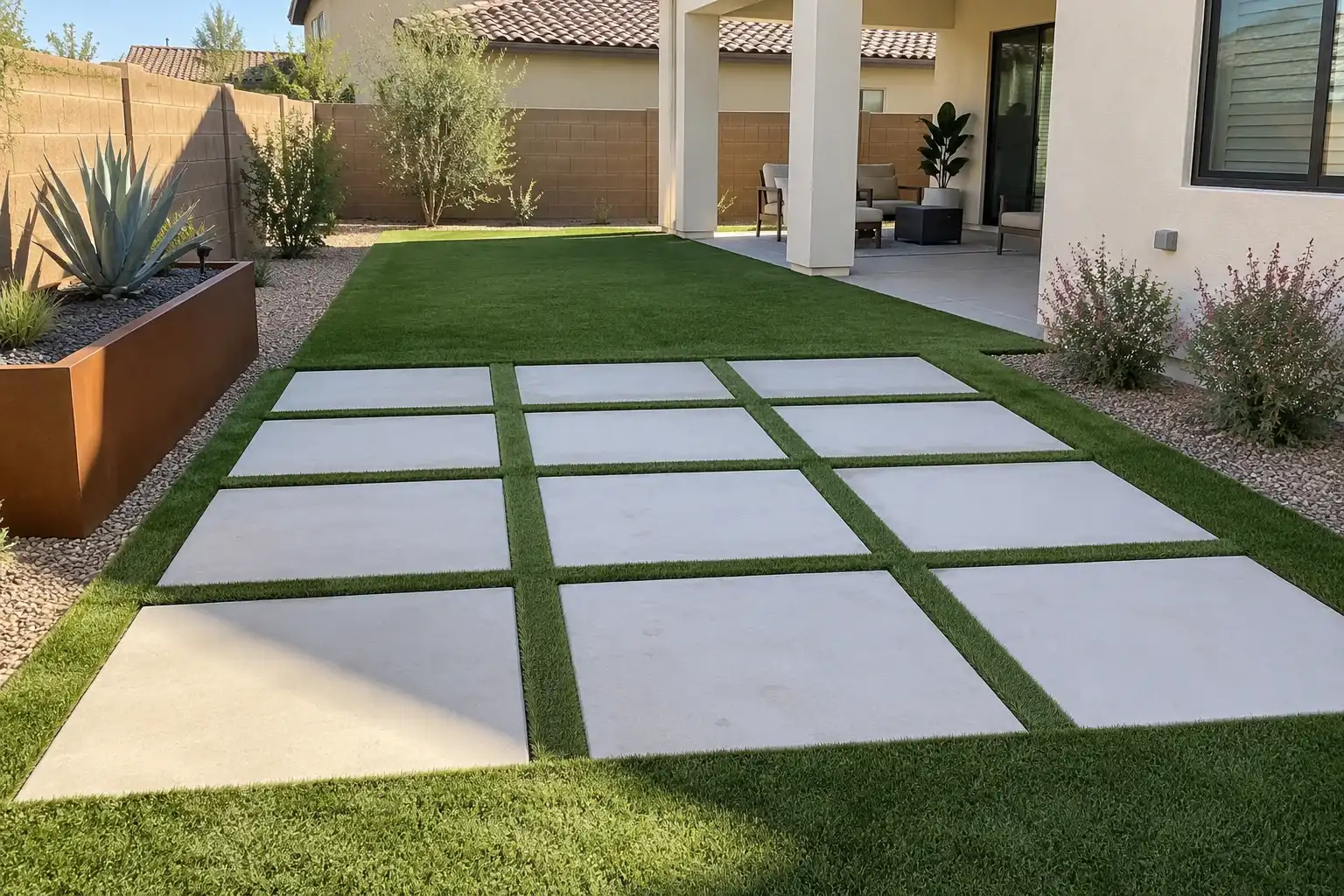
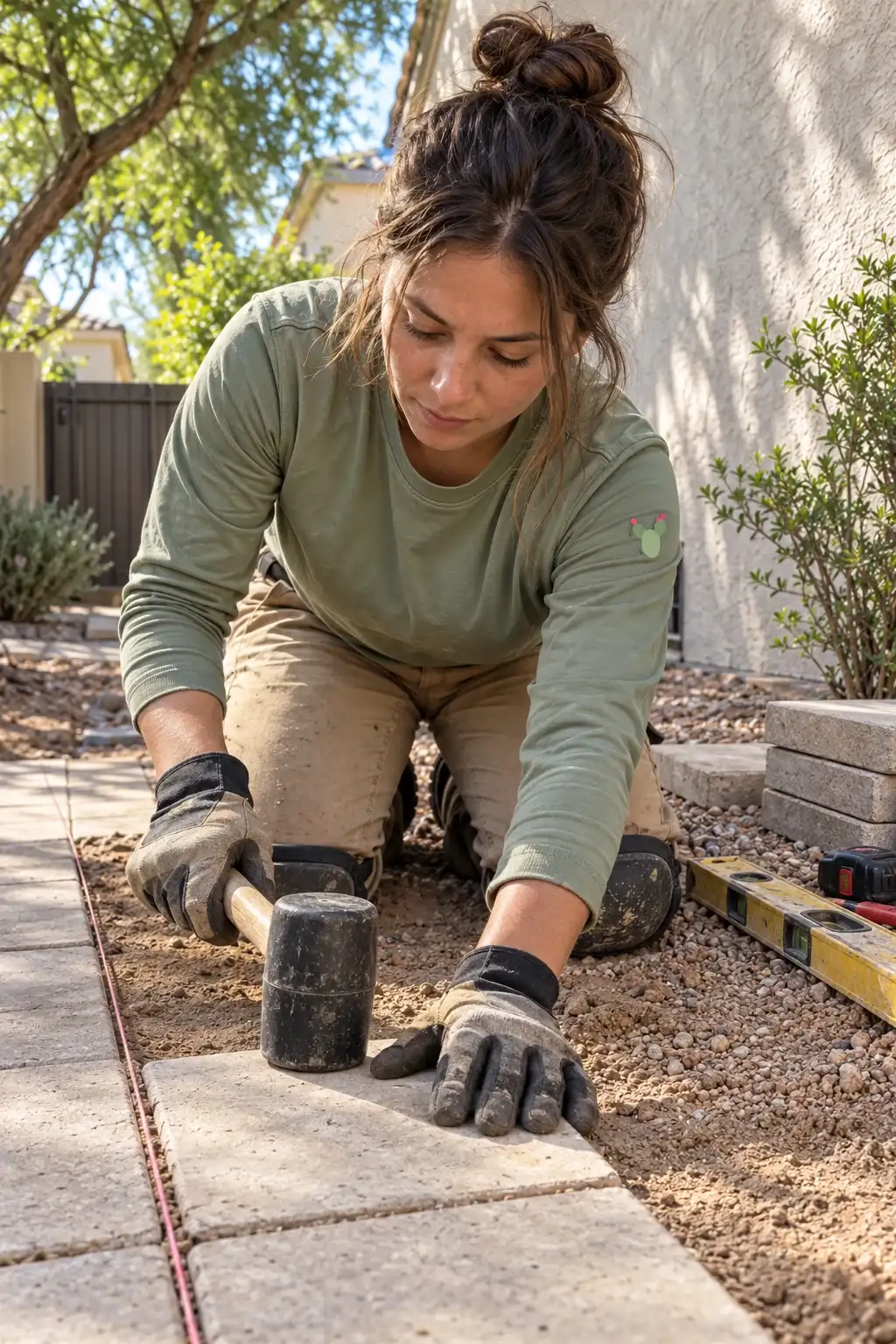
A turf install includes removal of the old surface, excavation, base, weed barrier, the turf itself, seaming, edge restraint and infill. The grass or gravel is stripped and hauled off, and the ground is cut down until there is room for a compacted base. The perimeter gets a rigid edge, either a paver border or an aluminum or plastic edge pinned into the soil. Pieces are cut to the shape of the yard, seamed where they meet, and stretched before the infill goes down. A pet area gets an enzyme infill and a fall set so liquid runs to a drain or to the edge. A putting green is a different build with a shaped sub base and cups, and it is priced as its own scope.
02Costs
What does artificial turf cost in Mesa?
Published national data puts artificial turf at an average of $5,783, with most projects between $3,244 and $8,714, and materials at $2 to $8 per square foot, according to a national cost guide, 2026. The spread is wide because the turf face, the pile height and the backing all price differently, and because base work is labor. On a Mesa lot, rock and caliche in the cut can add excavation and haul off that a soft soil install does not have. Access matters too: a yard behind a narrow gate with a pool in the middle means material moves by wheelbarrow. A yard that is already bare dirt prices lower than one with grass and a sprinkler system to remove, because there is less to haul. These are published national ranges, not a quote. The final price comes after someone sees the yard.
03Contact
What happens from the first call to a finished lawn?
It starts with a call to (747) 243-2089 and a walk of the area you want covered. The walk covers measuring the shape, checking the slope, seeing what drains where, and finding the hose bibs and the irrigation lines that have to be capped. A written scope with the turf type, the base depth and the edge detail follows the walk-through, with a price. Before digging, utility locates are called in. On site the order is removal, excavation, base, compaction, weed barrier, turf fit, seaming, edge, then infill and a final brush. Water is run over it once to check that nothing ponds. The last walk covers the seams, the edges and how to rinse the surface. You do not need to be home for the whole install, but the first walk and the last one are worth being there for.
04Ground
Why is base prep the deciding step on Mesa ground?
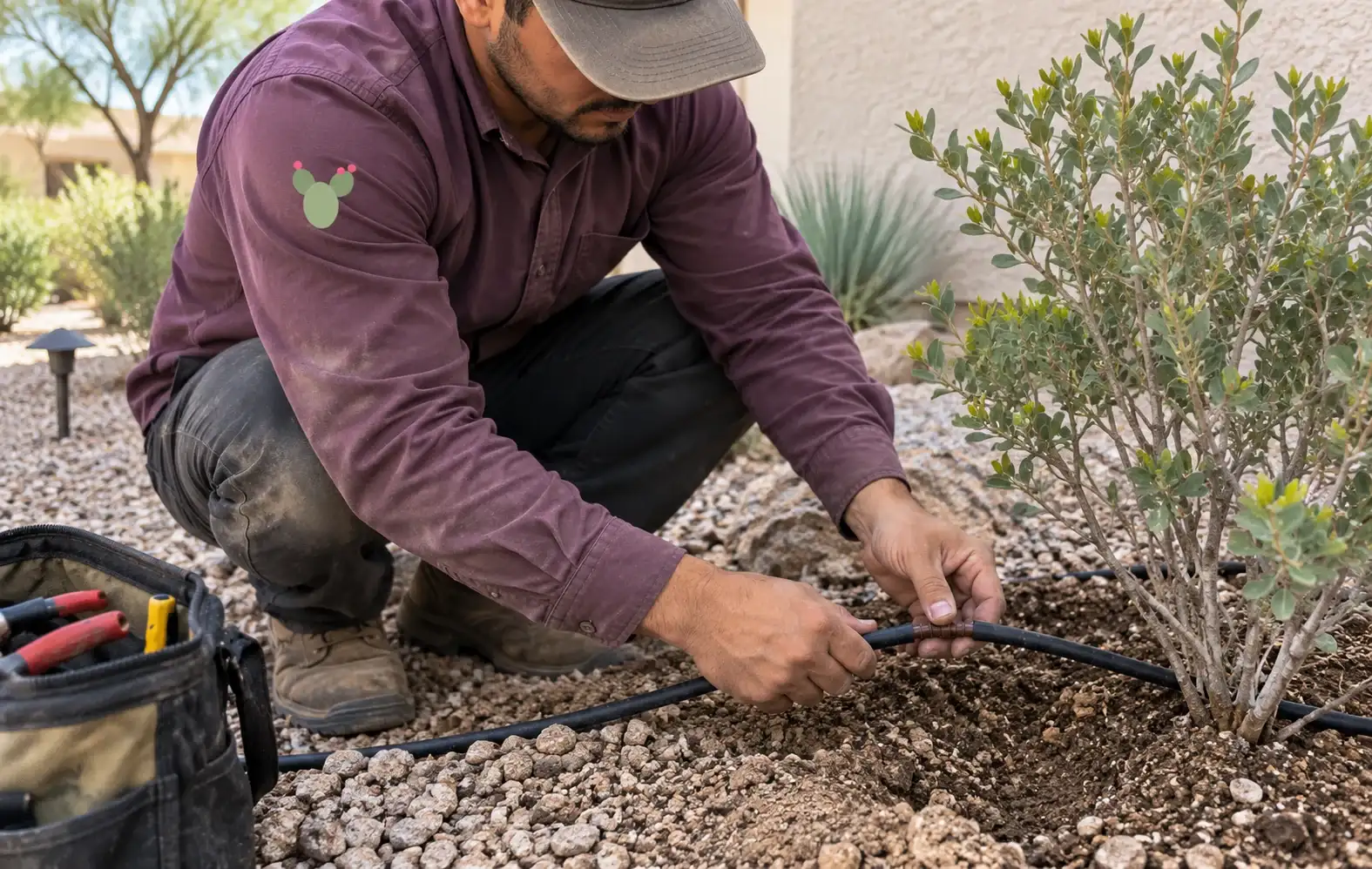
Base prep is most of the work and a large part of the lifespan. Caliche, a cemented layer that can be as hard as rock, is common in southern Arizona soils (UA Extension, managing caliche (opens in a new tab)), and on rocky lots the cut can turn up cobble and cemented gravel that has to be hauled out rather than graded. The ground is excavated, the hard layer is broken, and crushed aggregate is placed and compacted in lifts, graded so water leaves the surface instead of sitting under it. A weed barrier goes over the base, and the edges get pinned. Skip that work and the turf can ripple in the first hot season, the seams can open, and low spots can hold water through monsoon. On a sloped foothill lot a drain at the low side may be added.
05Turf
Is artificial turf part of Mesa's grass to xeriscape incentive?
No. A conversion that adds only artificial turf does not qualify for Mesa's grass to xeriscape incentive. The Residential Grass-to-Xeriscape and Tree Bonus pays up to $2,100 to replace grass with low-water-use xeriscape planting, and the city says artificial turf can be part of the yard only if low-water-use plants still cover 50 percent of the area where the grass is now (Mesa Water Conservation, 2026 (opens in a new tab)). The application and a pre-inspection must happen before any grass comes out, the grass must be healthy with at least 70 percent coverage, bare soil or weeds must be under 30 percent of the area, and there is 1 incentive per property in 3 years. A yard that goes all turf gets nothing from that program. If you want both, convert the planted area and treat the turf as a separate scope. Read the program page before you book any removal, because the pre-inspection is the gate and it cannot be done after the grass is gone.
06Planning
What should be ready before work starts?
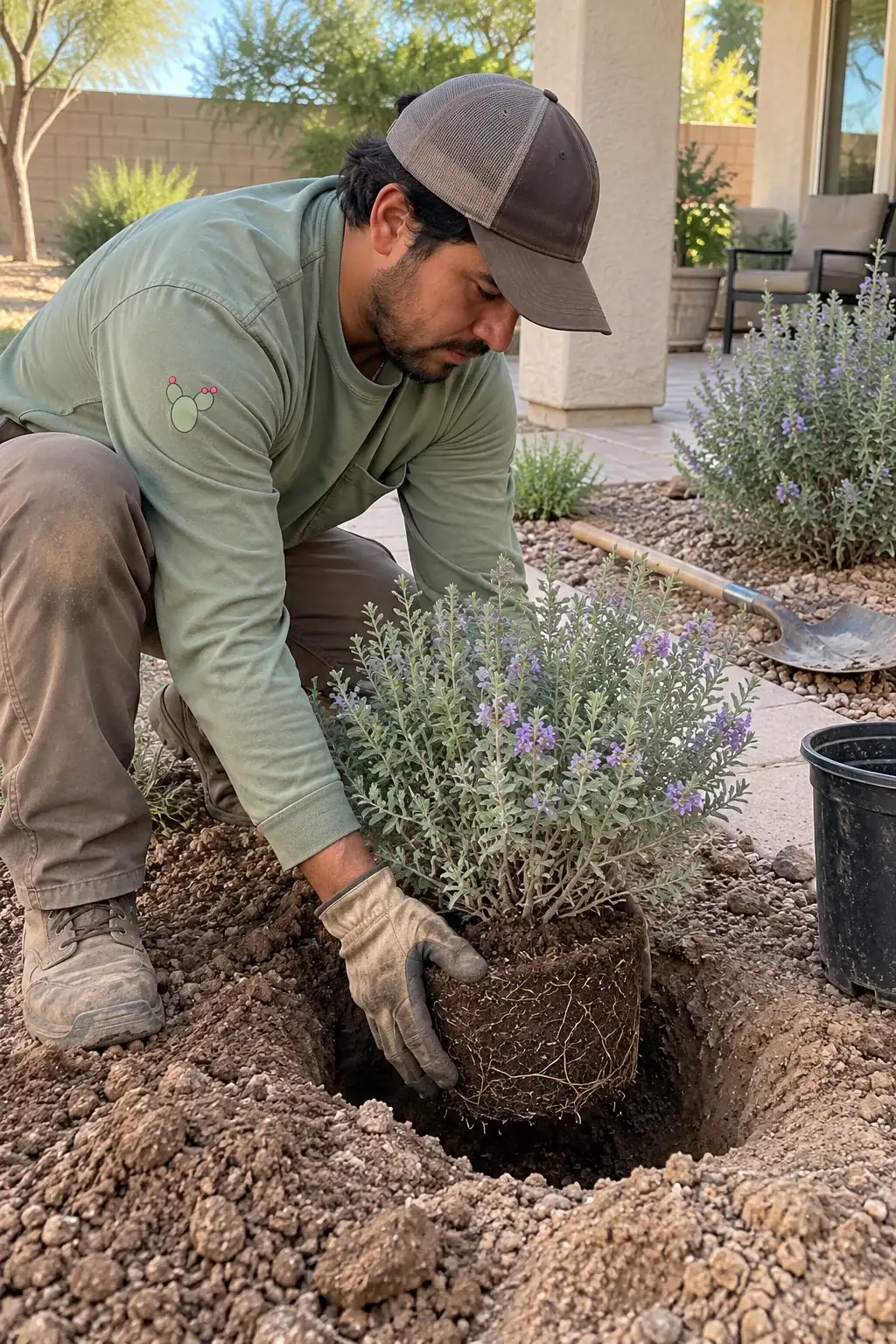
Have the area cleared and the decisions made. Move patio furniture, planters, dog bowls and the grill, and open the side gate. Decide where the dog goes during the work, since turf removal is loud and the yard stays open while it runs. Have the HOA rules ready if the community reviews front yard changes, because some Mesa subdivisions restrict turf to the backyard or cap the covered area. Know whether the irrigation lines under the old lawn stay or get capped, and whether you want a hose bib left in the new surface. If a pool sits between the street and the yard, mention it on the call so the access plan is right. Clear a parking spot near the gate as well, since a pallet of turf and a trailer of base have to sit somewhere.
07Turf
What goes wrong with artificial turf in Mesa?
The failures come from water and from shortcuts. Turf laid on native soil with no base can ripple and pull at the seams. Water drains through the turf but stops at a compacted or clogged base, and the surface turns into a shallow pond in monsoon. Edges that were not pinned lift in the heat. Pet areas without a washable infill hold odor once the weather warms. Weeds come up through the seams where the barrier was cut short. Reflective heat from a west window can scorch a low grade product. And a seam set in the wrong direction can show as a visible line for the life of the lawn. Each one is a base or fitting problem, not a turf problem.
08Timeline
How hot does artificial turf get in a Mesa summer?
The surface can run well above air temperature in direct sun, and July is when that shows most. The turf face itself handles the heat, but the surface tends to stay hot into the evening because there is no soil moisture under it to cool it. The plan can account for that: keep turf out of narrow strips along west and south walls, leave shade from a tree or a ramada over the main sitting area, and choose a lighter face color where the lawn is small. A short rinse with a hose drops the surface temperature for a while, and it is the same rinse that keeps dust down. Turf in full afternoon sun is the case to plan for, and the shade from a single tree can change how the yard feels.
09Timeline
How long does a turf installation take?
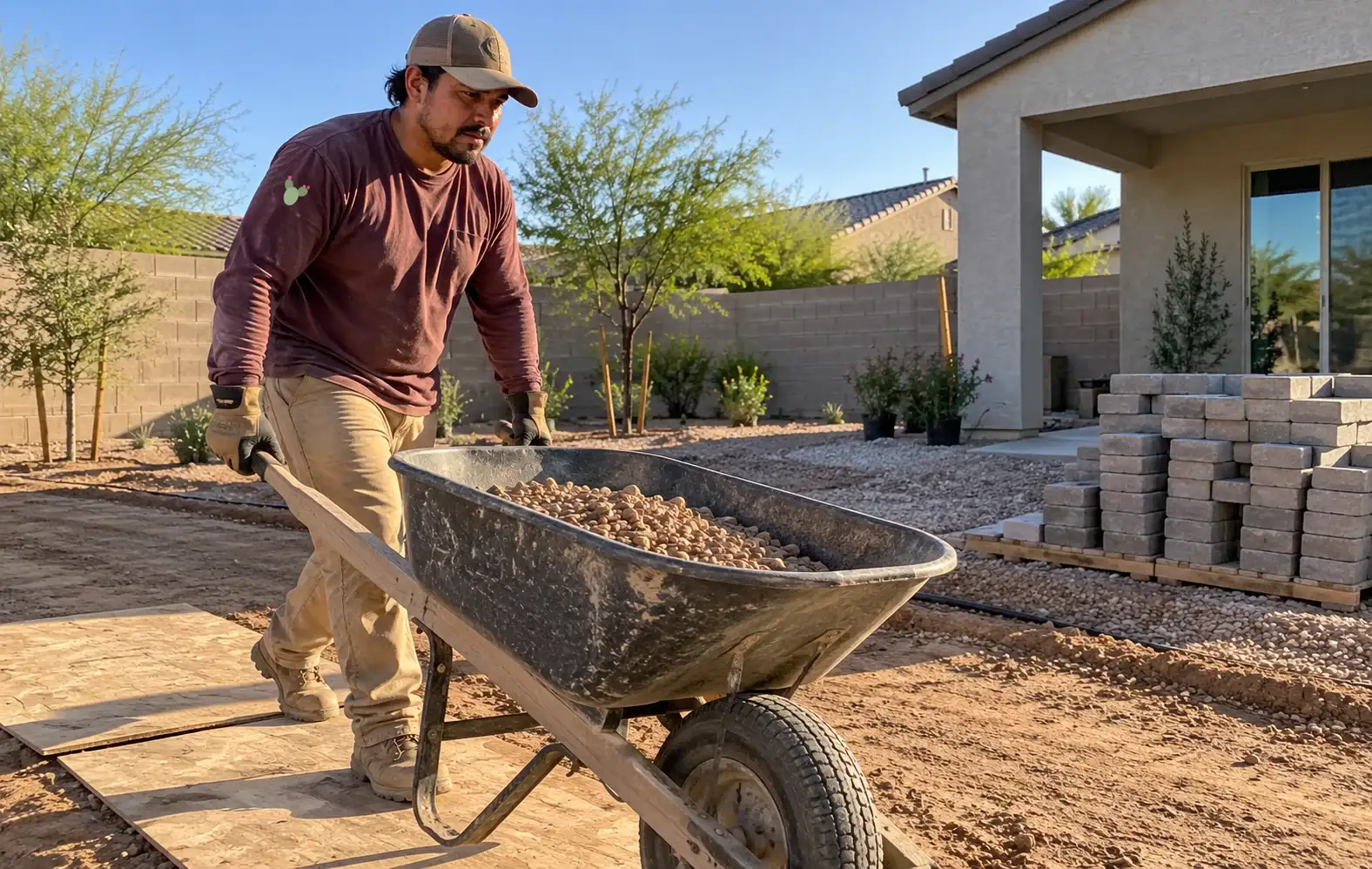
The schedule follows the base, not the turf. A small pet area or a front yard pad is a shorter job, and most of it is excavation and compaction rather than turf work. A large backyard with a putting green and a paver border runs longer, because each lift of base has to be watered and compacted before the next one, and the edges have to be set before the face goes down. Rock in the cut is a common reason a job slips. A written stage order is more useful than a single finish date, because the base sets the pace and the base is underground work that can turn on a rock shelf.
10Turf
What maintenance does artificial turf need?
Less than grass, but not none. Rinse the surface every couple of weeks in summer to keep dust down and to cool it. Brush the pile against the grain a few times a year so the fibers stand up, and brush up any area a dog uses hard. Pick up leaves and mesquite pods before they break down into the infill. Check the seams and the edge pins after monsoon. For a pet area, wash the spot with water and a mild cleaner and let it drain. Keep a leaf blower on it rather than a rake, and never power wash at close range, since that lifts the infill out of the pile. Top up the infill at the edges and around the seams, where it migrates first. A stiff broom on a cool morning is easier on the fibers than a rake in the heat.
11Costs
How do I stage the cost of a turf project?
The stage that matters is the base, because it is under everything and cannot be added later. If the budget is tight, do the excavation, base and drainage for the full area in one pass, then turf the main part and leave the rest gravel or bare until the next year. That way the second stage is a fitting job, not another excavation. Turf the area you look at from the kitchen and the patio first, and leave the side yard for later. If a putting green or a pet run is on the list, build it in the first stage so the base and the drainage are sized for it. The stage not to split is drainage, since a base built without it has to come out to be fixed.
12Costs
What is the cheaper version of a turf installation?
The lower cost version cuts area, not base. Turf a smaller shape and widen the gravel border, which also looks better than turf to the fence line. Choose a shorter pile product for a side yard or a pet run, where the look matters less than the wear. Keep an existing concrete patio and fit the turf to it instead of replacing it. Skip the putting green and keep a flat lawn. Do the removal yourself if you can, since hauling old turf and soil is a real line in the price. And keep the irrigation you already have for the trees rather than capping the whole system. Rent a dumpster and strip the old surface yourself if the access is easy and the area is small, and keep the existing edge if it is sound so the new turf can tuck into it.
13Service area
Which Mesa areas do you cover?
We serve Mesa and the towns around it. In Mesa that covers east Mesa and the golf course communities, Las Sendas and the northeast foothills, Eastmark in the southeast, and Dobson Ranch in the west. Coverage also includes Apache Junction and Gold Canyon to the east, Gilbert and Chandler to the south and southwest, Queen Creek and San Tan Valley, Scottsdale, Tempe, Fountain Hills and Phoenix. The ground changes the base plan more than the city does: a foothill lot in Las Sendas may need a drain at the low corner, while a bare Eastmark lot needs the base built from undisturbed fill. Foothill lots near the Superstitions and flat lots in the east valley take different base plans. If your street is not named here, send the ZIP code and someone from our team will call you back about coverage.
145 questions
Questions people ask
Still have a question? Call (747) 243-2089 and describe the yard.
01Is artificial turf cheaper than a real lawn?
Not at installation. Turf costs more up front than sod, and the published range runs $3,244 to $8,714 for most projects. The savings come later, in water and in mowing. Whether it pays back depends on the size of the lawn, the water rate and how long you stay in the house.
02Can I put turf over my existing grass?
No. The grass has to come out, along with the roots and the soft topsoil, so a proper base can be compacted. Turf laid over grass settles unevenly and holds water. The removal is part of the scope and it is one of the reasons the price is higher than a simple surface swap.
03Does turf work for dogs?
Yes, with the right build. A pet area needs a base that drains, a slightly lower fall, and an infill that can be washed. The fall is set to a drain or to the edge so urine and hose water leave the surface. The main habit is rinsing the spot regularly through summer.
04Will weeds come through artificial turf?
Rarely, if the barrier and the edges are done right. Weeds show up at seams, at cut edges and where soil is tracked onto the surface. A weed barrier over the compacted base and a pinned edge close those gaps. Anything that blows in can be pulled by hand.
05Does turf need a permit in Mesa?
Turf is a surface change, not a structure. HOA rules are the usual approval to check. If the turf sits against a new retaining wall or a patio cover, that structure can have its own permit rules: Mesa's residential construction FAQ exempts retaining walls under 4 feet only if they do not hold back dirt or water, and patio covers may need a construction permit (City of Mesa, residential construction FAQ (opens in a new tab)).
15Keep reading