Service area · Fountain Hills, AZ
Landscaper in Fountain Hills, AZ
Landscaping in Fountain Hills is a drainage problem before it is a planting problem. The grade gets read first, then the places for a wall, a pad or a swale are decided so the yard holds up through a monsoon.
Last updated
01How it works
What does landscaping in Fountain Hills involve?
The work starts with reading the grade: where the water enters, where it pools and where it leaves. On many hillside lots the plan becomes a set of level pads cut into the slope, held by block or boulder walls, with a swale or a buried line carrying runoff to the street instead of the patio. Plants go in by elevation, because the top of a slope dries faster than the bottom and a single valve schedule cannot serve both. Paths follow the contour rather than running straight up, and the view stays open, since a wall or a tree placed 3 feet too high can block the reason someone bought the lot. Walls get a footing and a drain behind them, because a wall that holds soil without a path for water can lean over time.
02Good to know
What do yards in Fountain Hills usually need?
Three items come up often on these lots: a wall that has moved, water against the house and a lawn that costs too much to keep. Retaining walls lean or bulge when the footing was never sized for the soil, and rebuilding one properly means digging back, adding drain rock and a pipe, then setting the block on a compacted base. Water against the house is often a grading issue rather than a gutter issue. Lawns on the flat pad are the simplest thing to replace with gravel and drip, because that ground is easy to work and easy to irrigate. Steep faces are better left as rock and native planting than as turf that has to be hand watered.
03Rules
Which ZIP codes are covered in Fountain Hills?
Street addresses in Fountain Hills use 1 ZIP code, 85268. That includes the streets around the fountain, the lots climbing toward the ridge and the parcels off Shea Boulevard at the edges. One ZIP means there is little guesswork about coverage. If an address is near the town line, call (747) 243-2089 to confirm it. Access is the usual question on these streets, since a narrow drive and a steep apron can decide how material gets to the back of the lot. A dump truck that cannot turn around means material gets staged at the street, and that changes the labor on the job.
04Rules
What rules affect a yard project in Fountain Hills?
Mesa's grass removal incentive does not apply in Fountain Hills, since the incentive is limited to Mesa water customers. Water guidance comes from the utility that serves the address, not from Mesa, so confirm the current guidance before changing a controller. Hillside work adds a second layer: walls that hold back soil and any grading that changes drainage may need review from the Town of Fountain Hills, which has its own hillside grading and retaining wall rules.
05Services
Which services are available in Fountain Hills?
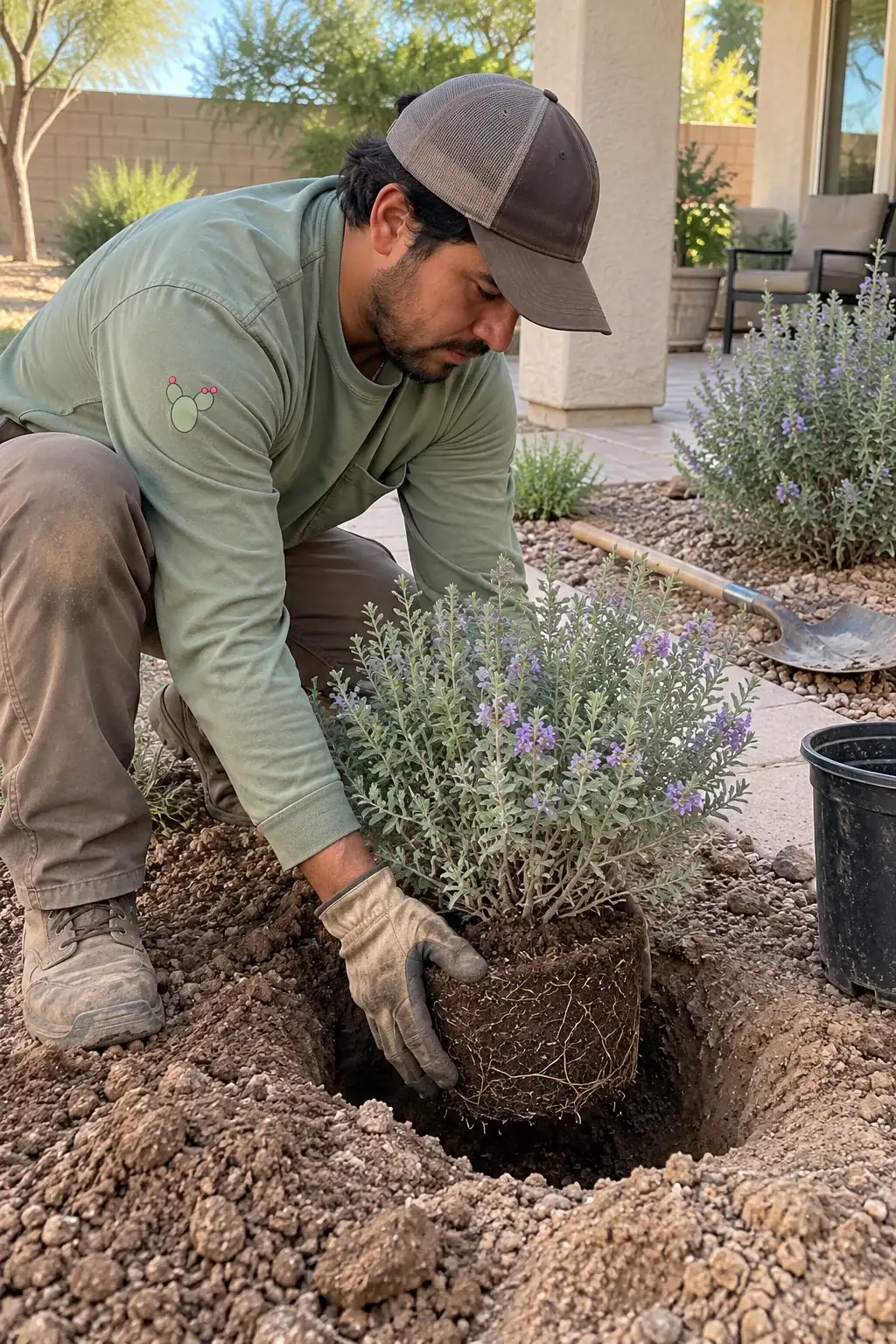
The service mix here leans toward structure. Pavers and retaining walls often carry much of the work, because a wall is what turns a slope into a yard. Landscape installation follows, covering the planting, drip and gravel on the pads the walls create. Desert landscaping replaces thirsty lawn on the flat ground and fills the steep faces with plants that need little water. Artificial turf fits a small play area or a putting strip where the grade is level, and it is a poor fit on a slope. Sprinkler repair covers the drip and spray systems that keep the planting alive through June, including valves on 2 or 3 different elevations. If the job is one wall and one bed, the scope can stay that size.
06Service area
Which neighborhoods are covered?
Coverage includes the whole town, which breaks into 3 kinds of ground. Around the fountain and the lower streets, lots are flatter and the work is closer to a typical valley yard: a patio, a lawn replacement, a wall on the property line. Climbing toward the ridge, the pads get narrower, the walls get taller and the view becomes the main asset, so the design protects sight lines and keeps planting low. At the edges off Shea Boulevard, parcels are larger and often hold more native desert, which means less to install and more to preserve. The address shows which of the 3 applies. A cul-de-sac lot with a shared drive is one case where a photo helps, since turning space decides the equipment.
07Costs
What does landscaping cost in Fountain Hills?
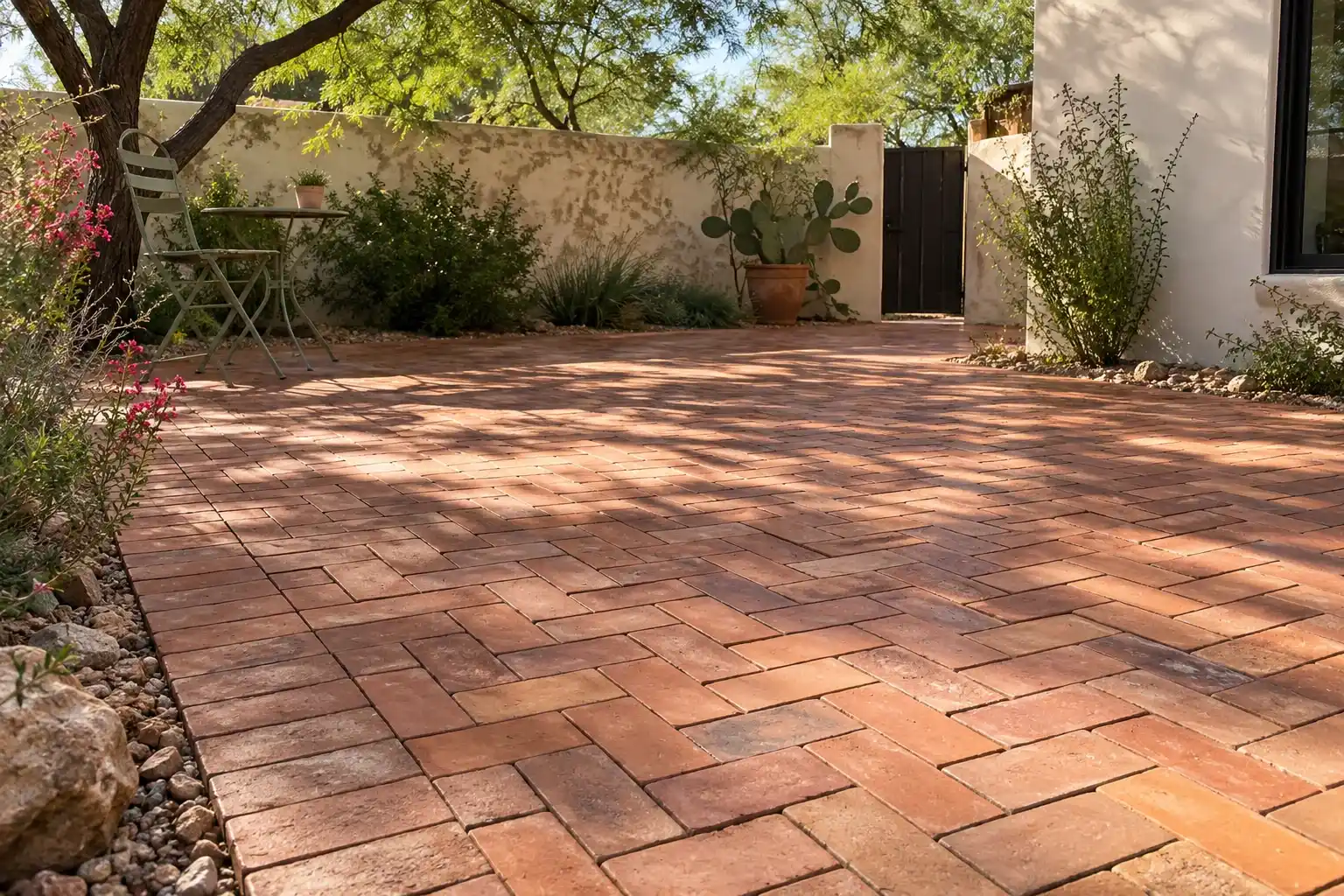
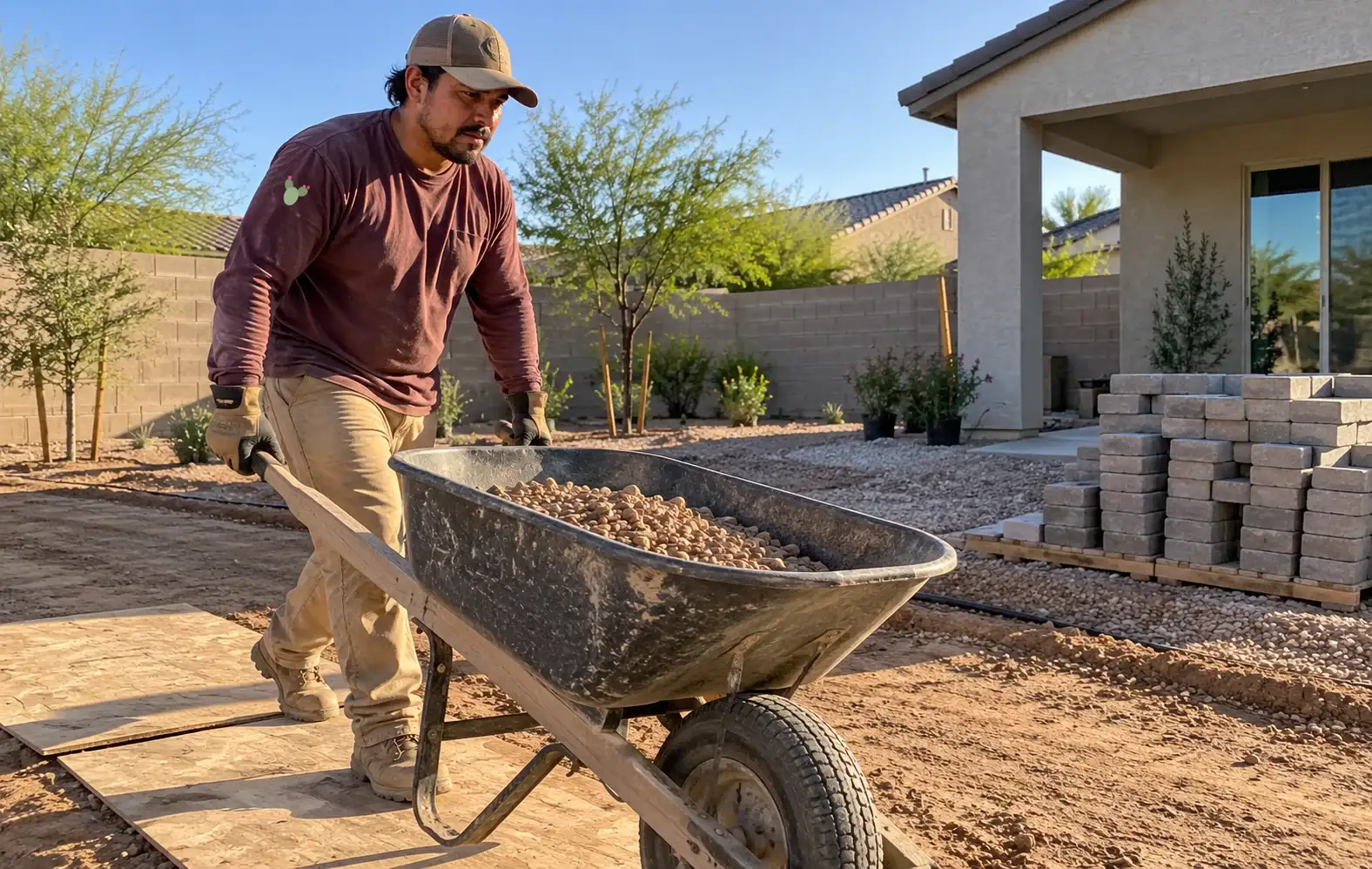
Paver work is a common place to start. National cost data puts a paver patio at about $3,800 for 280 square feet, with a range of $480 to $22,500 and $8 to $50 per square foot (2026). Published national rates put a 2 person crew at $50 to $100 per hour (2026). On a slope, the wall behind the patio can cost more than the patio itself, because the footing, the drain rock and the hauling add hours that a flat lot never sees. Small jobs at the low end are usually a walkway or a single wall repair. Wall work is quoted separately, and the height of the wall can move the number more than the length does. These are published national ranges, not a quote. The final price comes after someone sees the yard.
083 questions
Questions people ask
Still have a question? Call (747) 243-2089 and describe the yard.
01Do I need a wall on a sloped Fountain Hills lot?
Not always, but many lots need some grade change held in place. A low wall at the toe of a slope, a set of steps and a swale can do more than one tall wall. Taller walls that hold back soil can need review from the Town of Fountain Hills.
02Can artificial turf go on a hill?
It can be installed on a grade, but it is often not worth it. Turf needs a firm, even base, and a steep face needs extra work to hold that base. Gravel and native planting can handle a slope with less cost and less upkeep.
03Where does the water go after a storm?
It follows the grade. The job of a good plan is to give it a path to the street or a planted basin instead of the patio door. That means checking the swales, the wall drains and the low corner of the lot before planting.
09Keep reading