Service area · Chandler, AZ
Landscaper in Chandler, AZ
Landscaping in Chandler often begins with the city's grass removal rebate, and the paperwork has to clear before the first shovel goes in. That single rule sets the order of work on conversions here, and it is the reason a plan is worth settling early.
Last updated
01How it works
What does landscaping in Chandler involve?
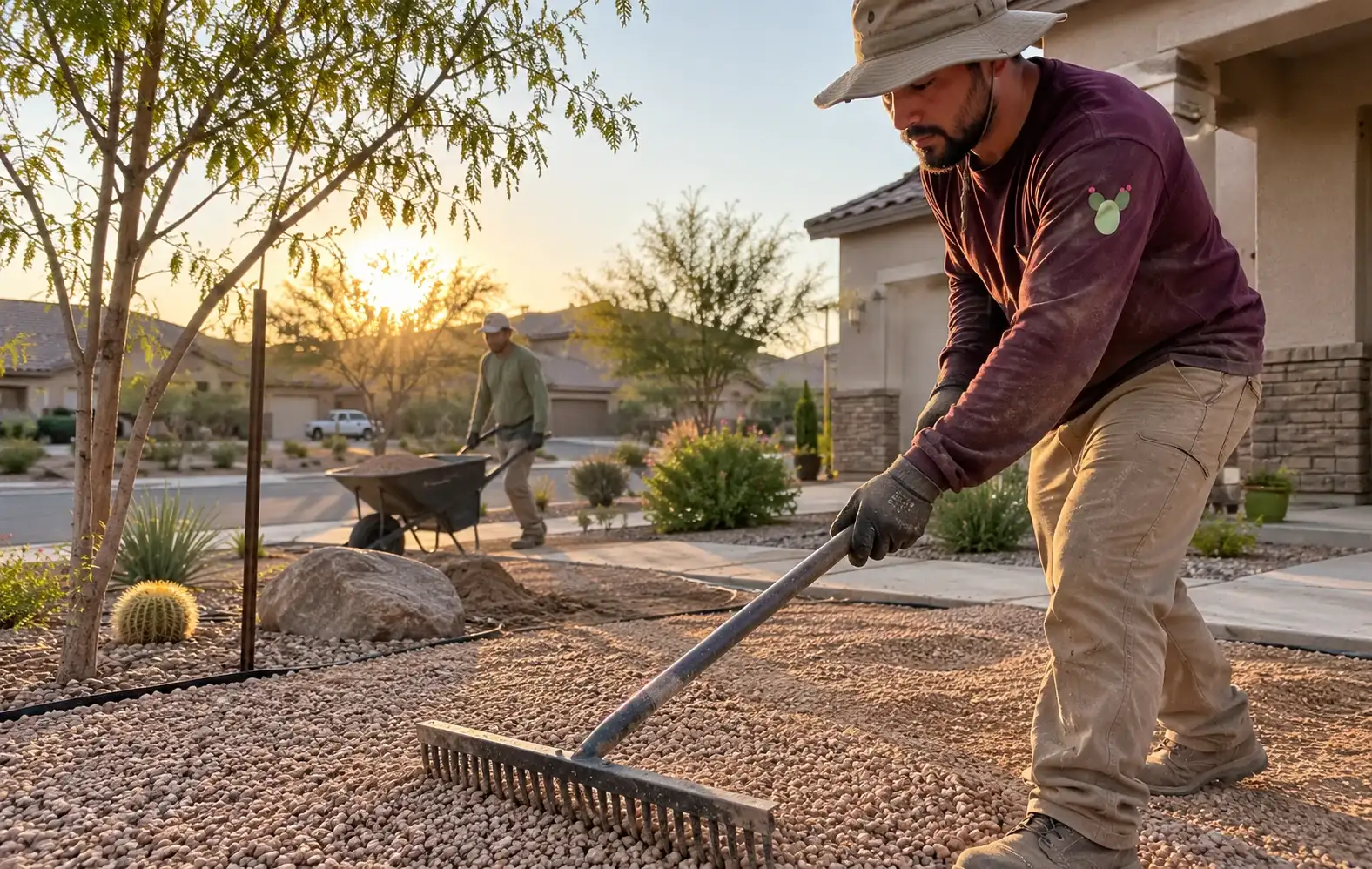
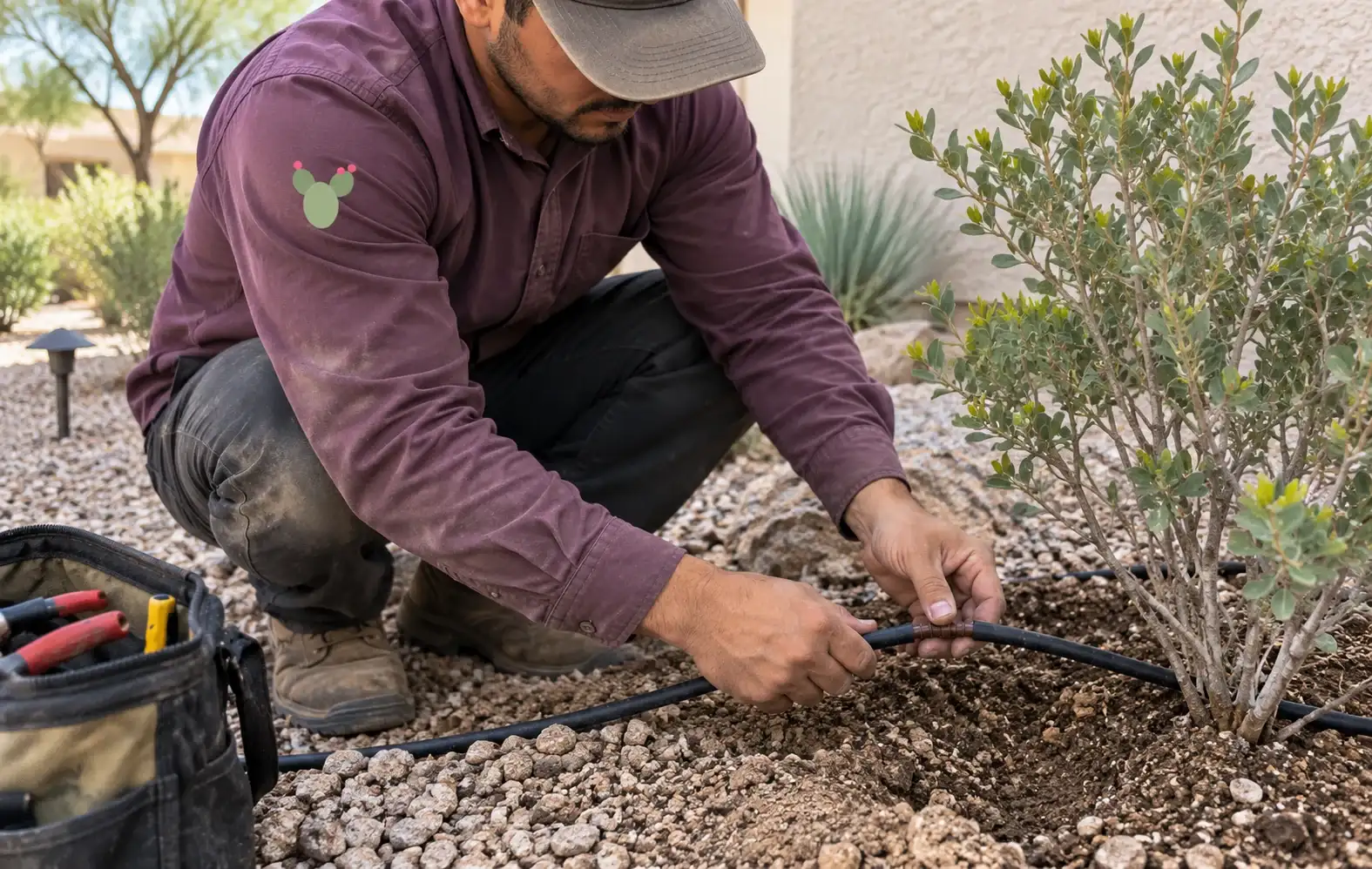
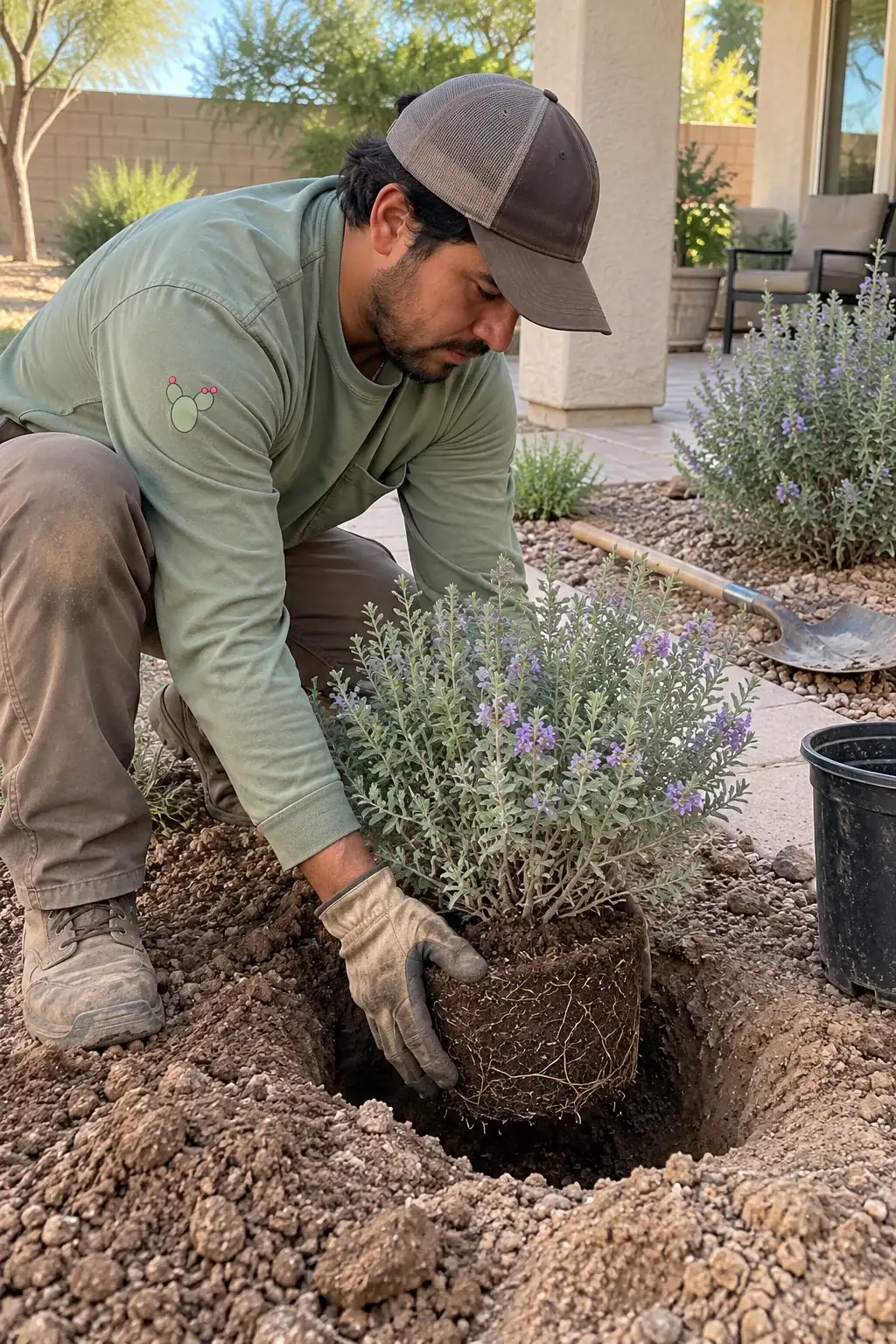
The sequence runs application, Notice to Proceed, then removal. Once the city signs off, the lawn comes out, the sprinkler heads get capped or converted, drip goes in at each plant, and the ground is covered in gravel and low water plants. The city requires at least 50 percent ground coverage with low water use plants, and pavers and artificial turf are not rebated (City of Chandler, grass to xeriscape rebate (opens in a new tab)). Chandler also borders Mesa on its north side, so some Chandler yards sit close to the Mesa line. The housing splits in two. Older blocks near downtown have mature trees, narrow frontages and irrigation that may have been patched over the years. Newer subdivisions have wider lots, block walls and lawns that can still be healthy enough to qualify for the rebate. Either way the questions are the same: how much grass goes, what replaces it, and how water reaches the new plants.
02Good to know
What do yards in Chandler usually need?
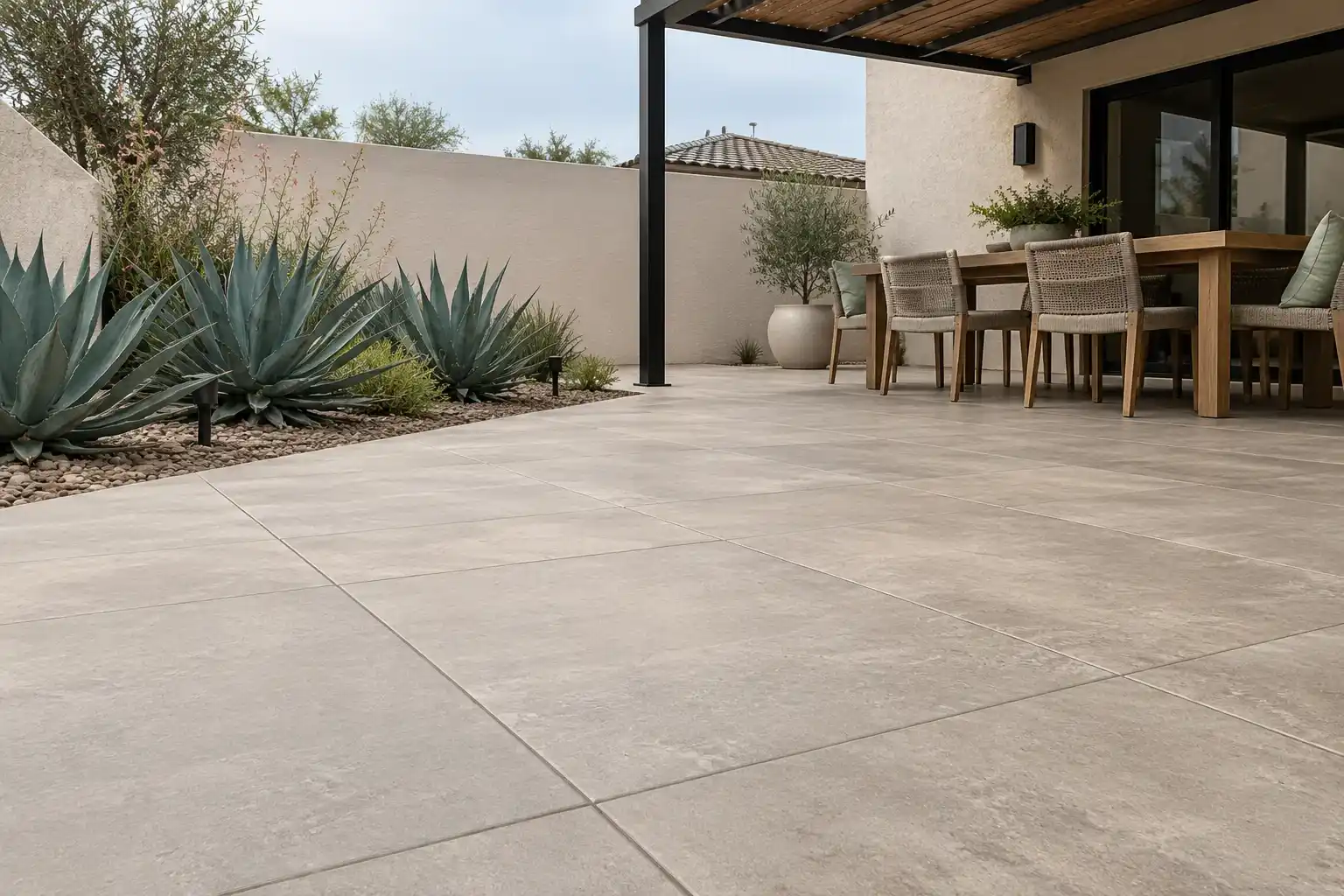
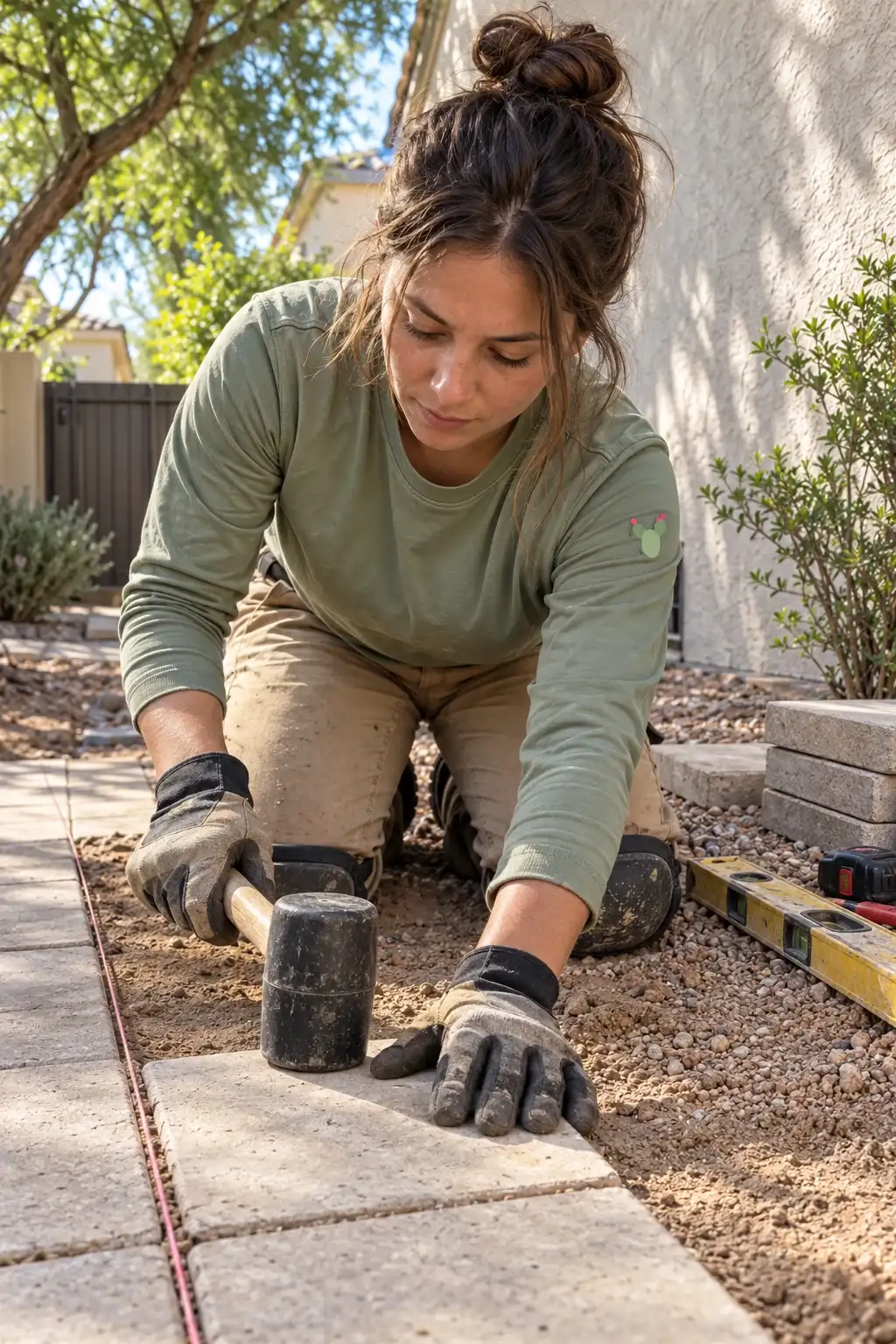
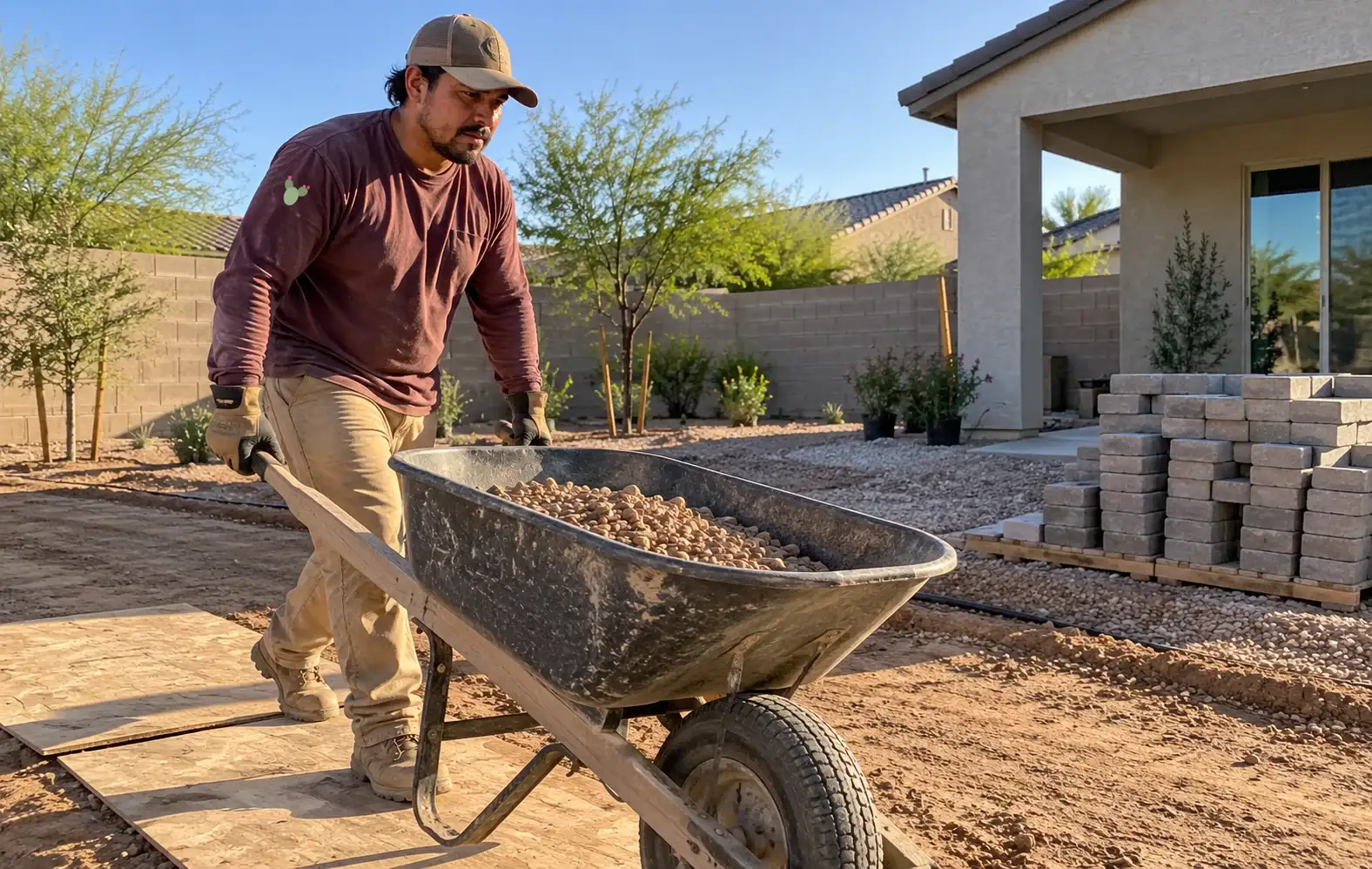
Bermuda removal is the first job on a conversion, and it is not a matter of spraying once. The grass has to be killed, scraped and hauled, and the root zone checked before anything goes in, or it can push back through the gravel. Then the irrigation has to change character. A lawn system throws water in arcs, while a desert yard needs drip at the root ball of each plant, on separate zones for trees, shrubs and groundcover. Shade is the third need, because a west facing wall with no tree adds to cooling costs in July. After that come the surfaces: gravel over the open ground, a paver path to the door, and a turf panel only where children will use it.
03Rules
Which ZIP codes are covered in Chandler?
Six ZIP codes. 85224 and 85225 cover the center and the older blocks near downtown, where the trees are tall and the lots are narrow. 85226 runs west toward the Loop 202 and Interstate 10, with a mix of older subdivisions and newer infill. 85248 sits in the south near Sun Lakes, with larger lots and wide streets. 85249 covers the southeast toward the Hunt Highway edge, where the newest construction is. 85286 sits in the south-central part of the city. A single street can change the number, so the ZIP on a utility bill is the one to use.
04Rules
What rules affect a yard project in Chandler?
The city's grass to xeriscape rebate runs on a Notice to Proceed, which means the application and the site check happen before any grass comes out. Pull the lawn first and the rebate is gone. The program page is worth reading before a work date is set, because the rules cover the living grass that has to be in place, at least 500 square feet of it, and what counts as replacement. The project has to be finished within 90 days, and the final application asks for a list of the plants installed and at least 2 photos of the finished conversion. Water guidance and conservation programs come from the City of Chandler, not from Mesa, so check the current guidance before a new controller is programmed. Where an HOA is in place, the front yard can still need design review, and that approval is separate from the city's. Two approvals, two timelines, and no work until both are in hand.
05Services
Which services are available in Chandler?
Four services, and on a conversion they usually arrive in a set order rather than all at once.
- 01Desert landscapingfor the grass to xeriscape work: removal, drip conversion, plant layout and gravel over the open ground.
- 02Landscape installationfor a bare lot or a full redesign, including grading, soil prep and walls.
- 03Artificial turffor a small play or pet area, built on a base that drains when the rain arrives in a heavy storm.
- 04Sprinkler repairfor valves, heads and controllers, including the changeover from spray heads to drip.
Call (747) 243-2089 with the ZIP and whether the lawn is still in place to find out which part comes first and what the city needs to see before it does.
06Service area
Which neighborhoods are covered?
Coverage follows the grid that runs off Chandler Boulevard, Ray and Warner. Alma School and Arizona Avenue cover the older center, where the trees are mature and the front yards are small. Price and McQueen run north to south through the city. The streets south of the Loop 202, around Chandler Heights and Riggs, tend to hold the newer subdivisions with larger lots and rear walls that face open ground. Coverage also includes the Sun Lakes edge, where the lots are wider and the plant lists can be set by the community. The cross streets show which of those an address is in.
07Costs
What does landscaping cost in Chandler?
National cost data puts landscaping at $4.50 to $12 per square foot, with a front yard at $1,500 to $5,000 and a full backyard renovation from $15,000 to $50,000 (2026, 32,752 projects). Artificial turf averages $5,783, and most installations fall between $3,244 and $8,714, with the material running $2 to $8 per square foot, according to national turf cost data (2026, 2,284 projects). A 2 person crew bills $50 to $100 per hour, and a new installation runs $3,000 to $16,000, according to a national cost guide (2026). On a conversion the removal and hauling are a real line item, since dead turf has to leave the property, and that cost does not shrink just because the new yard uses less water. These are published national ranges, not a quote. The final price comes after someone sees the yard.
083 questions
Questions people ask
Still have a question? Call (747) 243-2089 and describe the yard.
01Can the grass come out before the city approves?
No, and it can cost the whole rebate. The Notice to Proceed comes first, then removal. If the lawn is already gone when the inspection happens, the rebate does not apply.
02Does the rebate cover the whole yard?
It pays per square foot of grass converted, up to a cap, and the program has funding limits, so treat it as a contribution rather than a full refund. The rest of the cost sits with the owner, and the design can be phased to match.
03What happens to the old bermuda after removal?
It gets scraped, loaded and hauled to a green waste site, and the root zone gets checked before new material goes down. Leaving the roots in place can leave a gravel yard with grass pushing through.
09Keep reading