Service area · Apache Junction, AZ
Landscaper in Apache Junction, AZ
Landscaping in Apache Junction usually starts with a bigger, rougher lot than in Mesa, and many of these lots already carry native desert. The work follows the ground that is there, keeping native brush where it holds soil and building the usable yard around it.
Last updated
01How it works
What does landscaping in Apache Junction involve?
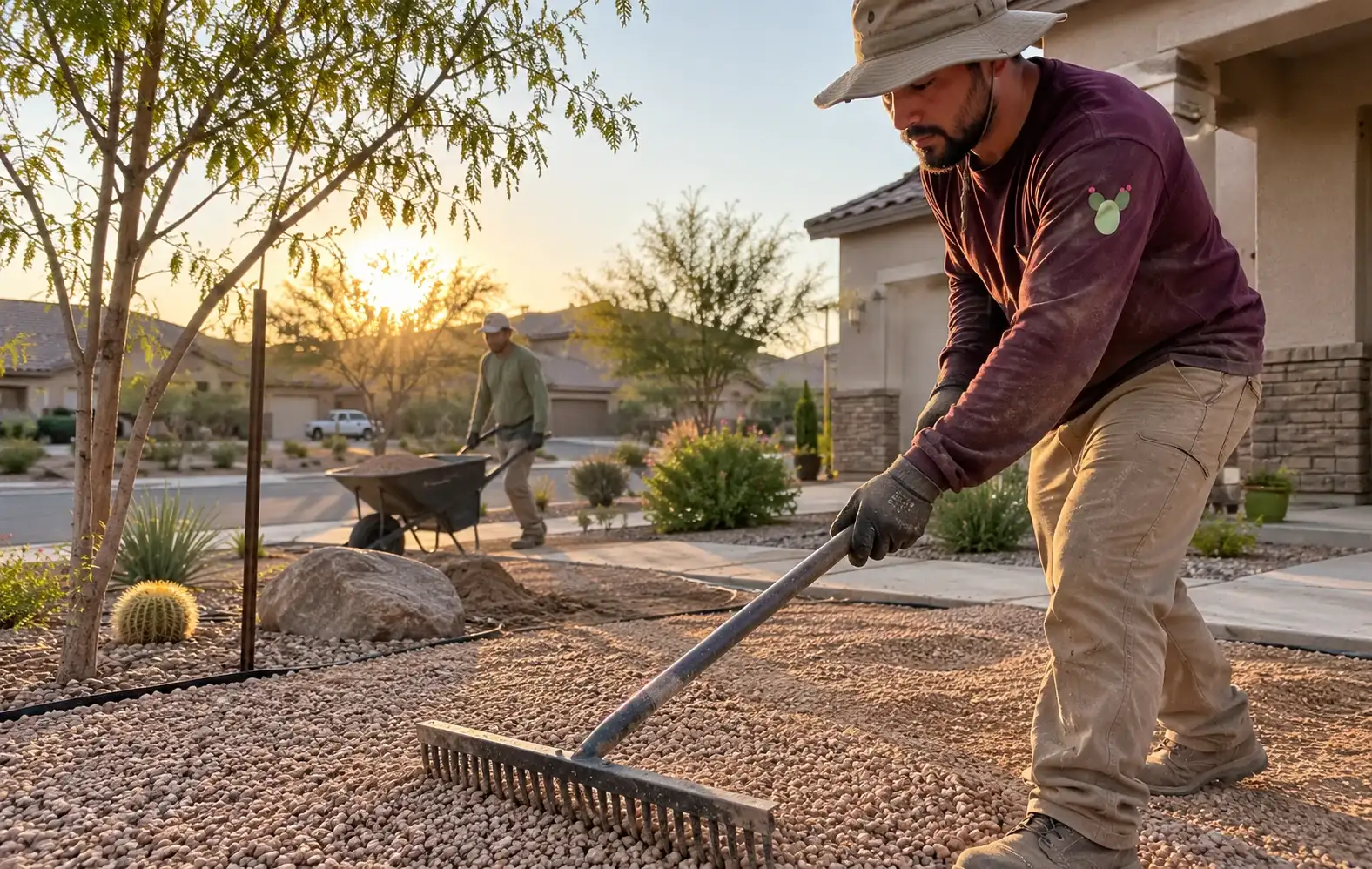
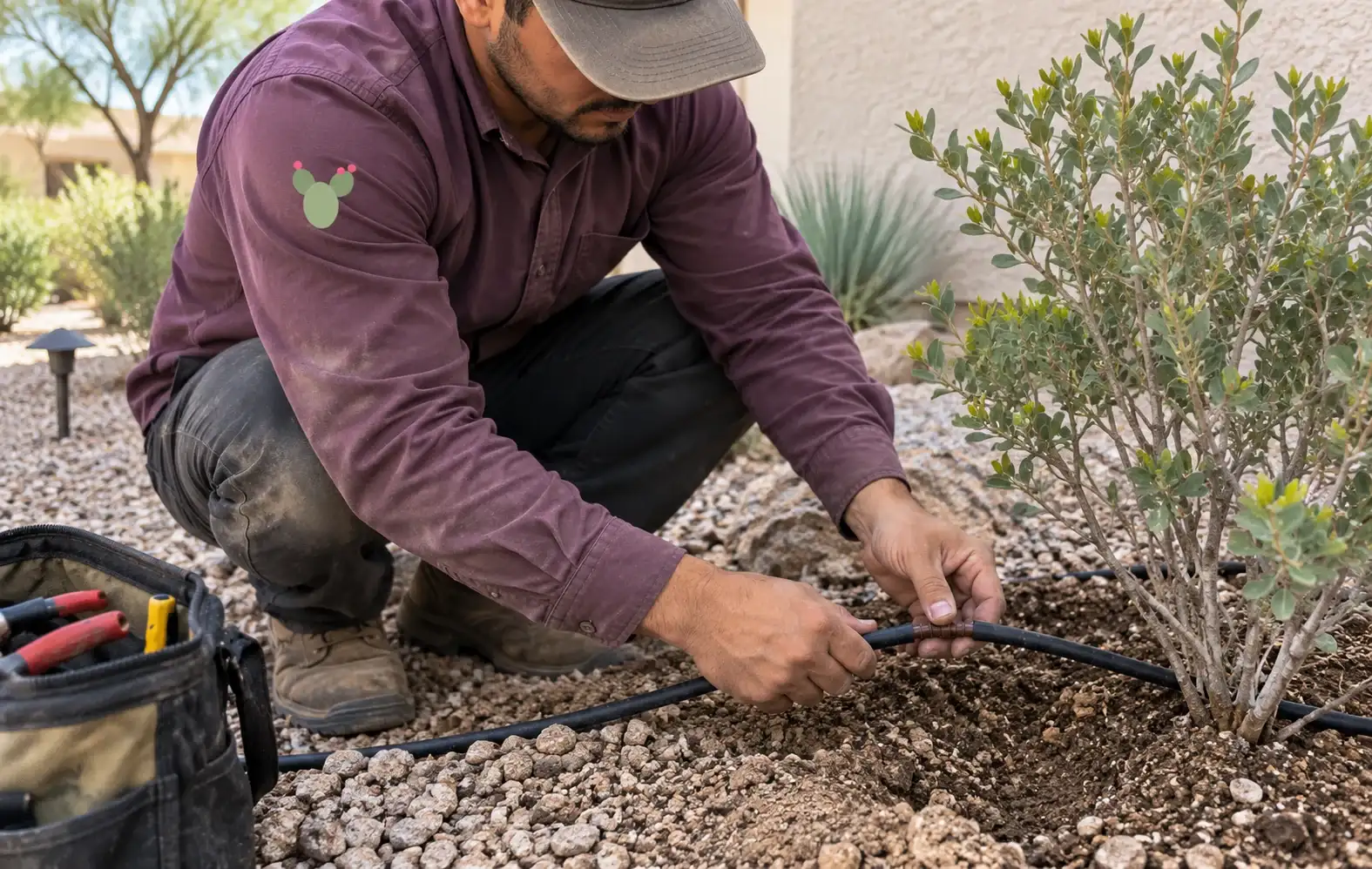
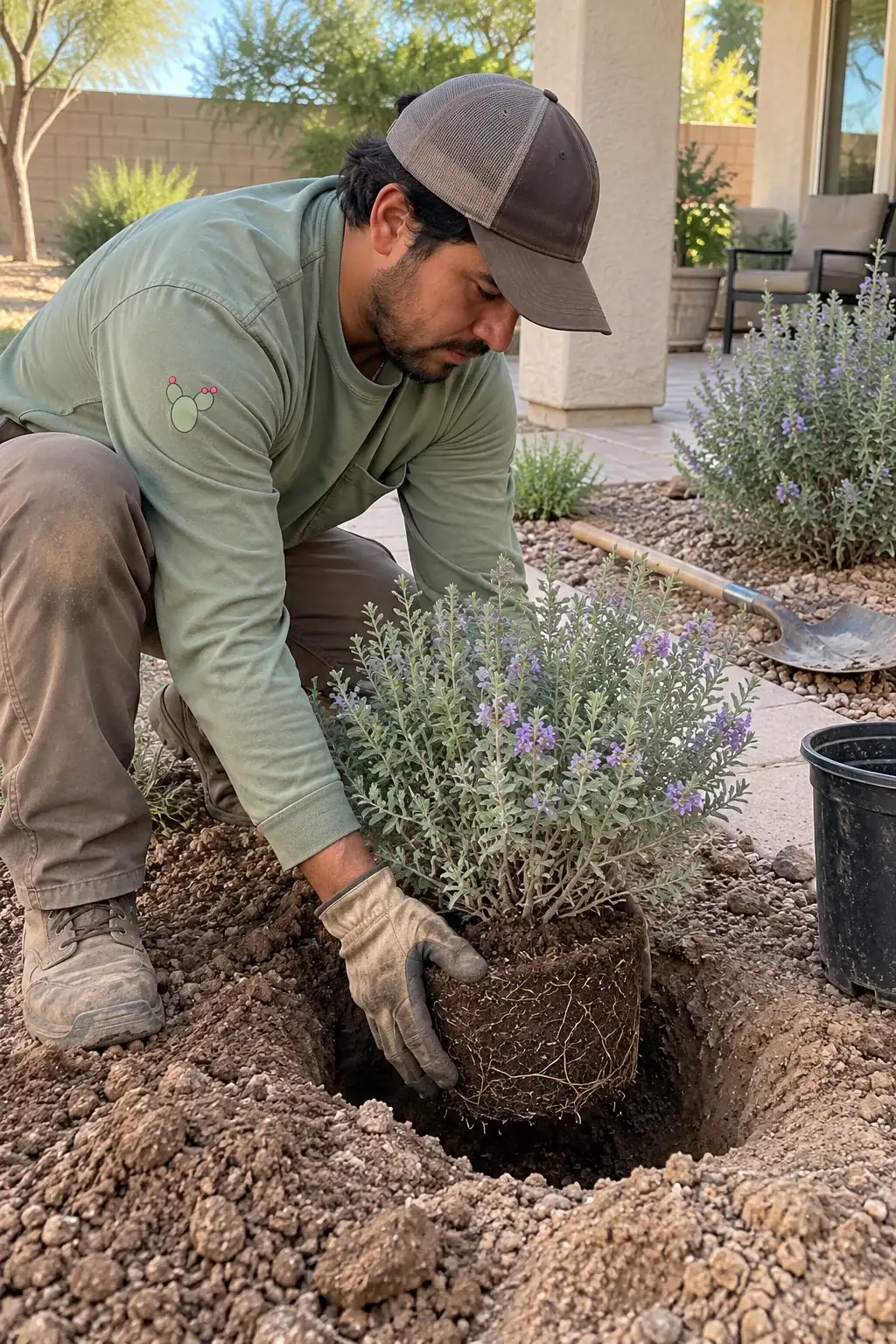
It starts with reading the slope and the rock, not with a plant list. Parcels climbing toward the Superstitions often do not sit flat, and a yard that looks level from the driveway can drop toward the back corner. Caliche can show up in patches close to the surface, which changes how deep a hole can go before a bar is needed. The ground gets walked first, the places where storm water leaves the property get marked and some areas are left alone. Native brush stays where it holds the soil. Then come the improvements: a graded pad for parking or a patio, a gravel drive, drip to the new plants, and a low wall where the grade steps down. On a parcel without an HOA, the owner makes the design call.
02Good to know
What do yards in Apache Junction usually need?
Dust control, drainage and a clean edge are common first needs on these lots. Open ground between the brush moves in the wind, so crushed rock over the bare areas settles it and cuts the weeding. Water has to be pushed away from the house and from any septic field, which on a sloped parcel often means a shallow swale or a berm rather than buried pipe. The third need is a boundary between the improved yard and the open desert, because that strip is where weeds travel and where a stray ember finds fuel. After those three, people ask for shade, a place to sit out of the afternoon sun, and a firm parking pad that does not turn to soup in a monsoon.
03Rules
Which ZIP codes are covered in Apache Junction?
Apache Junction is covered by 2 ZIP codes, 85120 and 85119. The older grid near the highway tends to hold rectangular, fenced lots, while the parcels toward the foothills are wider, with longer driveways and steeper, rockier ground. The 2 areas need different plans. A flat lot near the center is mostly a surfacing and irrigation job, while a foothill parcel is a grading and drainage job before anything gets planted. Apache Junction runs close to Gold Canyon on the east side, so a neighbor two doors down can fall under a different set of rules and a different ZIP. The ZIP and the slope show which of those 2 plans applies.
04Rules
What rules affect a yard project in Apache Junction?
Some parcels here sit outside an HOA, which removes one layer of review but not all of them. Walls, grading and structures may still need sign off from the authority that holds jurisdiction over the parcel, so that office can say what applies before the first block is set. On a lot with recorded covenants but no active board, the covenant document is still the rule, and it is worth reading before you build. Water guidance and conservation programs come from whichever utility serves the property, not from Mesa, so check the current guidance before programming a controller. On larger lots, keep the improved area inside the lines you can maintain. A wall built past the property line on a wide parcel is a survey problem.
05Services
Which services are available in Apache Junction?
The work splits into 4 kinds on lots this size, and many projects combine at least 2 of them.
- 01Landscape installationfor a new yard: grading, rock, drip and plants laid out around the slope rather than against it.
- 02Artificial turffor a small play or pet panel where a lawn would be wasteful, with a base that drains on hard ground.
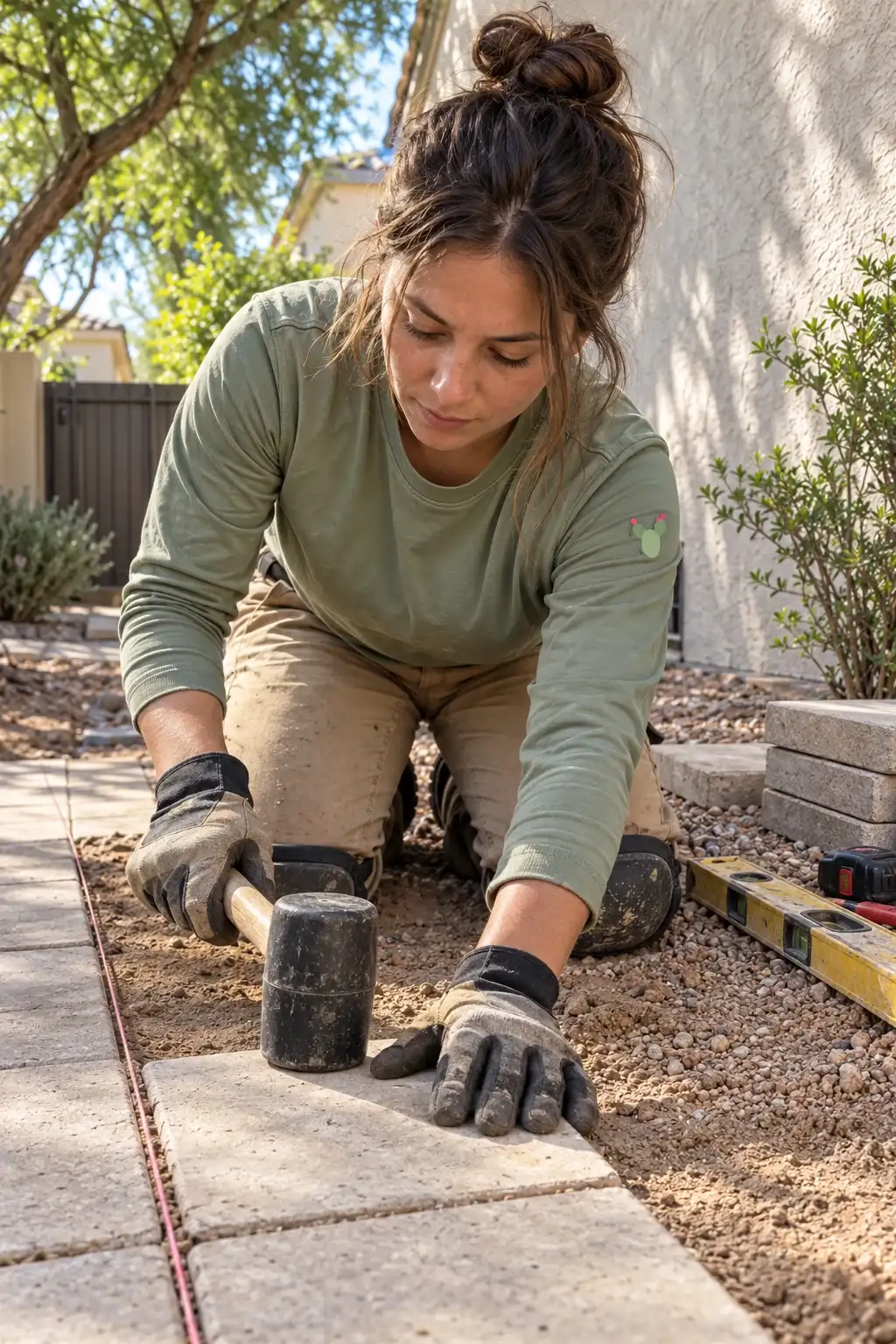
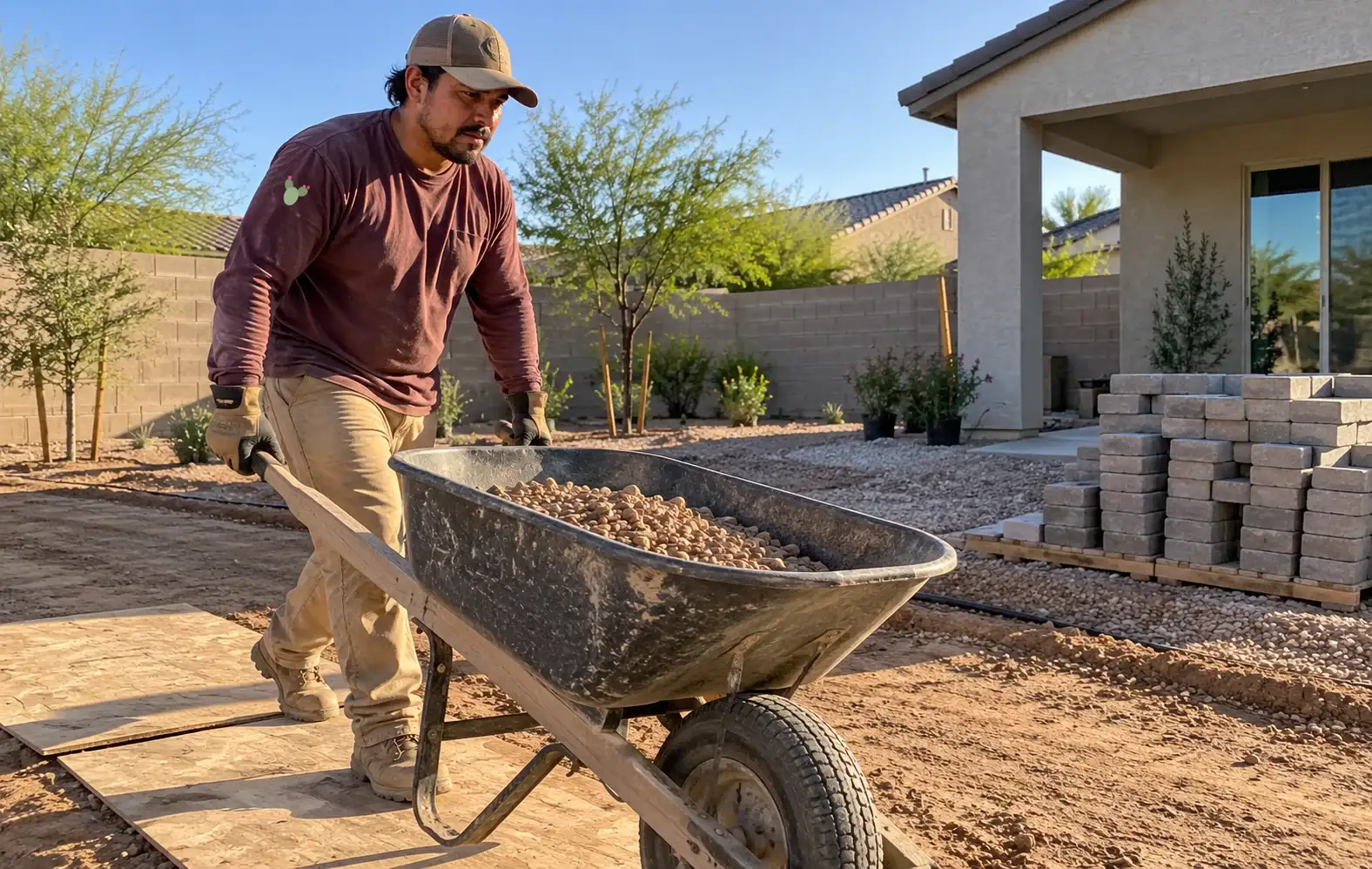
- 03Pavers and retaining wallsfor drives, patios and the walls that hold a cut in the grade, set on a compacted base built to resist creeping downhill.
- 04Sprinkler repairfor systems stretched too far across a large parcel, where the last head on the line can lose pressure.
Call (747) 243-2089 and describe the lot, including whether it slopes and how far the water line runs, to narrow it down to the part that matters first.
06Service area
Which neighborhoods are covered?
Coverage follows the highway corridor and the roads that climb off it. Apache Trail and Old West Highway carry most of the older development, from the flats near Meridian out toward Goldfield Road. Broadway and Southern cover the blocks south of the highway, where lots are smaller and the fences run in straight lines. North of Apache Trail, the streets that climb toward the foothills, including Mountain View and the roads off Idaho, hold the larger parcels with the long views and the steep driveways. Coverage also includes the edge along Baseline where Apache Junction meets Mesa, and the short residential streets tucked behind the commercial strip on the highway. A dirt road off one of those is worth mentioning, because access changes what equipment can reach the lot.
07Costs
What does landscaping cost in Apache Junction?
A 2 person crew bills $50 to $100 per hour, and a new installation falls between $3,000 and $16,000, according to a national cost guide (2026). Work is often priced by area at $4.50 to $12 per square foot, according to national cost data (2026, 32,752 projects). On a large parcel the square footage is what moves the number, and rock and grading add to it because a machine works harder ground and a bar replaces a shovel. A front yard typically lands at $1,500 to $5,000, while a full backyard rebuild runs $15,000 to $50,000 (national cost data, 2026). Two lots of the same size can land far apart here, since a flat parcel near the highway and a cut hillside parcel need different equipment and different wall lengths. These are published national ranges, not a quote. The final price comes after someone sees the yard.
083 questions
Questions people ask
Still have a question? Call (747) 243-2089 and describe the yard.
01Do I have to clear the native brush to landscape?
No, and on many of these lots it is better not to. Brush that is holding soil stays, and the new work goes around it. Clearing everything can invite erosion and dust, and it can cost more than working with what is there.
02What happens if the lot is mostly rock?
The plan changes rather than the budget disappearing. Rock means shallow planting pockets, more raised beds and less digging, and it often pushes the design toward specimen plants and boulders instead of dense groundcover.
03Is a retaining wall needed on a sloped lot?
Only where the grade steps and something sits above or below it. A patio cut into a slope needs a wall at the uphill side. A driveway that crosses a fall line needs one at the low side. Flat ground often needs neither.
09Keep reading