Guide 01 · 4 min read
Landscaping Cost in Mesa, AZ
Landscaping a Mesa yard can run from $1,500 for a front yard refresh to $50,000 for a full backyard rebuild, going by published national ranges, and the national average project is $3,516. The spread often comes from the ground under the yard more than from the plant list.
Last updated
01Costs
What does landscaping cost in Mesa?
Published national data puts the average project at $3,516, with most projects between $1,248 and $6,068, according to a national cost guide's 2026 landscaping study. That study covers 32,752 projects. Per square foot the same data runs $4.50 to $12. A front yard lands at $1,500 to $5,000 and a full backyard renovation runs $15,000 to $50,000. Another national cost guide's 2026 data puts a new landscape installation at $3,000 to $16,000, with a 2 person crew at $50 to $100 per hour. A paver patio averages about $3,800 for 280 square feet, and artificial turf averages $5,783, which shows how fast a yard adds up. These are published national ranges, not a quote. The final price comes after someone sees the yard.
02Costs
Which parts of a yard drive the price?
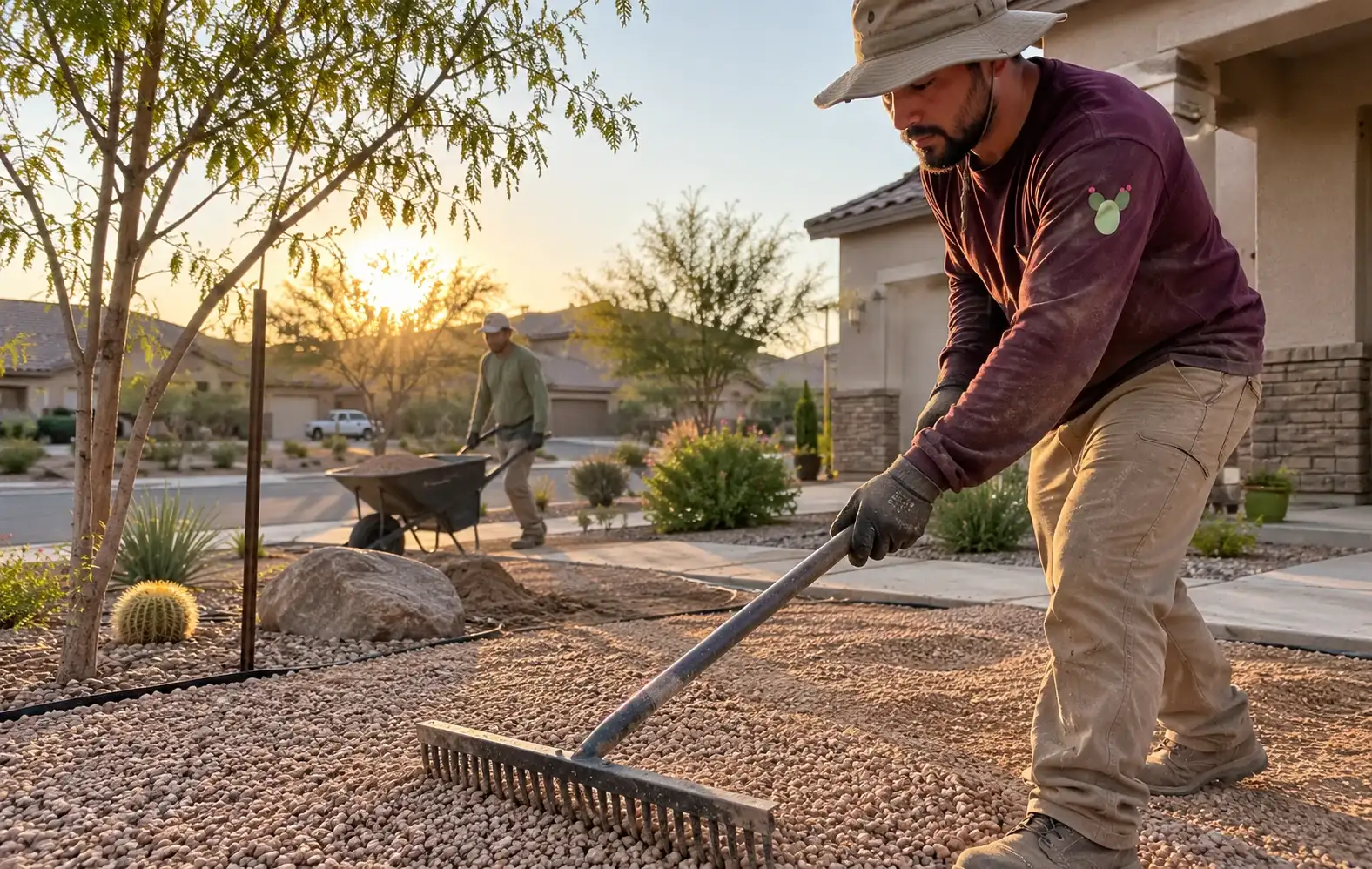
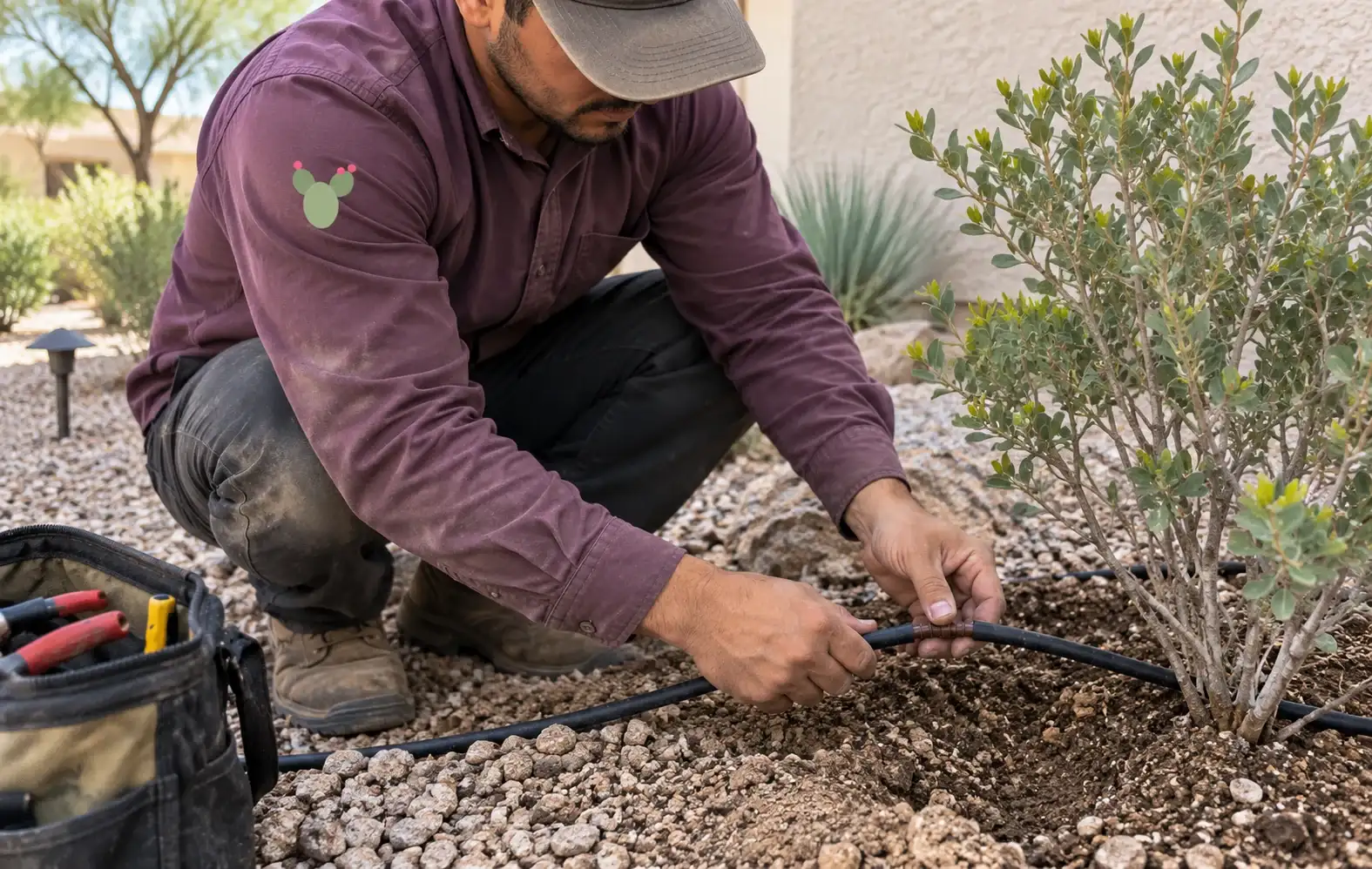
Demolition and haul off can cost more than the planting, and they are a line worth checking on a bid. Removing grass, breaking out an old patio and hauling the debris away takes truck space and dump fees, and none of it shows when the job is done. Base prep is the next line that grows. A yard with caliche can need a breaker or a skid steer before anything can be planted, and a yard with workable soil may not. Irrigation is the next line. Tying into a working drip line is cheap compared with running new main line, valves and a controller. Plant size is the last. A small shrub and a boxed tree do the same job in a plan and cost very different amounts. A breakdown by line shows more than one total.
03Costs
Why do foothill lots cost more than flat lots?
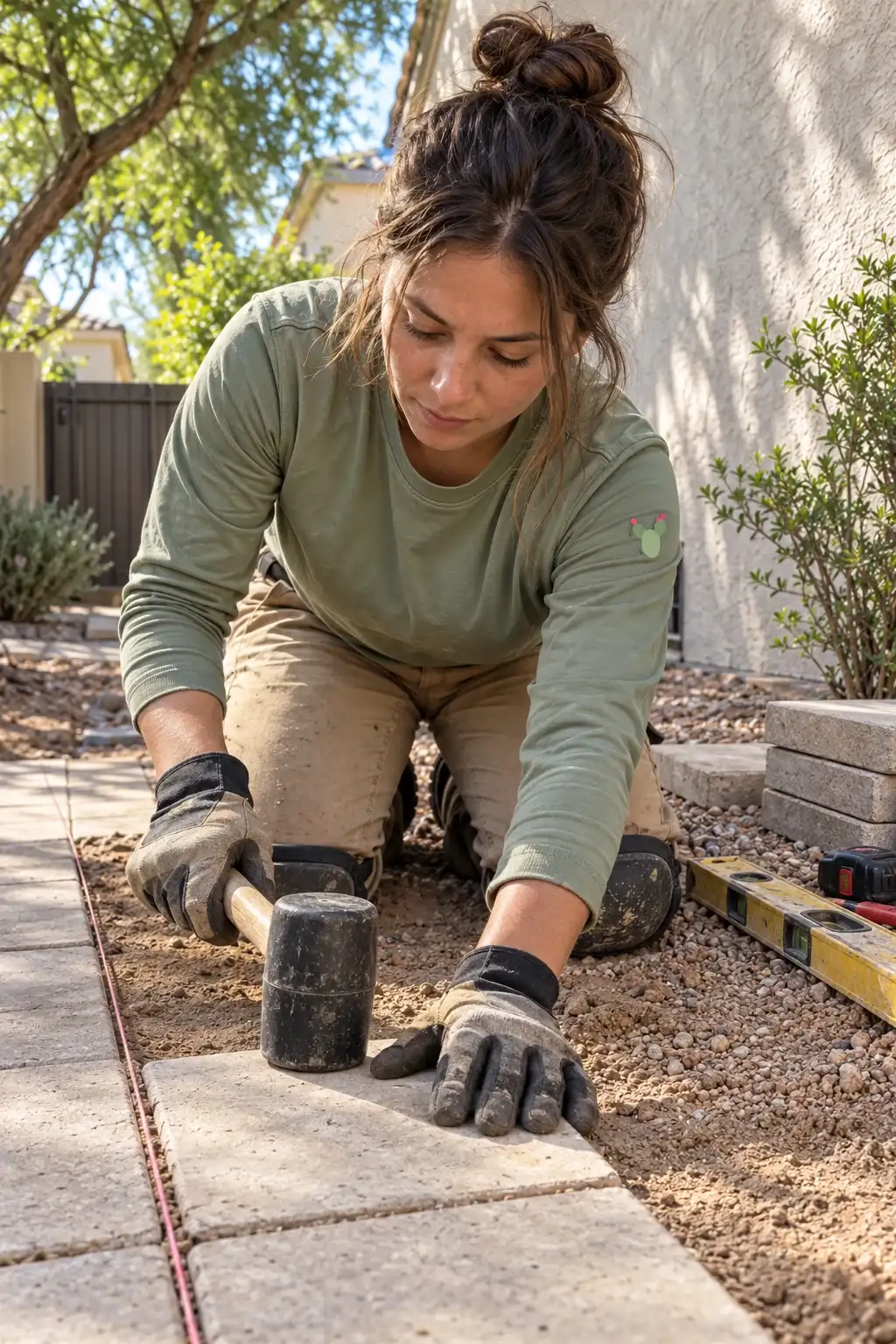
A lot with slope can cost more than a flat lot of the same size. A slope needs a retaining wall or terracing before a patio can sit level, and a wall needs a footing, drainage gravel and a way to move water around it instead of through it. Rock is the second factor. Foothill ground near the Superstitions can turn up fractured rock and caliche at shallow depth, so trenching for irrigation and digging footings both slow down. Access is the next factor. A narrow driveway or a side gate can mean material comes in by wheelbarrow, and labor hours climb. None of these show up in a per square foot range, which is why a foothill bid can sit above a published number without being wrong. What turns up once digging starts can add to a bid too.
04Costs
What does a 2 person crew cost per hour?
A 2 person crew runs $50 to $100 per hour, according to a national cost guide's 2026 data. That rate is for labor, so materials, equipment rental and dump fees can sit on top. The hourly number is a useful check on a bid, because it tells you what the crew time behind a price is worth. A job quoted at the low end of the hourly band can still finish high if it assumes a long run of hours, and a job at the high end can finish level if the work goes smoothly. How many crew hours a bid assumes, and what happens if the work runs longer, show how firm a price is. A number is easier to compare than an open ended estimate.
05Bids and scope
How do you compare 2 bids on the same yard?
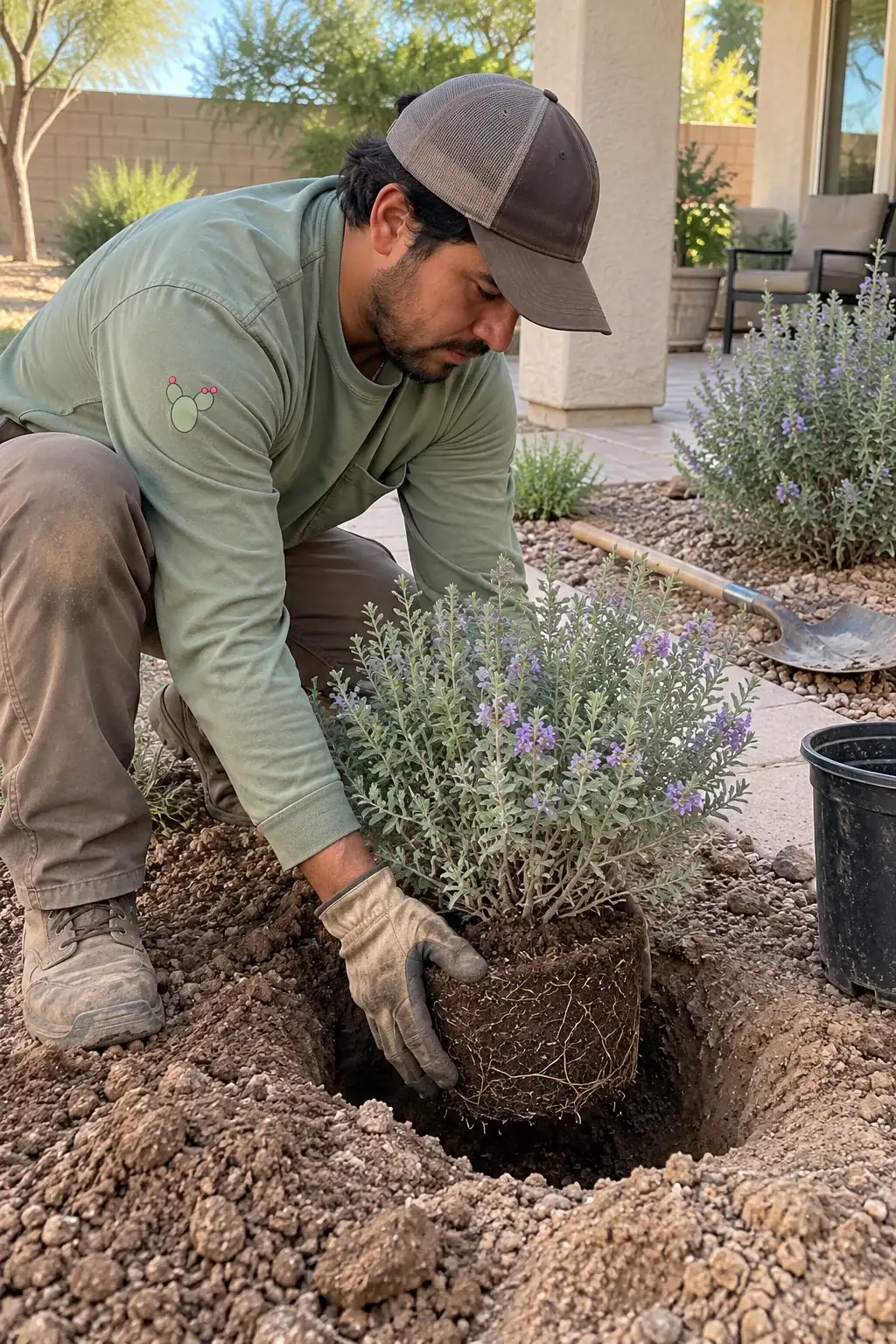
Bids set side by side compare best line by line, not total to total. Square footage and plant counts come first, because a lower bid often covers less ground. Next is the irrigation scope: new main line or a tie in, how many valves, and whether a controller is included. Then base prep: how deep the excavation goes, how much gravel, and whether fabric goes down under it. Then haul off, because a bid that leaves debris on site is not the same job. A list of what a bid excludes makes it easier to compare than a single number with no detail. The lowest total is often the smallest scope. If 2 bids are hard to read side by side, call (747) 243-2089 to talk through the lines.
06Costs
What brings a landscaping project down in price?
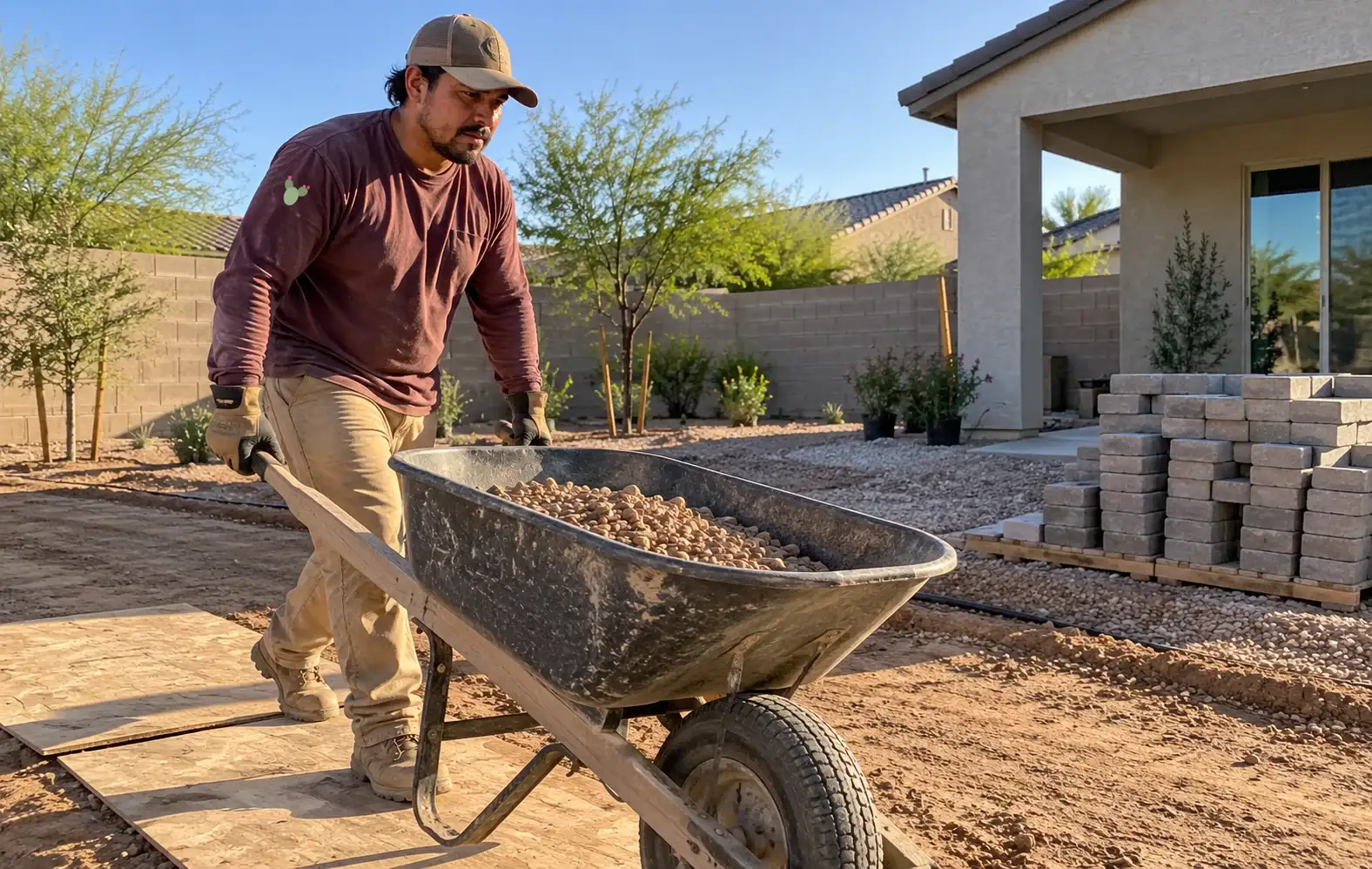
Stage the work. A front yard first and a backyard next season splits the cost into 2 budgets and lets you live with the first result before committing to the second. Keep the existing irrigation main line if it holds pressure, and change heads and drip rather than trenching new pipe. Choose smaller plant stock, since smaller plants cost less and often catch up faster than expected. Keep the lawn area you actually use and convert the rest, rather than removing all of it and paying for turf somewhere else. Do the demolition yourself if you have the time and a way to haul. Mesa's grass to xeriscape incentive pays up to $2,100 toward a conversion, according to Mesa's Residential Grass-to-Xeriscape Program (opens in a new tab), which changes the math on a major line item.
073 questions
Questions people ask
Still have a question? Call (747) 243-2089 and describe the yard.
01Is $100 an hour too much for landscape work?
Not on its own. Published 2026 data puts a 2 person crew at $50 to $100 per hour, so $100 sits at the top of the normal band rather than outside it. What the rate includes and how many hours the bid assumes are the details that matter.
02Why can a Mesa quote be higher than a national average?
A national range averages yards across the country. Mesa ground can bring caliche, rock and slope, and those add labor before a single plant goes in. A bid above the range can be accurate for a difficult lot.
03Does a design cost extra?
Sometimes. A simple planting plan can be folded into the installation price, and a full drawing with measurements can be charged separately. Whether a drawing is included, and whether it is the owner's to keep, are worth settling before work starts.
08Keep reading