Guide 04 · 4 min read
Low-Maintenance Yard Ideas for Mesa
A low-maintenance Mesa yard is mostly hard surface, drip irrigation and plants that live on rain plus a deep watering now and then. The aim is fewer decisions and fewer repairs, not a yard you never touch.
Good to know
What makes a yard low maintenance in Mesa?
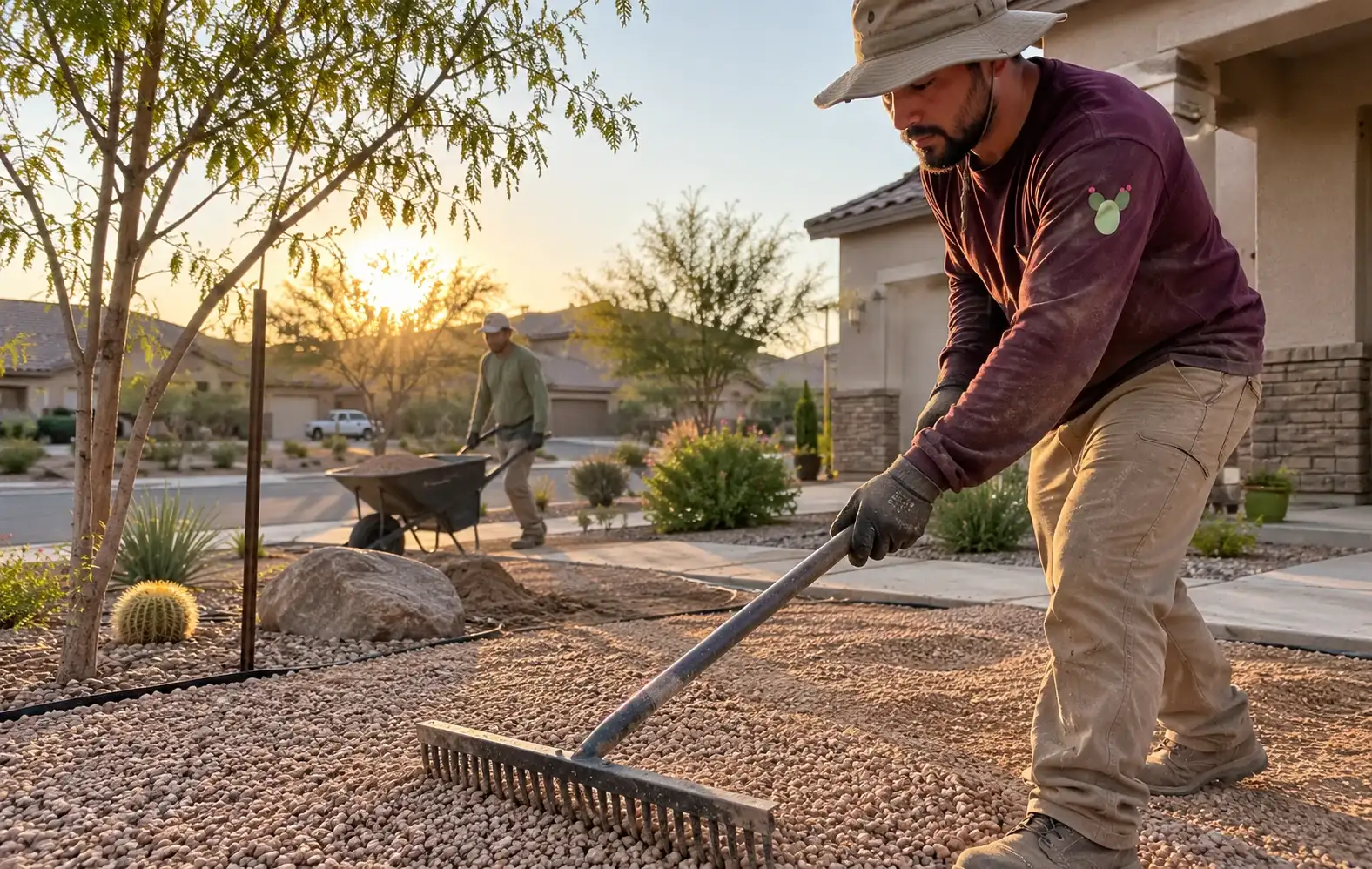
Low maintenance means fewer decisions and fewer repairs, not zero work. In Mesa the load comes from 3 places: summer heat, poor soil, and irrigation that fails quietly. A yard that handles all 3 needs little from you between seasons. Hard surface does most of the work. Gravel, pavers and a small turf area need no mowing and no fertilizer. Drip irrigation replaces sprinkler heads that clog and mist in the wind. Plants from desert and Mediterranean climates ask for less water than a lawn and hold their shape without shearing. Group plants by water need, so one valve does not overwater the cactus and underwater the trees. That single design choice can remove more maintenance than any plant list you can buy.
Good to know
Does gravel alone make a yard low maintenance?
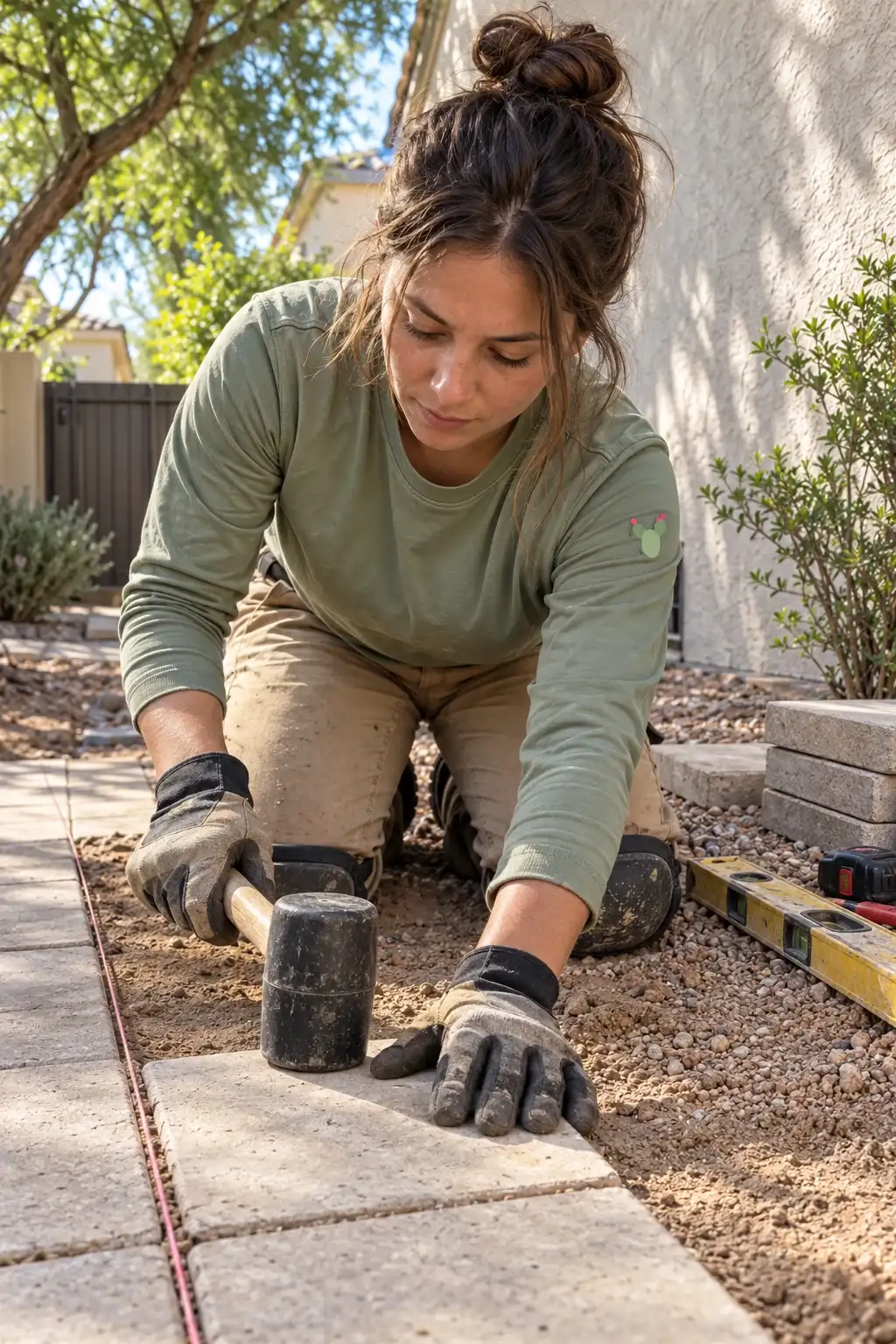
Gravel alone can be the least expensive option, and it can fail quickly if it is laid badly. A dump of rock over unprepared ground can grow weeds through the stone within a season, and the fix is pulling them by hand or spraying, which is more work than the lawn it replaced. Gravel needs a weed barrier under it, a compacted base if it will be walked on, and enough depth to cover the fabric. It also needs edges, because loose rock migrates into the street and onto the patio. A gravel yard with no plants can be one of the hottest versions of a yard, since bare rock can hold heat into the evening. Gravel works when it sits between plants and paths rather than covering the whole lot.
Planting
Which plants need the least work in a Mesa yard?
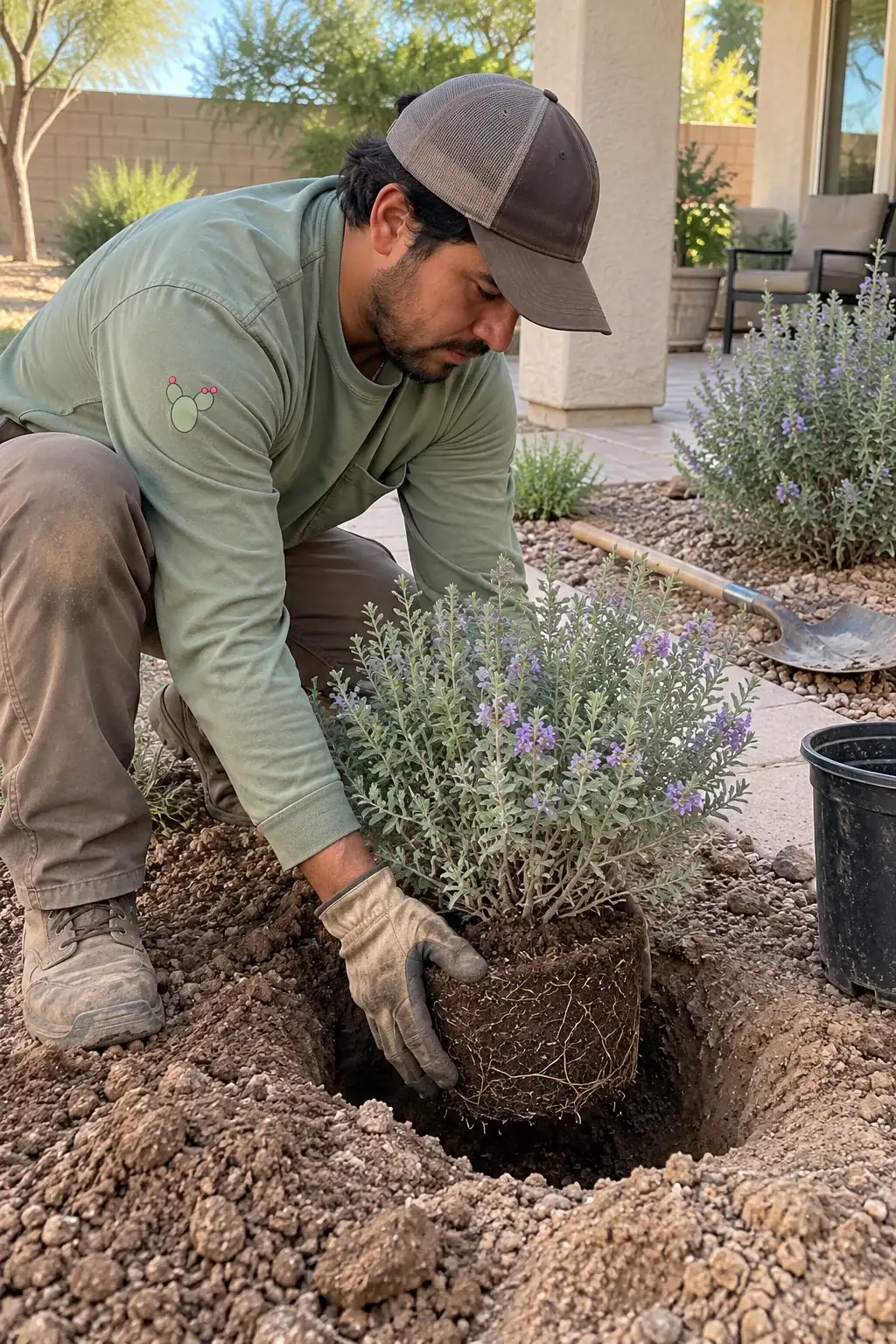
The plants that ask least are the ones from this desert and from dry Mediterranean hills. Mesquite, palo verde and desert willow give shade without much water once established. Ocotillo, creosote and brittlebush take full sun and reflected heat. Rosemary, oleander and Texas sage fill a hedge line with little care. Agave and most cactus need almost nothing beyond a check for rot after a wet winter. Mesa sits in USDA zone 9b, where the average annual extreme minimum runs 25 to 30 F, according to 2023 PlantMaps zone data (opens in a new tab), so a plant that sulks below freezing is a poor bet. The common thread is drainage, not dryness. Plant on a slight mound and keep gravel away from the crown.
Turf
Is artificial turf lower maintenance than grass?
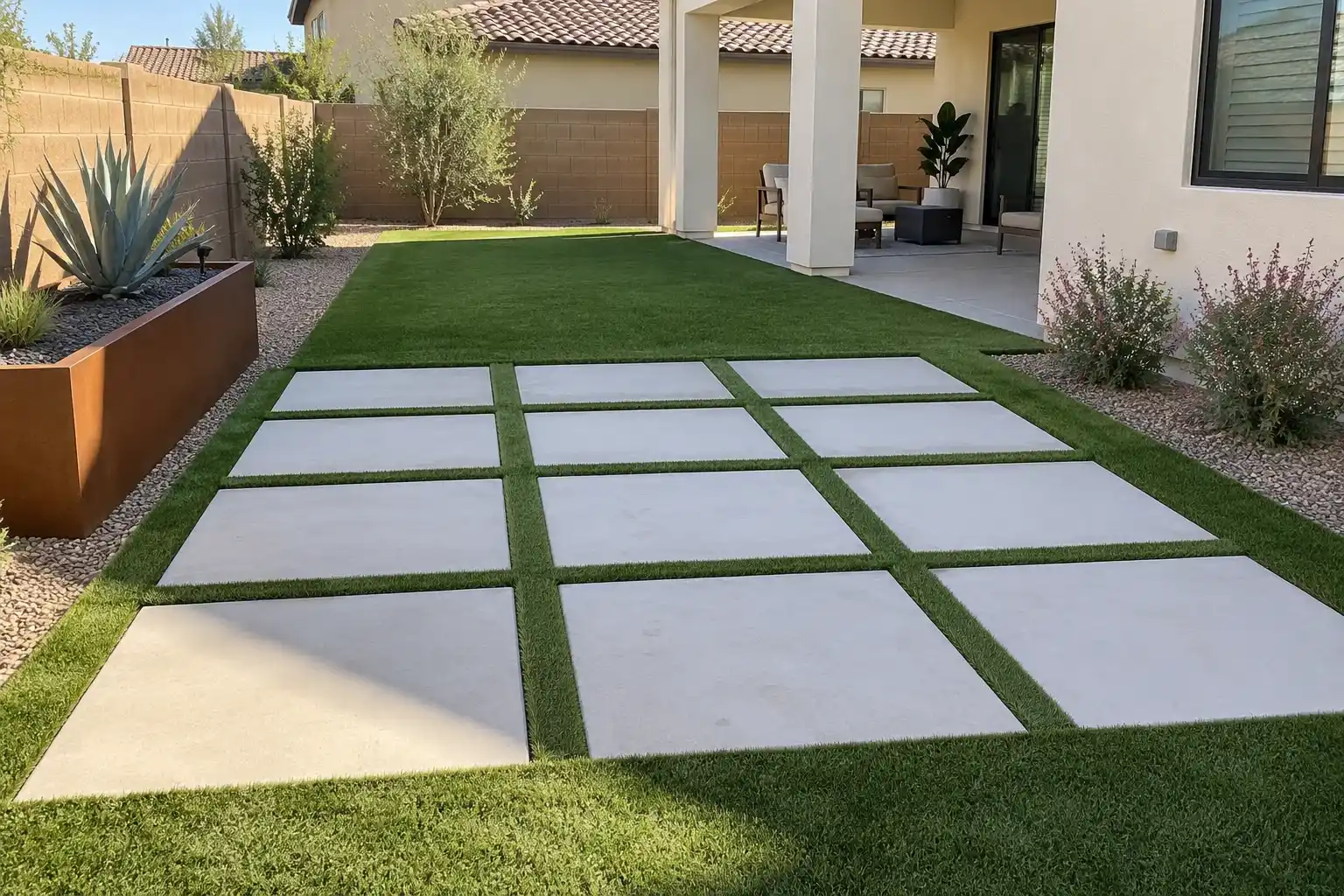
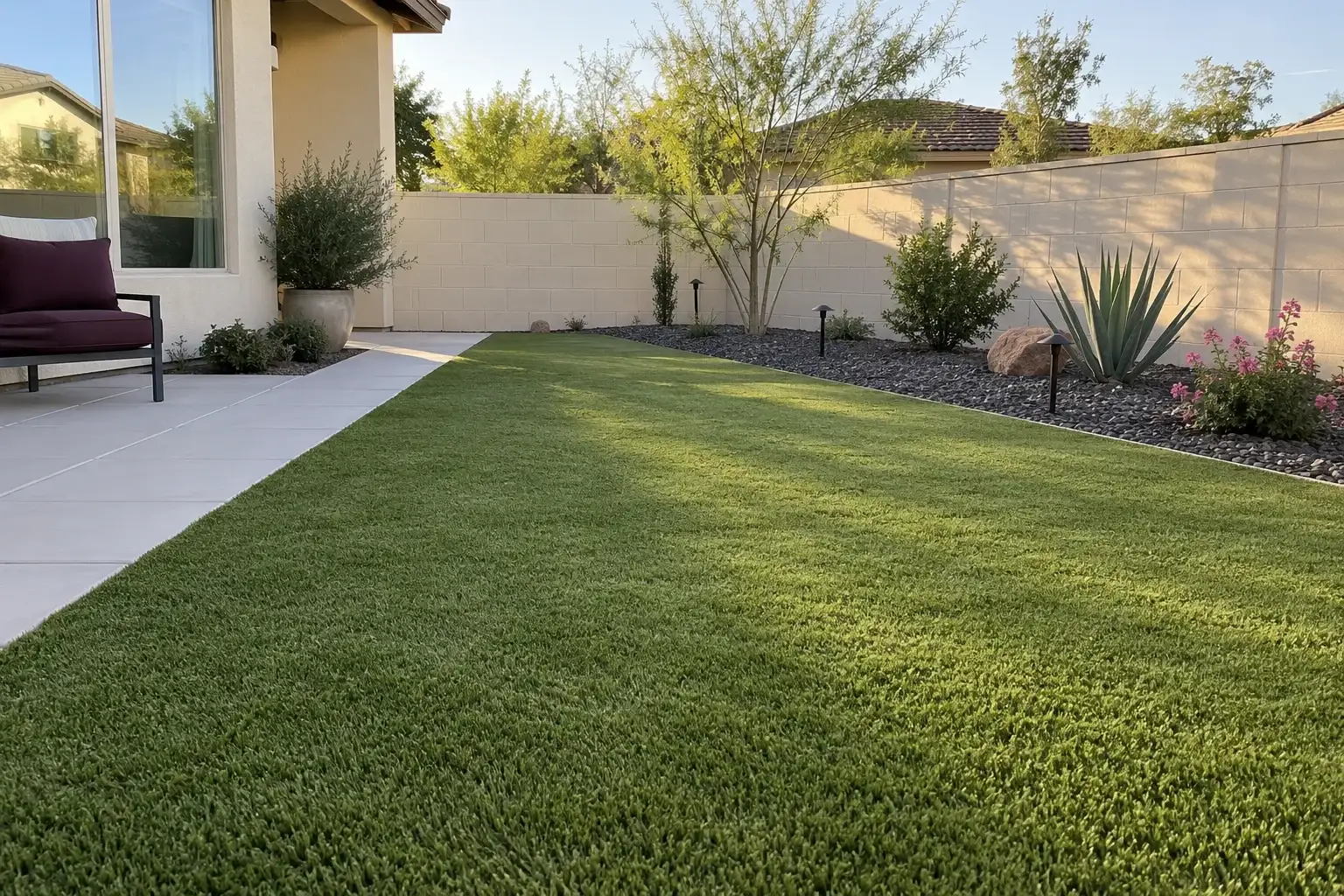
Turf removes mowing, edging, fertilizing and most watering, so the weekly work drops sharply. It does not remove all work. Turf needs rinsing after dust storms, brushing where traffic flattens the pile, and a check for weeds along the edges. Pet owners need to pick up waste and rinse the area, because turf does not break it down the way soil does. Heat is the other trade. Turf gets hotter than grass in direct sun, so a full sun lawn replacement can raise the temperature on a patio that sits next to it. A small turf area for kids or dogs works well. Covering a large west facing yard in turf trades a mowing job for a heat problem.
Water
What does drip irrigation change about upkeep?
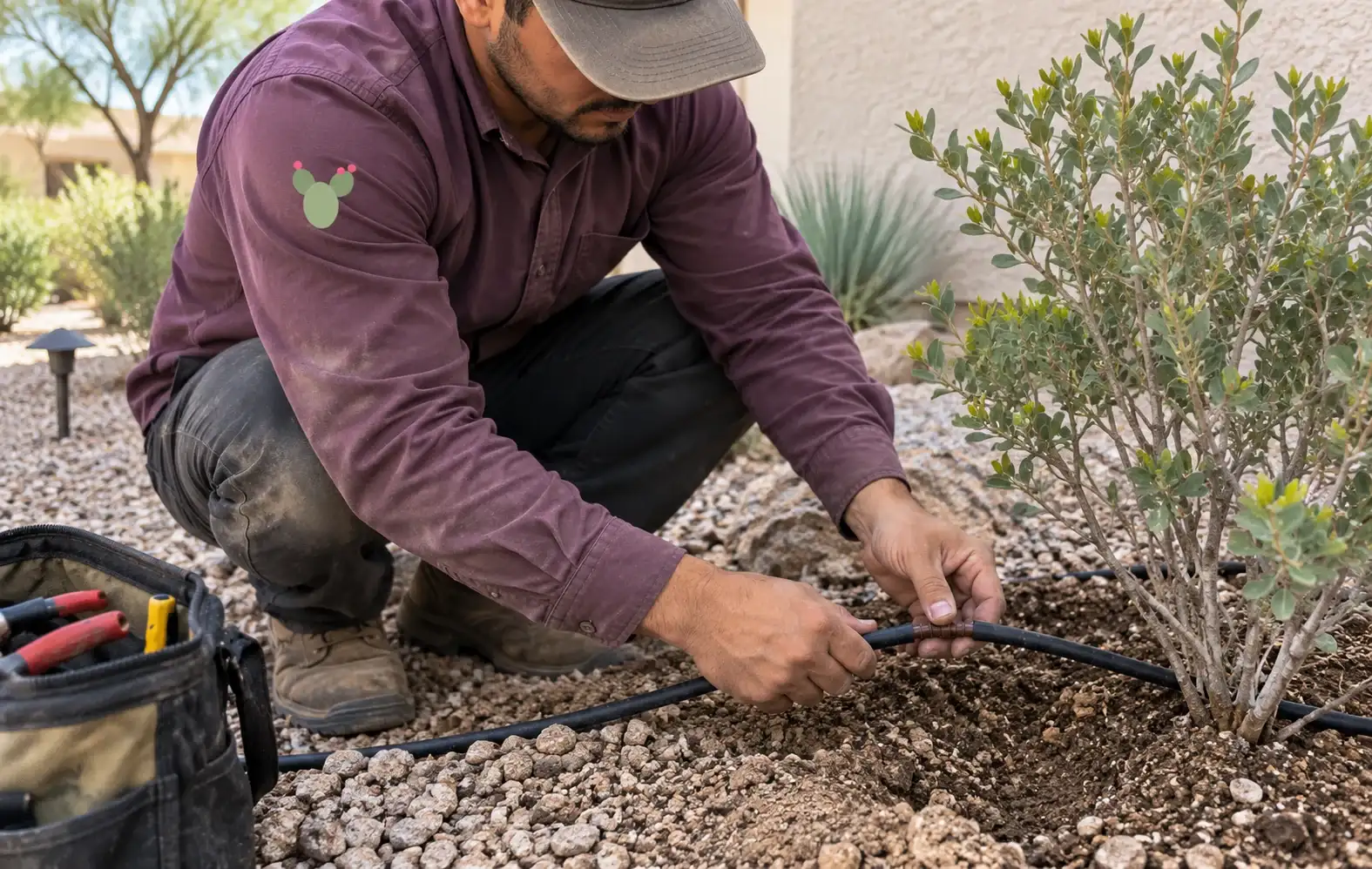
Drip delivers water at the root instead of in the air, so less is lost to wind and evaporation. That matters in Mesa, where a sprinkler head running at midday can lose a large share of its water before it lands. Drip also keeps foliage dry, which can cut fungal problems on shrubs and trees. The upkeep moves rather than disappears. Emitters clog, lines get cut by a shovel, and a filter needs cleaning. A drip system that is never checked looks fine until a plant dies, because there is no spray pattern to catch your eye. Walk the line once a month in summer, open the end and flush it, and check that each plant is getting water. Mesa publishes a Landscape Watering Guide and a water calculator at Mesa Water Conservation (opens in a new tab).
How it works
What work still happens every year?
Every low-maintenance yard still has a yearly list. Prune shrubs and trees in the cool months rather than shearing them through summer. Cut back ornamental grasses and brittlebush after the last frost. Check and flush the drip line before the first hot stretch and again in fall. Top up gravel where traffic has pushed it aside, and re-set pavers that heaved after a monsoon. Clean the turf, if you have it. Look at the irrigation controller each season, because a controller left on a summer program through winter wastes water and can drown desert plants. None of this takes a weekend. Most of it fits into a few short visits a year, plus the monthly drip check in summer. If the controller is a mystery, send the details through the contact form, and someone from our team will call you back.
3 questions
Questions people ask
Still have a question? Call (747) 243-2089 and describe the yard.
Do I have to remove all my grass to have a low-maintenance yard?
No. Keeping a small lawn area where you actually sit is a reasonable choice. Convert the rest to gravel, pavers and desert plants, and the mowing and watering drop without losing the patch you use.
How often does a drip system need checking?
Once a month through the hot months, and once before spring. Flush the ends, look for clogged emitters and check that each plant is wet at the root. A yearly filter clean is also worth doing.
Is gravel less expensive than pavers for a Mesa yard?
Gravel costs less per square foot up front and needs topping up over time. Pavers cost more at the start and hold their place under foot traffic. Paths and patios usually justify pavers, and open ground suits gravel.