Guide 02 · 4 min read
Grass to Xeriscape in Mesa, AZ
Mesa pays up to $2,100 toward replacing a lawn with low-water-use xeriscape, and the application plus a pre-inspection have to happen before any grass comes out. The order of those steps decides whether the money is paid at all.
Costs
Does Mesa pay homeowners to remove grass?
Yes, through the Residential Grass-to-Xeriscape and Tree Bonus incentive, which pays up to $2,100 to replace grass with low-water-use xeriscape. The owner has to be a single-family homeowner and a Mesa water customer, and only landscapes watered through a city water meter qualify, so grass watered by wells or flood irrigation does not. The full $2,100 is for 1,500 or more square feet of grass removed plus 2 qualifying trees, and the minimum is 500 square feet. The program is run by the city, and the current terms sit on Mesa's Residential Grass-to-Xeriscape Program page (opens in a new tab). Funding is limited and handed out first come first served, so a yard that qualifies early in the year may find the fund closed later. That is the main reason to check the page before booking a crew. The payment goes toward the conversion, and the application has to come before the work rather than after it. Read the rules at the source, because the city can change them between program years.
Planning
What has to be true before you apply?
Three conditions decide most applications. The property has to be a single-family home on a Mesa water account, in the owner's name. The grass has to be healthy, with at least 70 percent coverage. Bare soil or weeds have to be under 30 percent of the area being converted. The city also limits the program to 1 incentive per property in 3 years, so a homeowner who took the money recently is not eligible again yet. Homes built within the past year are not eligible either. Measure before you apply. A lawn that is half dirt and half Bermuda may fail the 70 percent test, and the pre-inspection is where that gets decided. If the grass is thin, improve it first and apply later, rather than spend money on a removal that cannot be paid for.
Planning
Why does the pre-inspection come before any work?
The city has to see the grass before it comes out. That is the whole point of the pre-inspection: it confirms there was a living lawn with enough coverage to count, and it records the area being converted. If a crew arrives first and strips the yard, there is nothing left to inspect and the application cannot be approved. The order is application, then pre-inspection, then the city's approval to proceed, then work. Funding is limited and first come first served, so timing matters. Do not schedule demolition until the inspection is done and the approval email has arrived. Pulling the grass first and sorting the paperwork later puts the incentive at risk.
Ground
What happens to the grass and the soil?
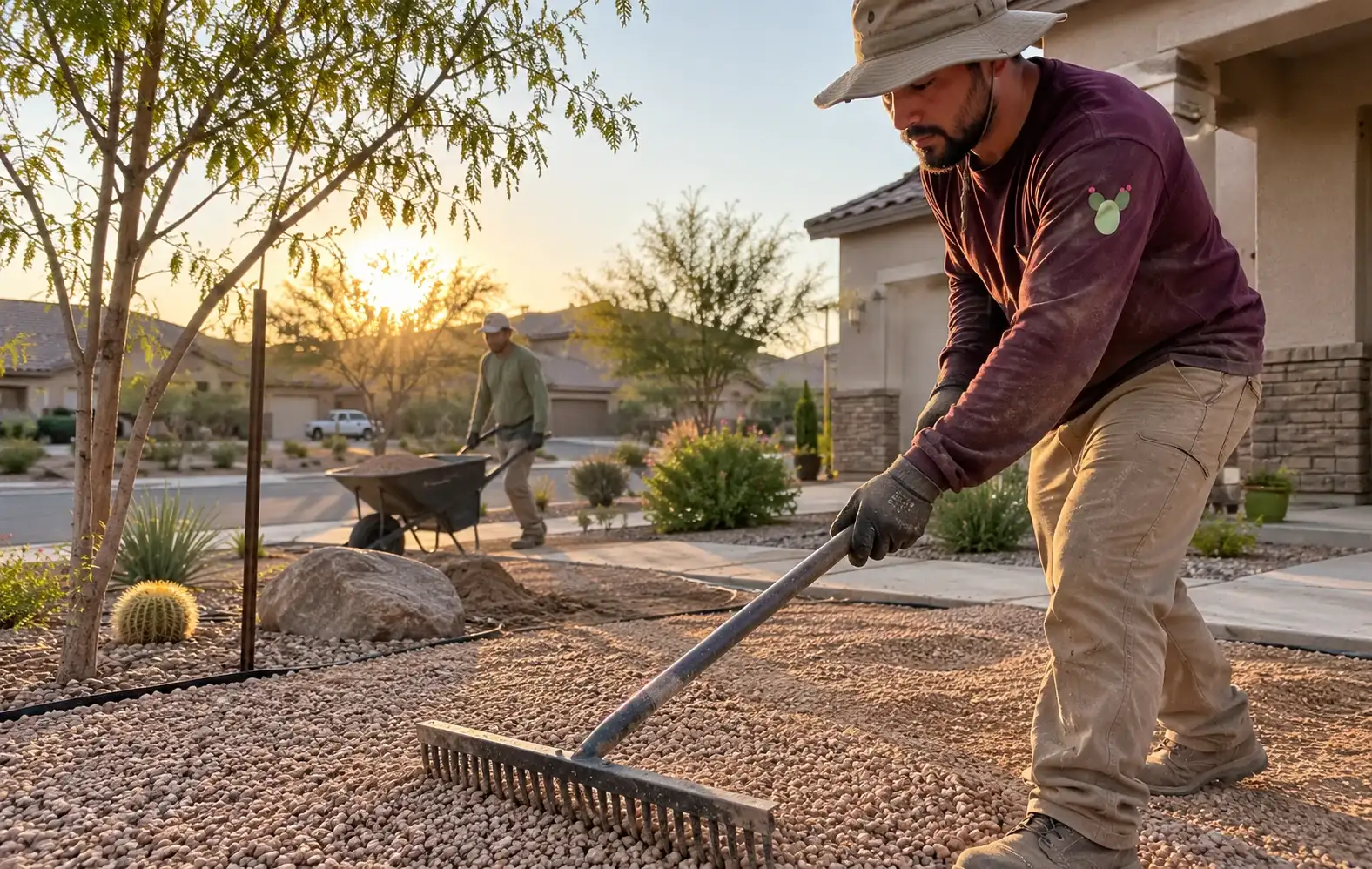
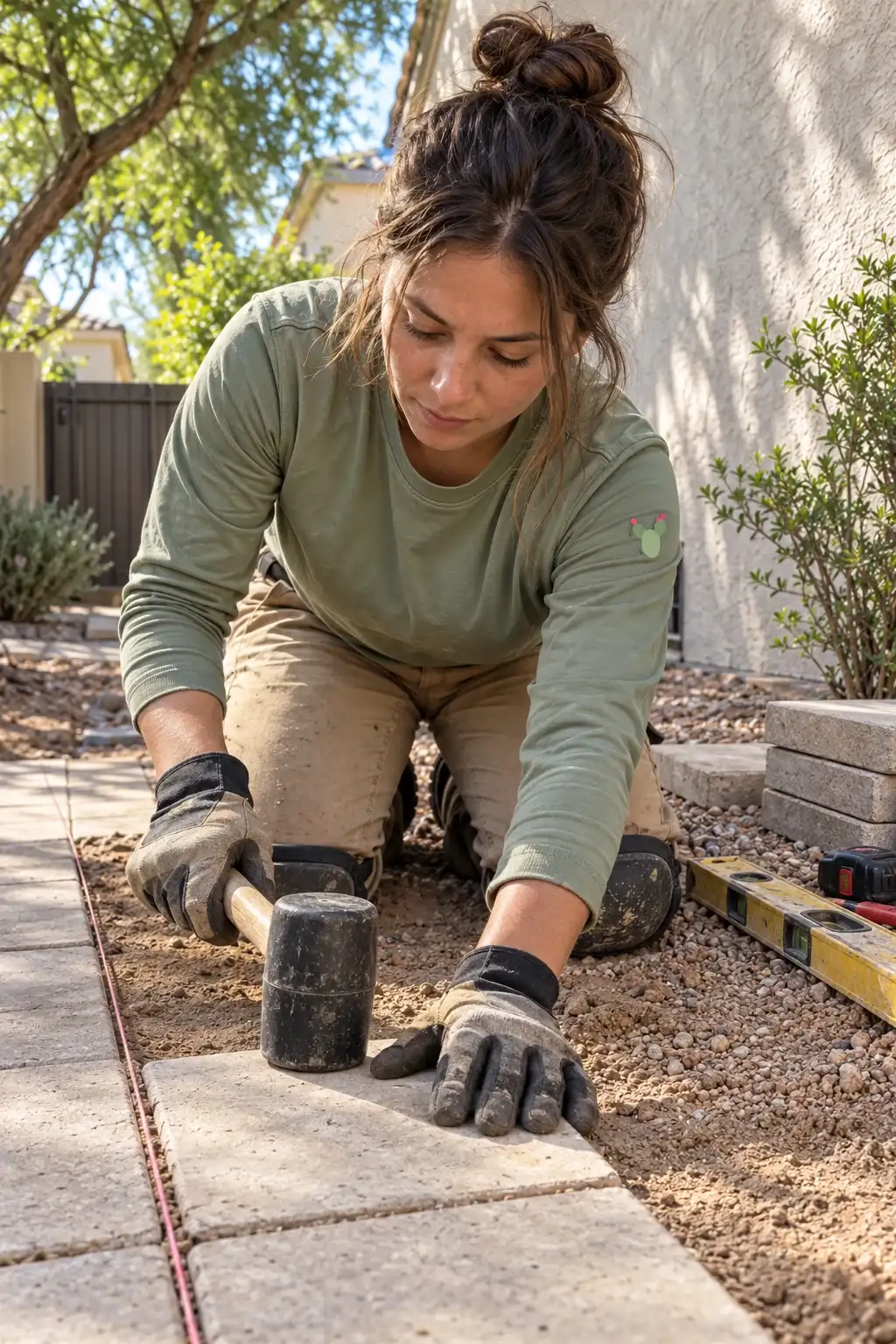
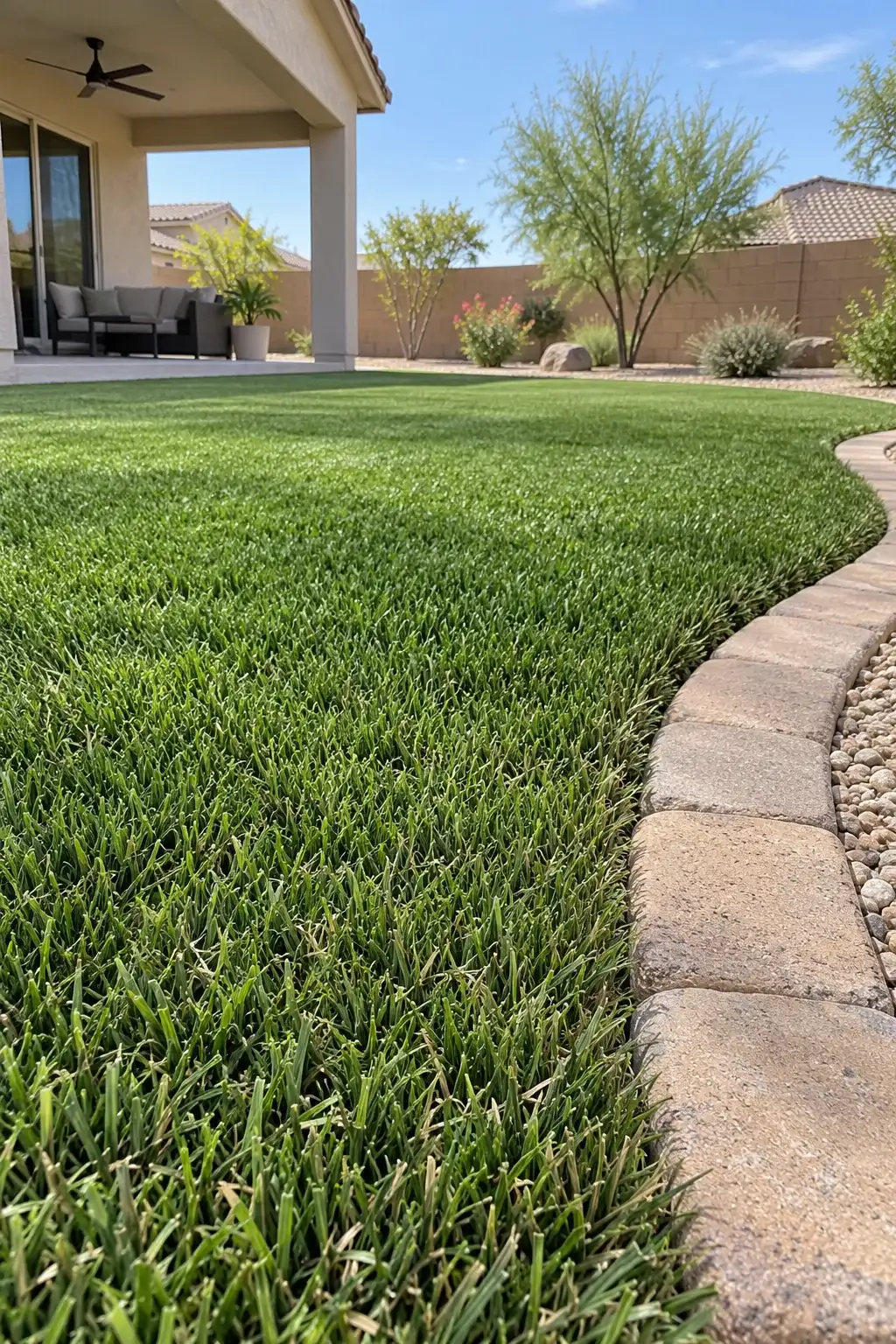
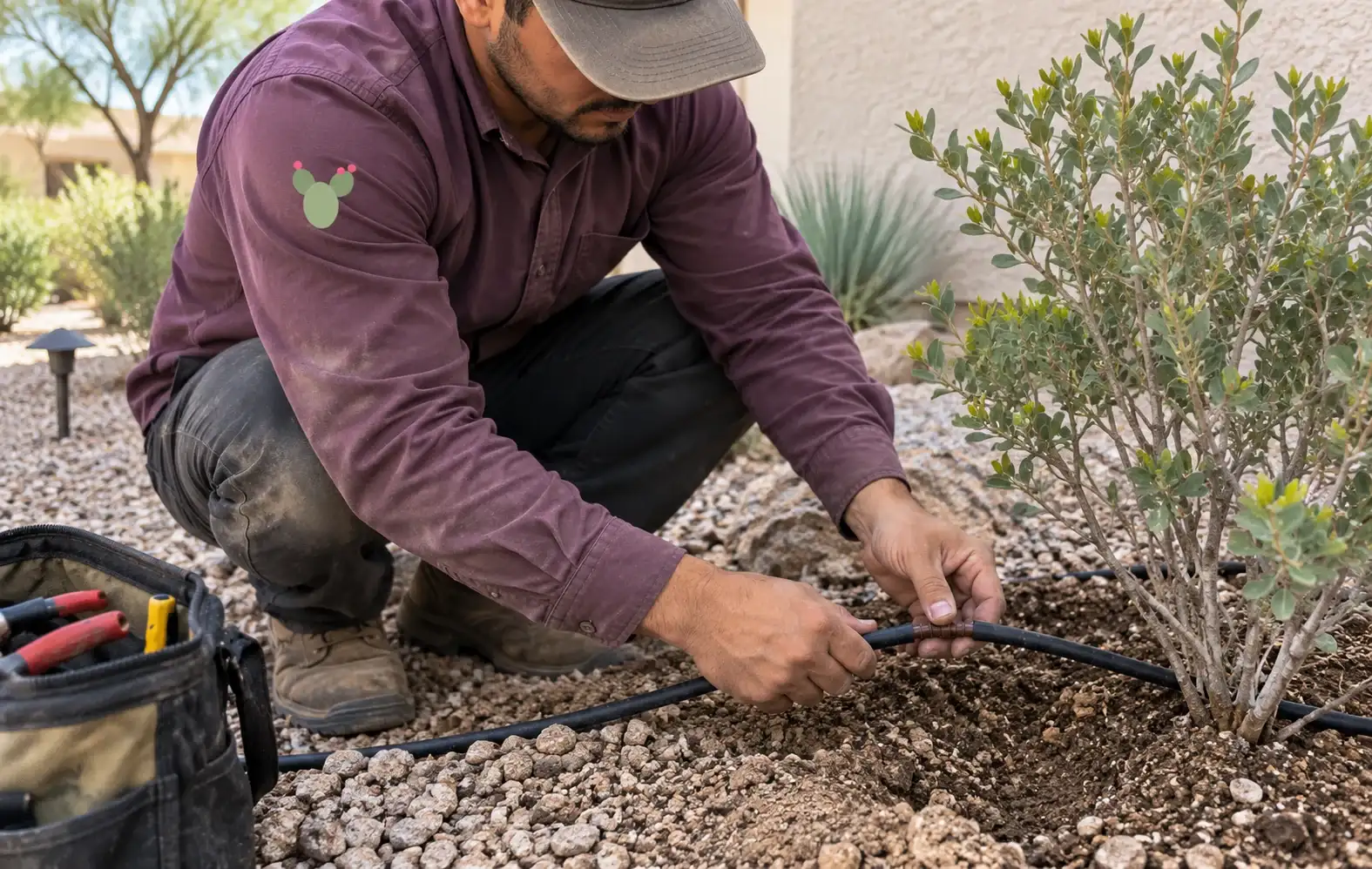
Removal is the dirty part. The sod gets stripped with a skid steer or a sod cutter and hauled out, and then the amount of soil work gets decided. In Mesa, that can mean breaking caliche and adding compost so the new plants have somewhere to root. Some conversions keep a layer of organic matter and plant into it, and others scrape down and rebuild the top few inches. Irrigation gets capped or rerouted at the same time, because a sprinkler schedule designed for grass will drown a xeriscape. The old valves can often be reused for drip zones. Where the debris goes and what happens to the existing lines are part of the scope. A removal that leaves the irrigation untouched has not finished the job.
Turf
What replaces the grass?
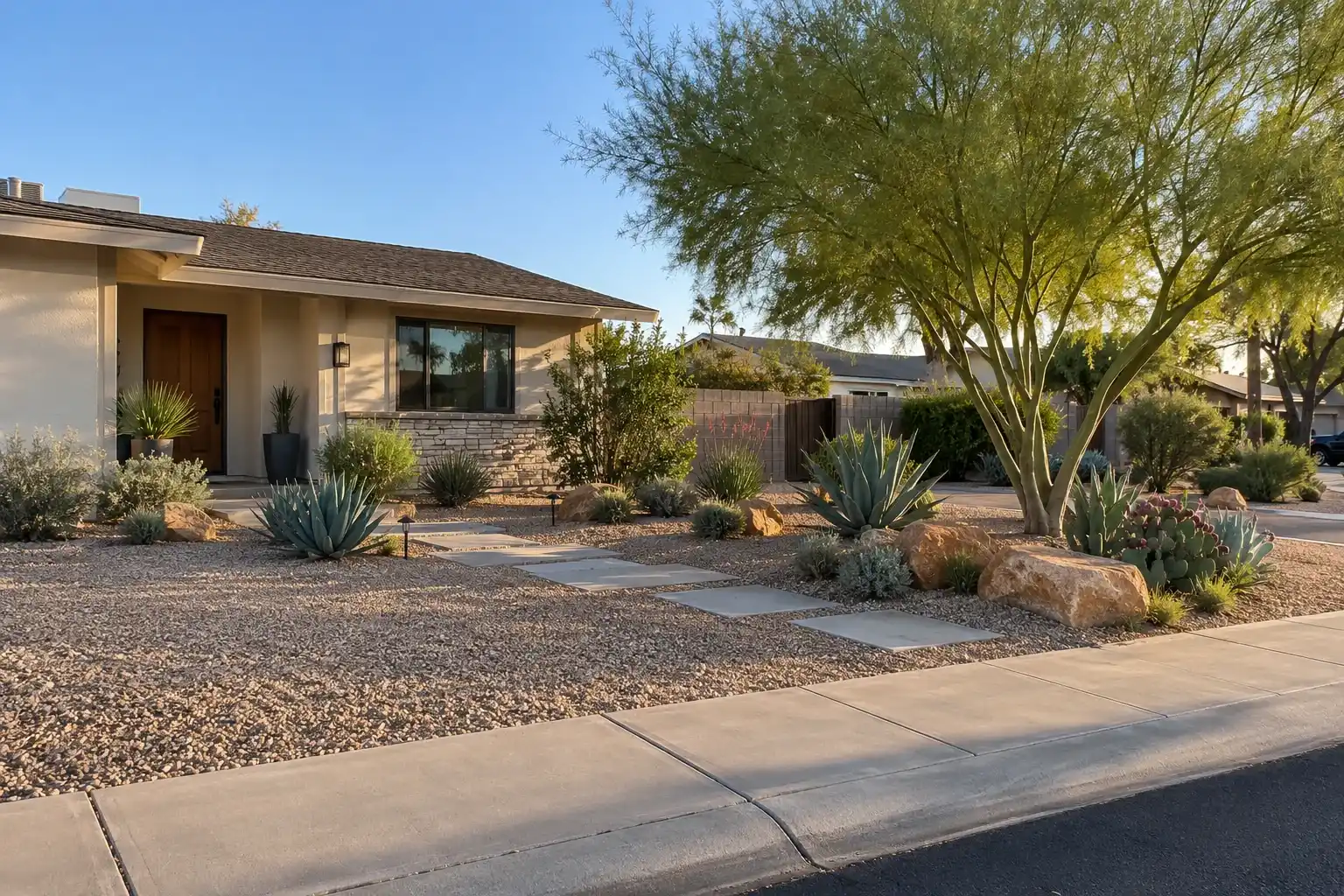
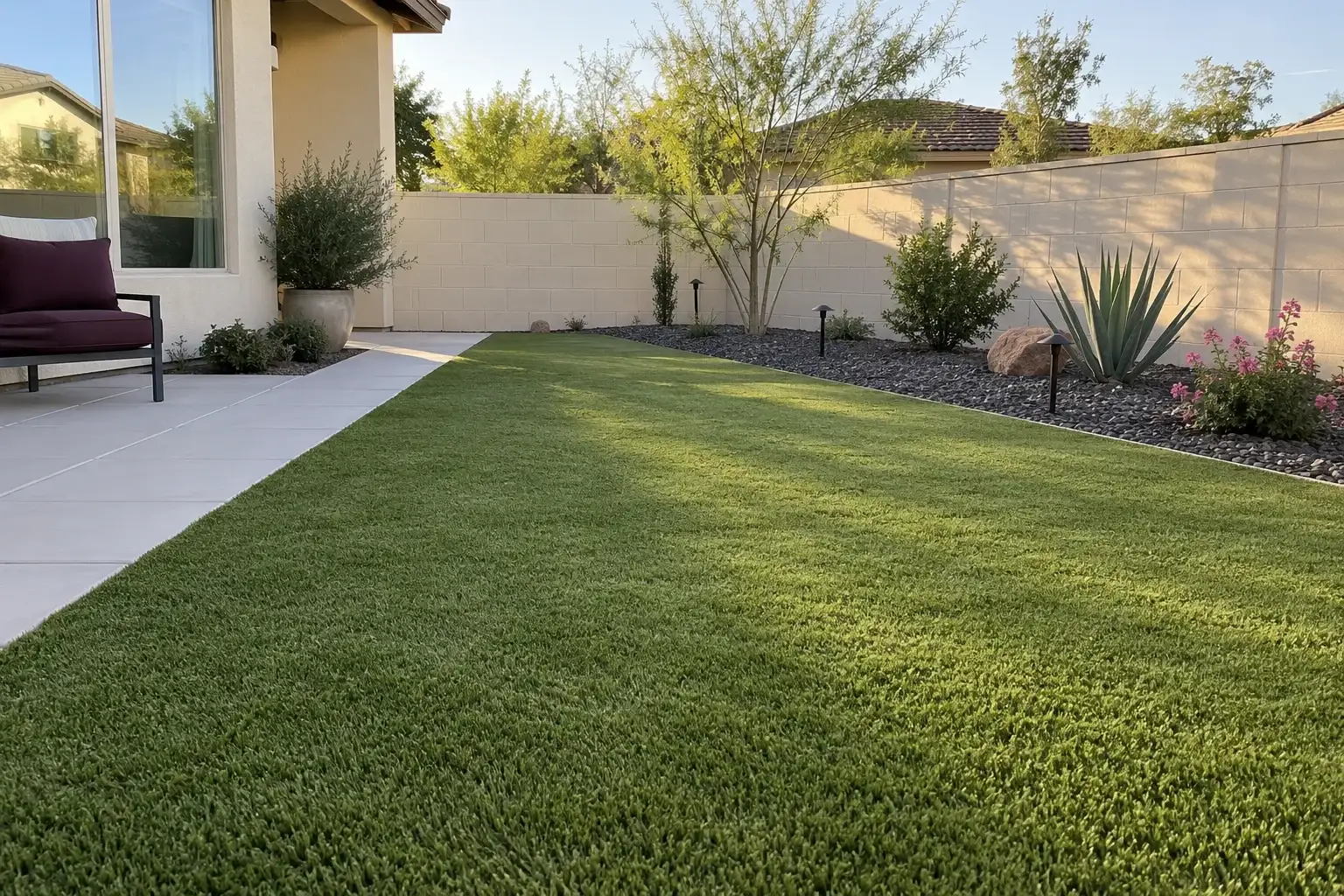
What replaces the lawn is a planting plan, not a rock pile. A typical Mesa conversion uses a mix of trees for shade, shrubs for structure, accent plants for color and a ground cover of gravel or decomposed granite. Desert willow, palo verde, mesquite, Texas sage and brittlebush are common choices. Drip lines run to each plant, grouped by water need, so one valve does not serve a cactus and a shade tree at the same time. Some homeowners keep a small lawn area for kids or pets and convert the rest. A conversion that adds only artificial turf does not qualify for the city's incentive. Turf can be part of the yard, but low-water-use plants must still cover 50 percent of the converted area at maturity, and rock alone does not qualify either. A plan that is only gravel and no plants will bake in summer.
Costs
How long does a conversion take, and what does it cost?
The schedule follows the inspection date, the weather and the work calendar more than the size of the yard. Removal and planting often fall on different days. Cost depends on the area, the soil and the plant count. Published national data puts landscaping per square foot at $4.50 to $12, with a front yard at $1,500 to $5,000, according to a national cost guide's 2026 landscaping study. These are published national ranges, not a quote. The final price comes after someone sees the yard. Against that, the city incentive pays up to $2,100, which covers part of the work rather than all of it. If a quote and the published range sit far apart, call (747) 243-2089 to talk through what moved it.
3 questions
Questions people ask
Still have a question? Call (747) 243-2089 and describe the yard.
Can I apply after the grass is already gone?
No. The application and the pre-inspection both have to happen before any grass comes out. Once the lawn is stripped there is nothing for the city to inspect, and the incentive cannot be approved.
Does the incentive cover artificial turf?
Not on its own. A conversion that adds only artificial turf does not qualify. Turf can be part of the plan, but low-water-use plants must still cover 50 percent of the converted area, and rock alone does not qualify either.
How much does the Mesa incentive pay?
Up to $2,100 per property, for 1,500 or more square feet of grass removed plus 2 qualifying trees. The exact amount depends on the area converted and the current program terms. Funding is limited and first come first served, so check the city page before booking work.
Keep reading